Overview
Fallout: A Post Nuclear Role Playing Game drops you into Southern California in the year 2161, decades after a global nuclear exchange reduced civilization to scattered settlements, mutant-filled ruins, and desperate survivors clinging to whatever order remains. You play as the Vault Dweller, sent out from the safety of Vault 13 on a timed mission to find a replacement water chip before the entire vault's population dies of thirst. It's a focused premise that opens into something much larger.
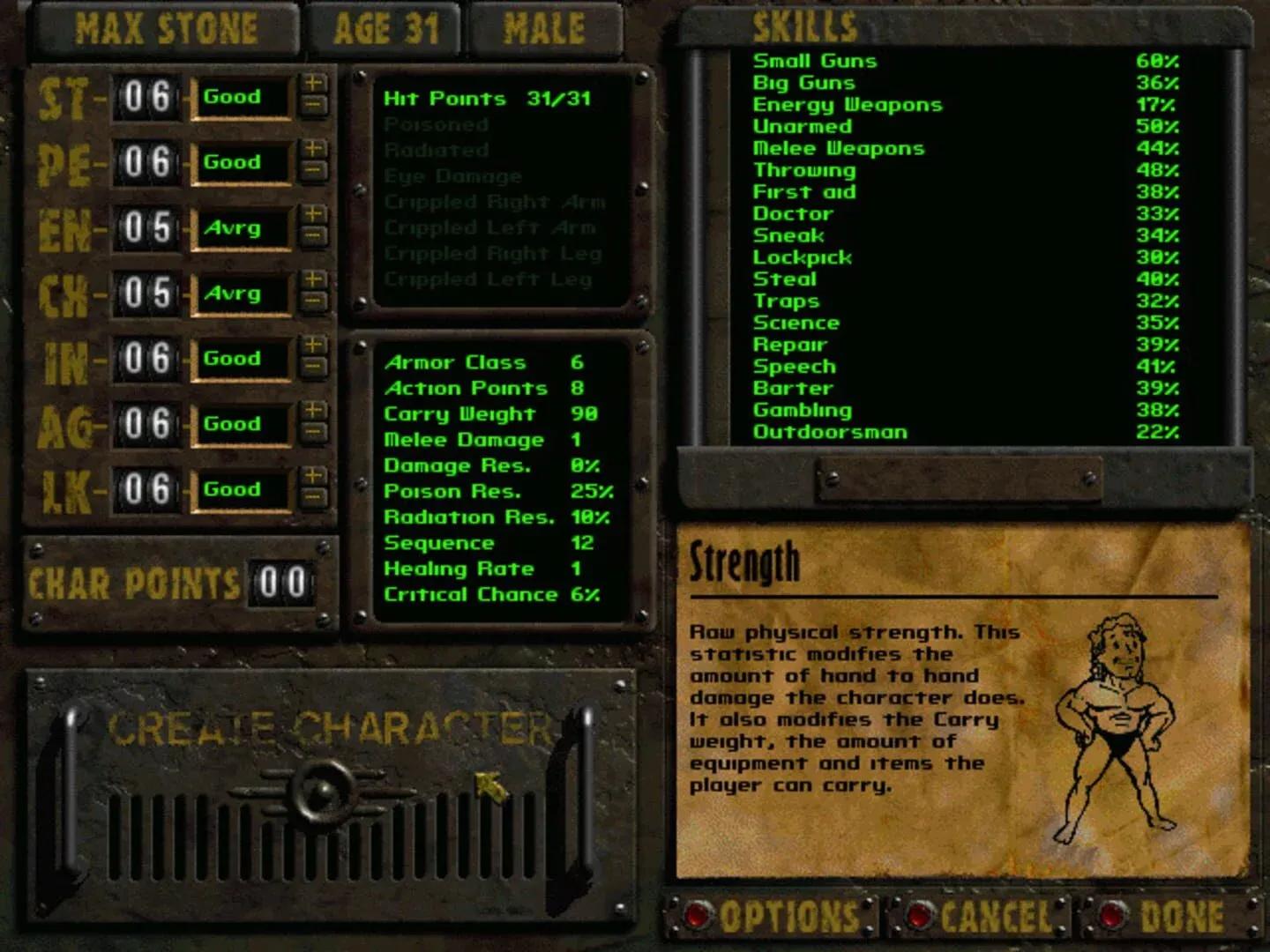
Interplay built this game around the SPECIAL system, a character-building framework where seven core stats (Strength, Perception, Endurance, Charisma, Intelligence, Agility, and Luck) shape not just combat effectiveness but how the entire world responds to you. A high-Intelligence character unlocks dialogue options that a low-Intelligence build literally cannot access. A Charisma-focused run can talk its way through encounters that a combat build would have to shoot through. The system rewards commitment to a character concept in ways that still feel rare.
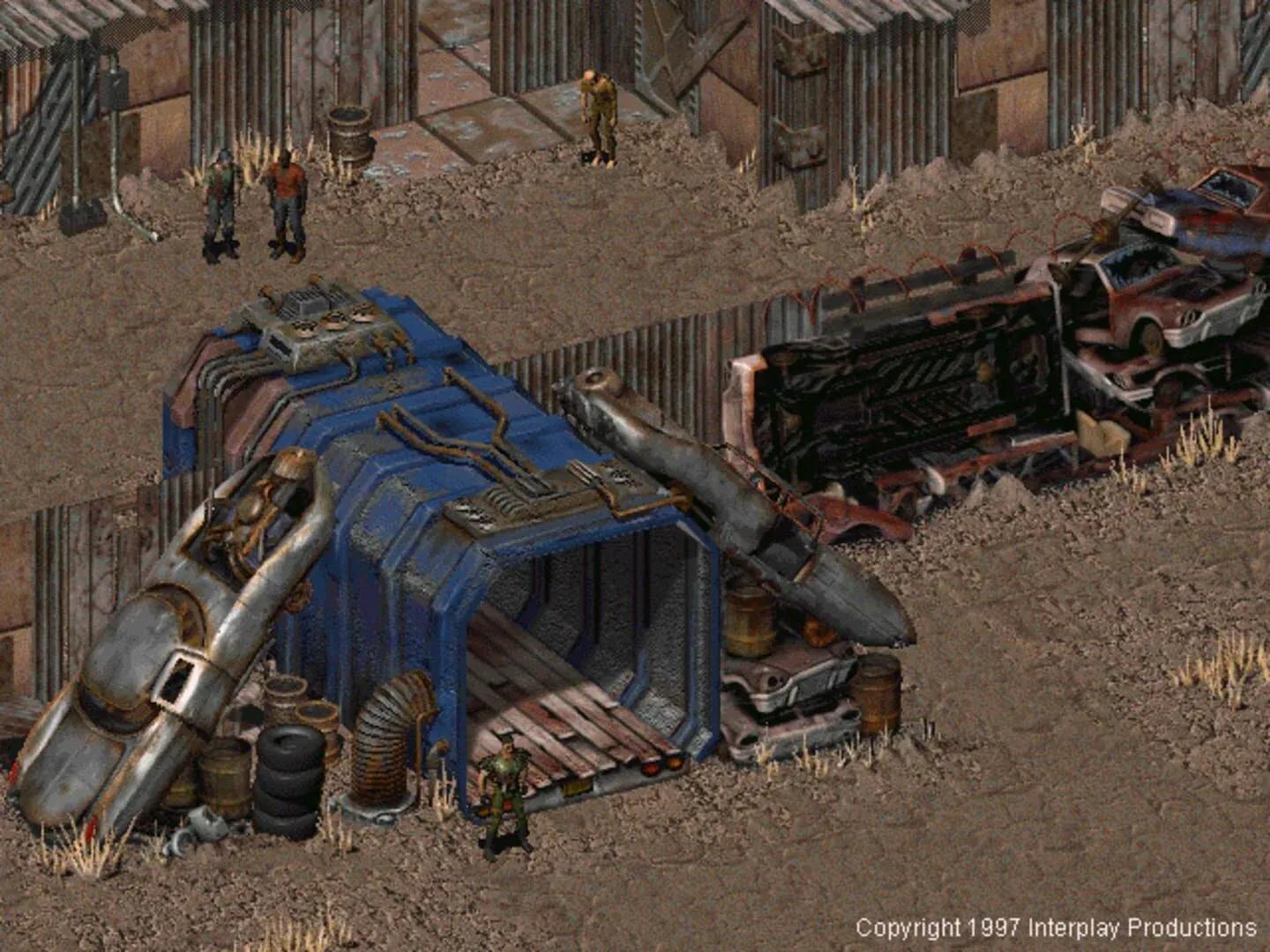
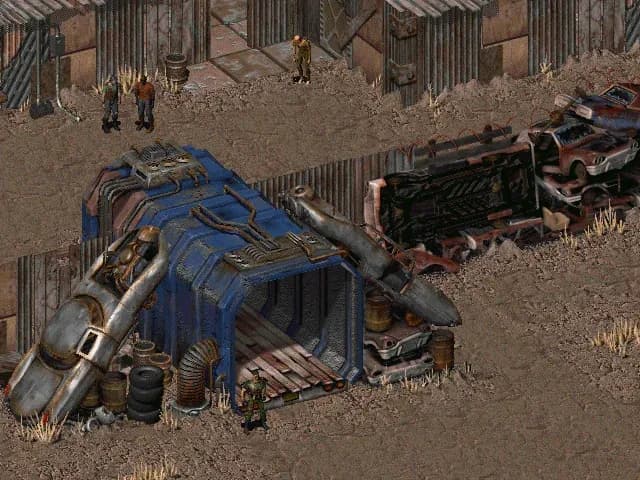
The setting draws from a timeline that diverged from ours after World War II, a world where nuclear-age aesthetics never gave way to modern technology. The result is a wasteland that feels both familiar and alien, with rusted 1950s Americana sitting alongside mutant encampments and pre-war military hardware.
Fallout: A Post Nuclear Role Playing Game content image
Gameplay and mechanics: how does Fallout actually play?
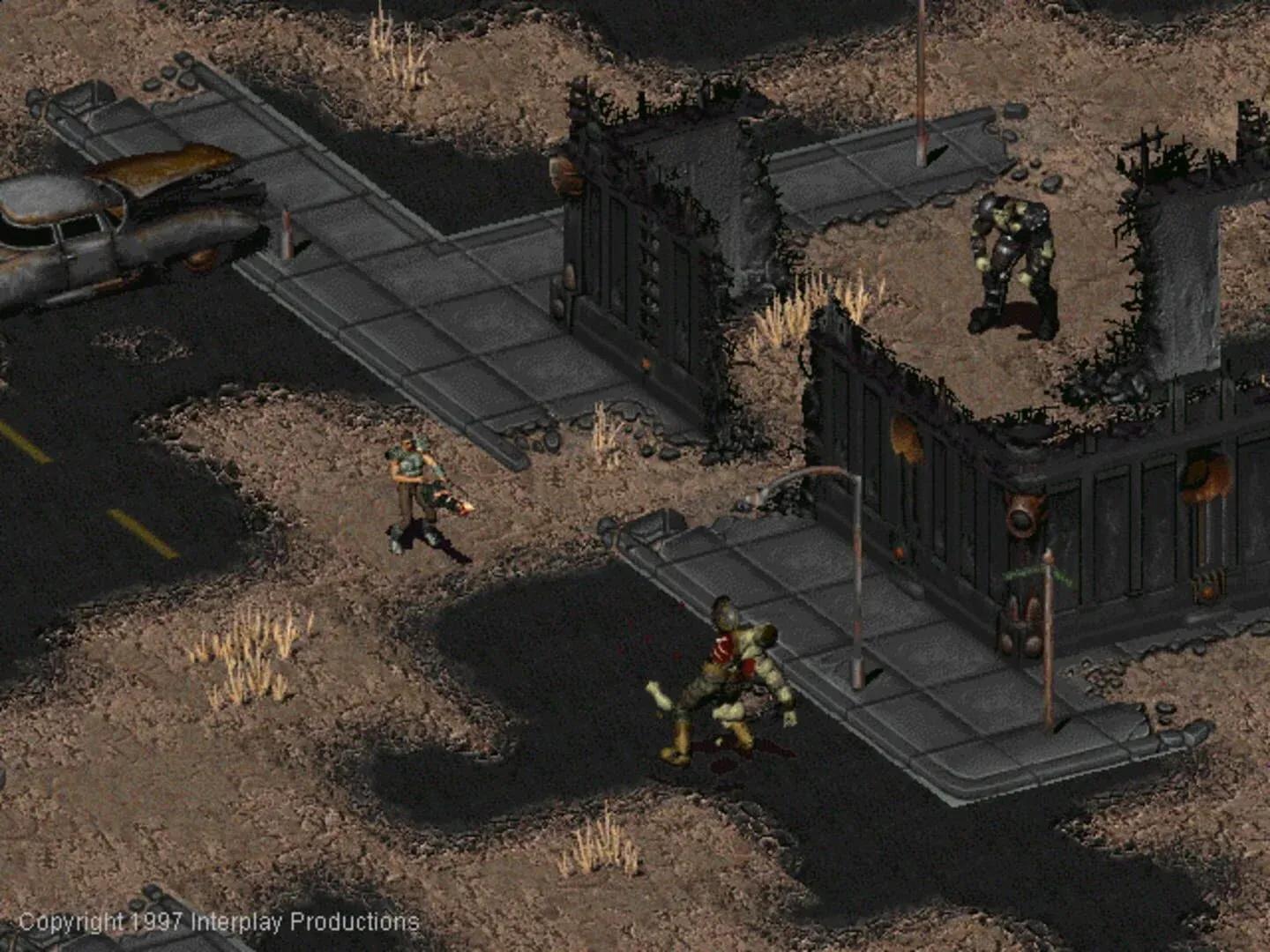
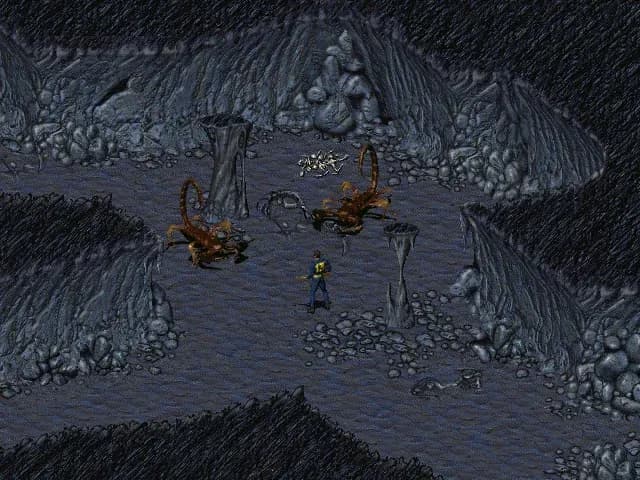
Fallout uses turn-based tactical combat built around an Action Point system. Each turn, you spend AP on movement, attacks, and special actions, with targeted shots letting you aim for specific body parts to cause different effects. Shooting an enemy in the legs slows them down. A well-placed eye shot can blind. The combat is deliberate and punishing on higher difficulties, rewarding preparation over reaction.
Fallout: A Post Nuclear Role Playing Game content image
Core mechanics that define the experience:
- SPECIAL stat allocation at character creation
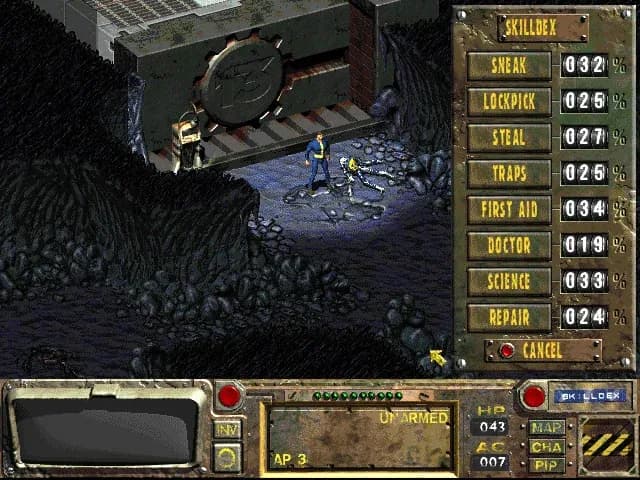
- Skill points spent across categories like Small Guns, Speech, and Lockpick
- Traits that give meaningful trade-offs at creation
- Perks earned every few levels with lasting effects
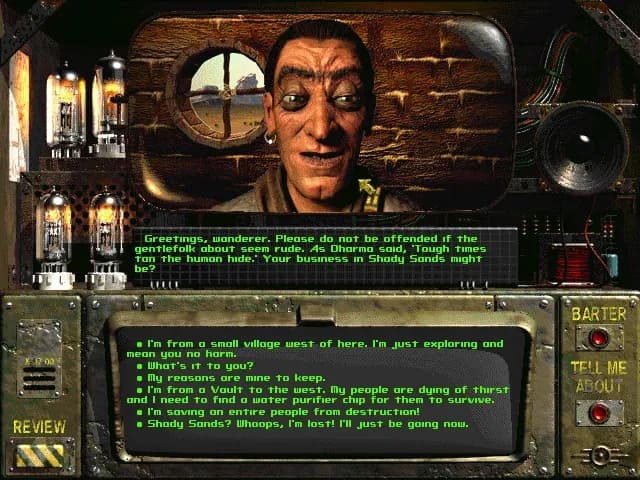
- Branching dialogue trees tied directly to character stats
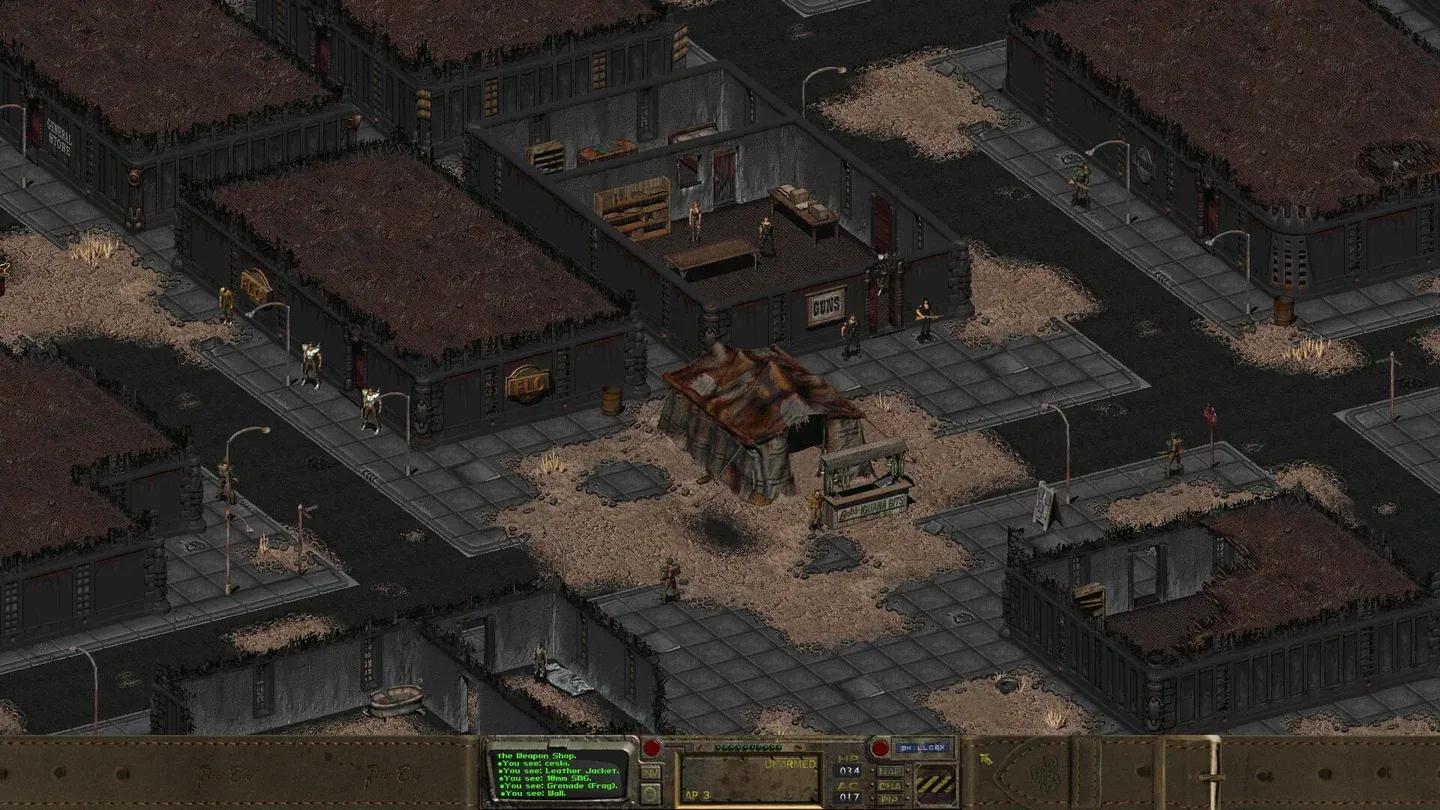
Outside of combat, the game is largely a conversation and exploration RPG. Settlements like Shady Sands and The Hub have their own factions, economies, and problems. How you handle them has consequences that ripple through the rest of the game.
Fallout: A Post Nuclear Role Playing Game content image
World and setting: the wasteland of 2161
The lore behind Fallout's world is one of the most carefully constructed in RPG history. The Resource Wars of 2052-2077, China's invasion of Alaska, the United States' annexation of Canada, and the eventual nuclear exchange on October 23, 2077 all happened in a timeline that diverged from ours decades earlier. That backstory isn't just flavor text; it explains why the wasteland looks the way it does, why certain factions exist, and why the vaults were built in the first place.
Fallout: A Post Nuclear Role Playing Game content image
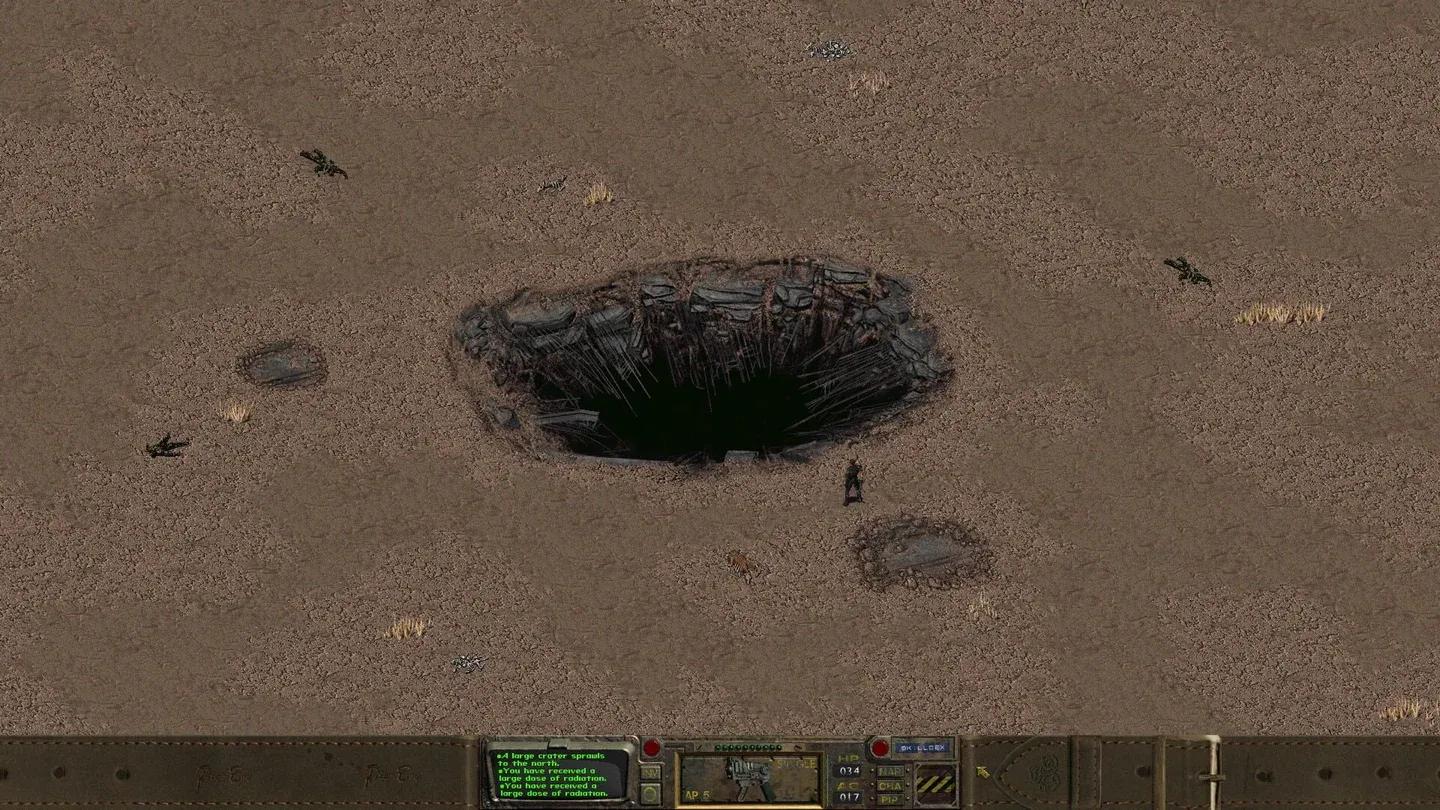
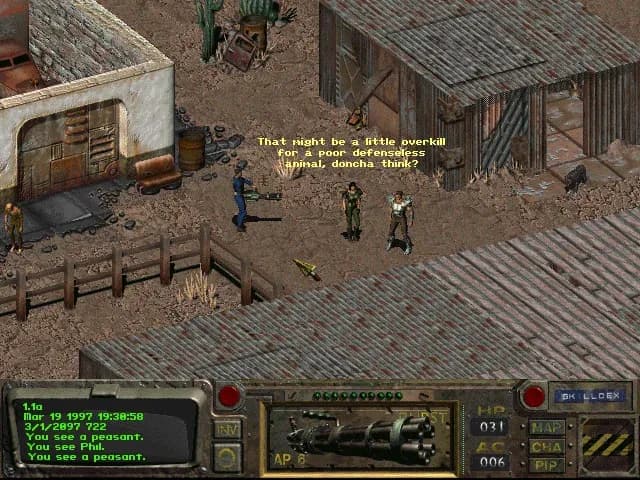
Vault 13 serves as your anchor point, but the world extends well beyond it. The Pip-Boy 2000 tracks your map, objectives, and inventory as you move between locations, with bottle caps functioning as currency across the wasteland's trading posts and settlements. The tone balances dark humor with genuine bleakness, a combination that became the franchise's signature.
Impact and legacy
Released originally in 1997 and now available on Steam for Windows and macOS, Fallout is frequently credited with revitalizing the CRPG genre at a time when it was losing ground to action games. The SPECIAL system influenced character-building in RPGs for years afterward, and the game's approach to player agency through dialogue and stat-driven outcomes set a standard that developers still reference. Playing it now makes clear why the franchise became what it did: the original game trusted players to engage with its systems seriously, and those systems delivered.