
Build counterattacking tactics in Football Manager 27 by defending compactly, keeping reliable attacking outlets, and using direct distribution against high presses. The aim is to give stronger opponents fewer openings while retaining a route towards their goal. A low block handles the defending; a forward who can hold the ball gives your attacks somewhere to start.
Your most useful tools include Press Less Aggressively, Go Long, and selected individual instructions. These serve different jobs, so build the defensive structure first, then adjust distribution and player behaviour to match what the opposition actually does.
When does a counterattacking approach make sense?
A compact counterattacking approach makes sense when stronger opponents press you high, leave space behind their defensive line, or repeatedly win possession during your short build-up. Go Long offers a way past that pressure, particularly when your attacking players can win physical contests and keep the ball until support arrives.
If you enjoy the tactical detail of simulation games, Press Less Aggressively presents a meaningful trade-off: your players protect their positions, but the opposition gets more time on the ball. That can suit an underdog better than chasing technically superior players around the pitch.
Before committing, check these match conditions:
- Opposition positioning: A high defensive line creates space for quicker attackers to exploit.
- Your build-up: Repeated losses in your defensive third strengthen the case for bypassing the press.
- Your outlet: A physically strong forward who can hold possession makes direct distribution more useful.
- Goalkeeper distribution: Good Kicking helps your goalkeeper find a useful recipient rather than surrender possession.
An opponent sitting deep presents a different problem. With less space behind them, you may need width, patient possession, or a change of attacking tempo rather than the same counterattacking approach throughout.
How do you choose a compact defensive formation?
Start with a shape that lets defenders and holding midfielders maintain their positions. Press Less Aggressively provides the relevant instruction package: a Low Block, reduced Trigger Press, and Regroup during the defensive transition. Regroup governs what happens after you lose possession, helping establish the defensive side of this approach.
Compare the compact defensive options
Football Manager 27 offers several ways to reduce the intensity of your defending. They make different compromises, especially with the ball.
| Tactical tweak | Main instruction changes | Useful situation | Main cost |
|---|---|---|---|
| Press Less Aggressively | Low Block, reduced Trigger Press, and Regroup | Maintaining a compact defensive unit against stronger opponents | Gives opponents more initiative and time in possession |
| Take a Breather | Mid Block, reduced Trigger Press, and lower Tempo | Short spells when condition is falling or the match has become frantic | Reduces pressure on the opposing ball carrier |
| Shut Up Shop | Very Defensive mentality, Low Block, Regroup, much lower Tempo, and much shorter passing | Protecting a narrow lead late in an important match | Substantially reduces your own attacking threat |
Use the Press Less Aggressively instruction package as your reference for compact defending. Shut Up Shop changes much more than pressing, including mentality, passing, and attacking patience. It is a late defensive commitment rather than a balanced starting point for getting forward.
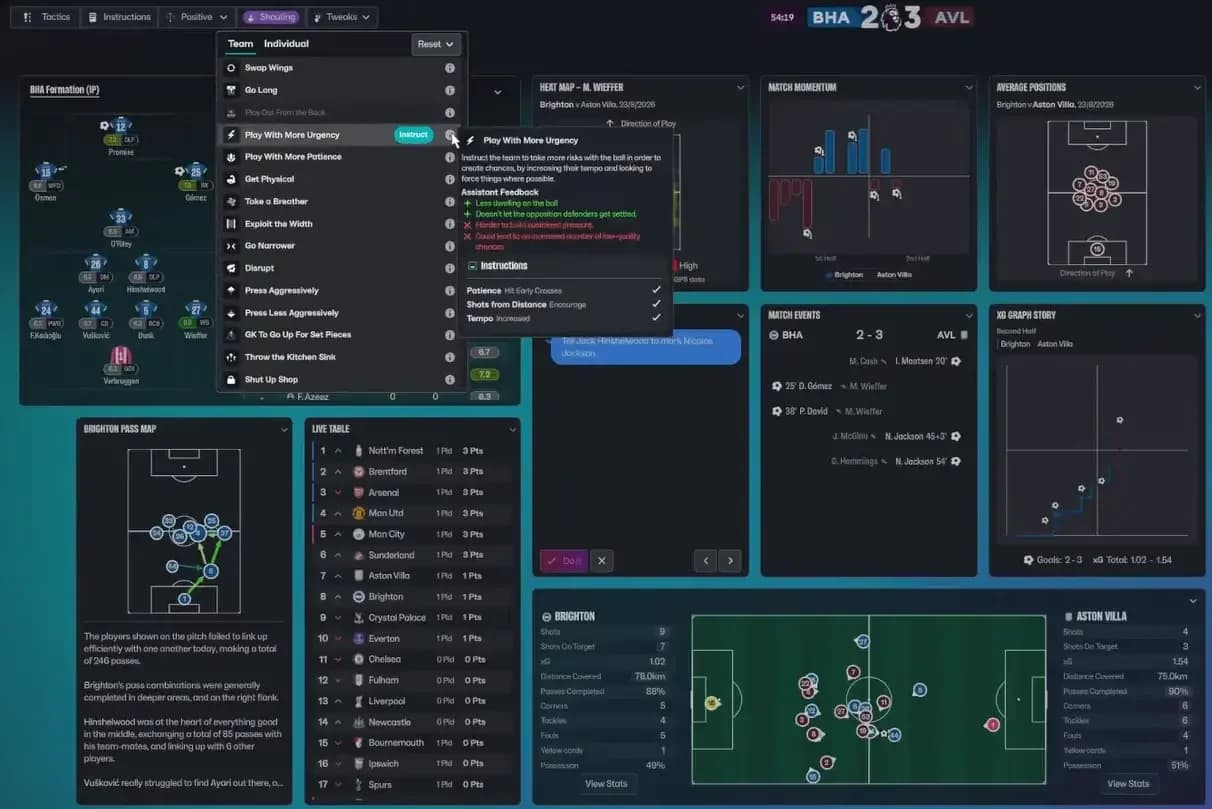
Build a disciplined low block
Which roles suit ball winners and attacking outlets?
Give each part of the team a clear job: hold the defensive structure, challenge for possession selectively, or provide the next attacking pass. A Target Forward is a useful outlet when they can win physical duels and retain the ball while fast wingers and supporting midfielders move forward.
Keep the defensive jobs distinct
A midfielder can take the more proactive ball-winning responsibility through Engage Your Opponent. This increases pressing, harder tackling, and tighter marking. It can help limit an influential opposition creator, but it also asks your player to leave their position more readily.
Be more cautious with centre-backs. Drawing one out to engage can compromise the defensive structure you are trying to preserve. Stick to the Plan encourages a player to follow their tactical position, making it a useful option when positional discipline matters more than creative movement.
Use these player profiles to divide the work:
| Player or area | Useful qualities or behaviour | Relevant adjustment |
|---|---|---|
| Midfielder engaging a creator | Capacity to challenge the opponent without abandoning the team's balance | Engage Your Opponent increases pressing, tackling, and marking intensity |
| Defender protecting the shape | Positioning, Concentration, Tackling, and Anticipation | Stick to the Plan reinforces tactical positioning |
| Central attacking outlet | Physical strength and the ability to hold up the ball | A Target Forward can retain direct deliveries until support arrives |
| Wingers and supporting midfielders | Pace to move forward around the outlet | Support the forward once they secure possession |
| Player repeatedly losing possession | Simpler passing and fewer speculative decisions | Keep It Simple reduces passing risk and shooting frequency |
Protect possession before adding creativity
Keep It Simple is useful when one player repeatedly wastes the ball. It encourages shorter passing, fewer risks, and fewer shots. The compromise is reduced forward progression, so apply it to the player causing the problem rather than expecting it to improve every attacking situation.
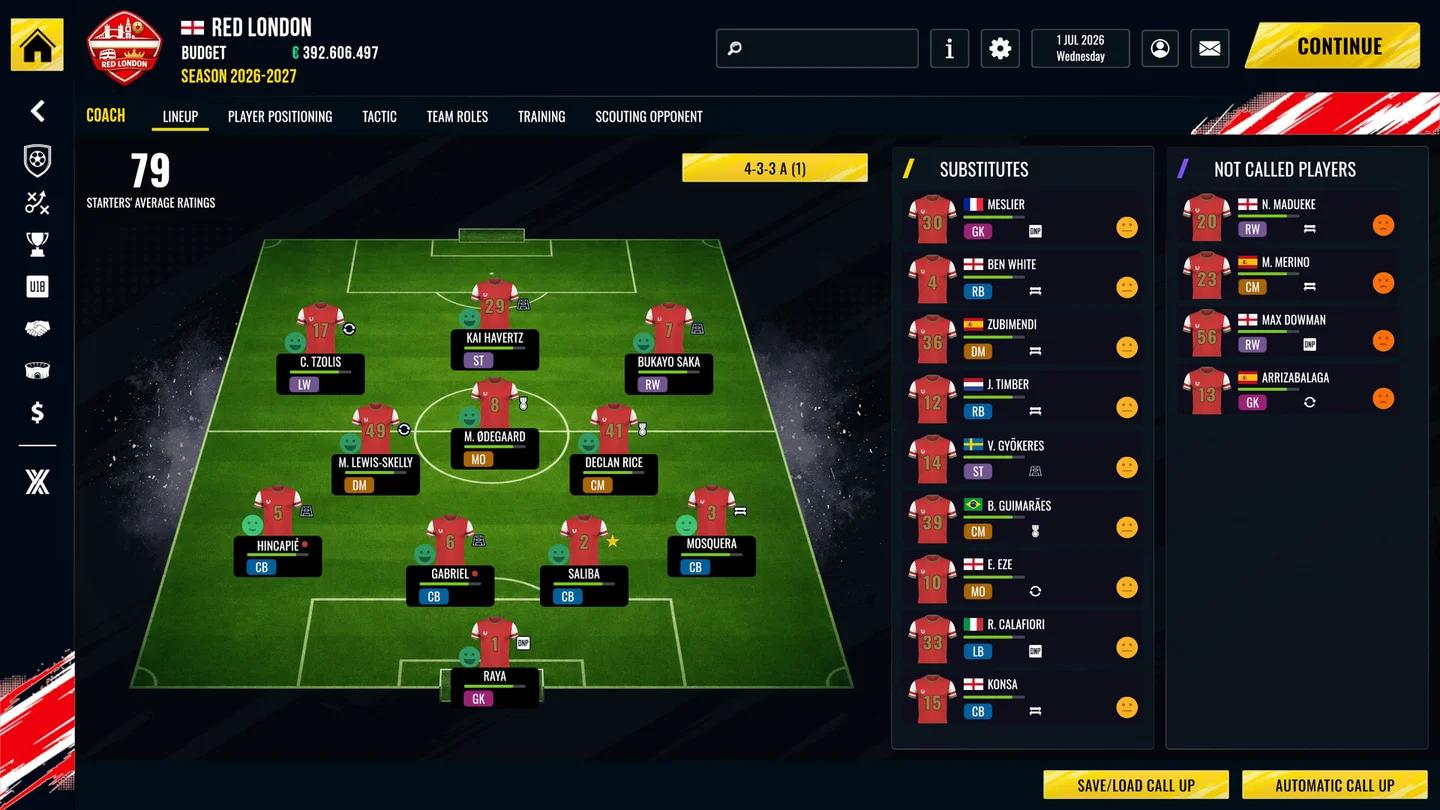
Give possession a safer route
At the attacking end, Make Something Happen increases passing directness, passing risk, and shooting frequency. Reserve that freedom for players with the Vision, technique, and creativity to justify it. More ambitious decisions also mean more opportunities to lose possession.
How do you turn regained possession into chances?
A successful defensive stand needs a usable next action. Go Long changes goal kicks to long distribution and the Build-Up Strategy to Bypass Press. Against a high press, it can move the ball towards your attacking players without requiring your defenders to complete short combinations under pressure.
Give direct distribution a recipient
The strongest version of Go Long pairs a goalkeeper with good Kicking and an attacker who can contest the delivery. A tall Target Forward can hold the ball while quicker wingers and supporting midfielders advance. That provides a route for turning direct distribution into a supported attack.
The cost is reduced ball retention. If the forward cannot win the contest or hold possession, Go Long can hand the ball straight back. Judge it by whether your attacking outlet receives useful service, not simply by how far the goalkeeper sends the ball.
Use short build-up when the pressure allows it
Play Out From the Back switches to short goal kicks and Play Through Press. It can suit situations where the opposition gives your defenders time and space, but it demands composed, technically capable players. Passing, Composure, and Anticipation matter for both the goalkeeper and centre-backs when playing through pressure.
Use the Average Position and Pass Map views to assess the opponent's structure and your passing routes. A high press supports the case for bypassing pressure; an opponent allowing an easy short exit gives you a reason to reconsider Go Long.
How do you balance defensive security with attacking support?
Selective engagement is safer than asking every player to charge at the ball. Engage Your Opponent can restrict a dangerous creator, but opponents with strong Dribbling, Agility, Acceleration, and Balance may escape that challenge. Consider the matchup before increasing an individual player's aggression.
Adjust the player who creates the risk
Ease Off reduces pressing and encourages more cautious tackling. It is particularly useful for a booked defender or a player being drawn out of position. The price is straightforward: their opponent gets more time to use the ball.
If the whole team is tiring, Take a Breather lowers pressing and tempo while adopting a Mid Block. Use it in spells of around 10 to 15 minutes, then reassess condition and the match situation. It conserves energy, but also gives the opposition more freedom in possession.
Separate protecting a lead from chasing a goal
For a narrow lead late in the match, Shut Up Shop is the more defensive option. Reserve it for situations where protecting the result outweighs creating further chances, particularly around the 85th minute and beyond. Its Very Defensive mentality and much shorter passing materially change your attacking approach.
Throw the Kitchen Sink makes the opposite commitment. It changes 11 team instructions, including Very Attacking mentality, much higher Tempo, much more direct passing, and aggressive pressing. That is an emergency response for the closing stages, especially the final 10 minutes when another conceded goal matters less than finding an equaliser.
What should you change against opponents who sit deep?
A deep, compact opponent removes much of the space your counterattack wants to exploit. Start by checking Average Position and Pass Map: are the flanks available, is central progression blocked, or are your players already reaching useful positions but rushing their final decisions?
Change the route before forcing more attacks
Exploit the Width widens your attacking shape and directs progression down both flanks. It suits narrow opposition structures, especially when your wingers have an advantage over their markers through pace, Dribbling, Flair, or Agility.
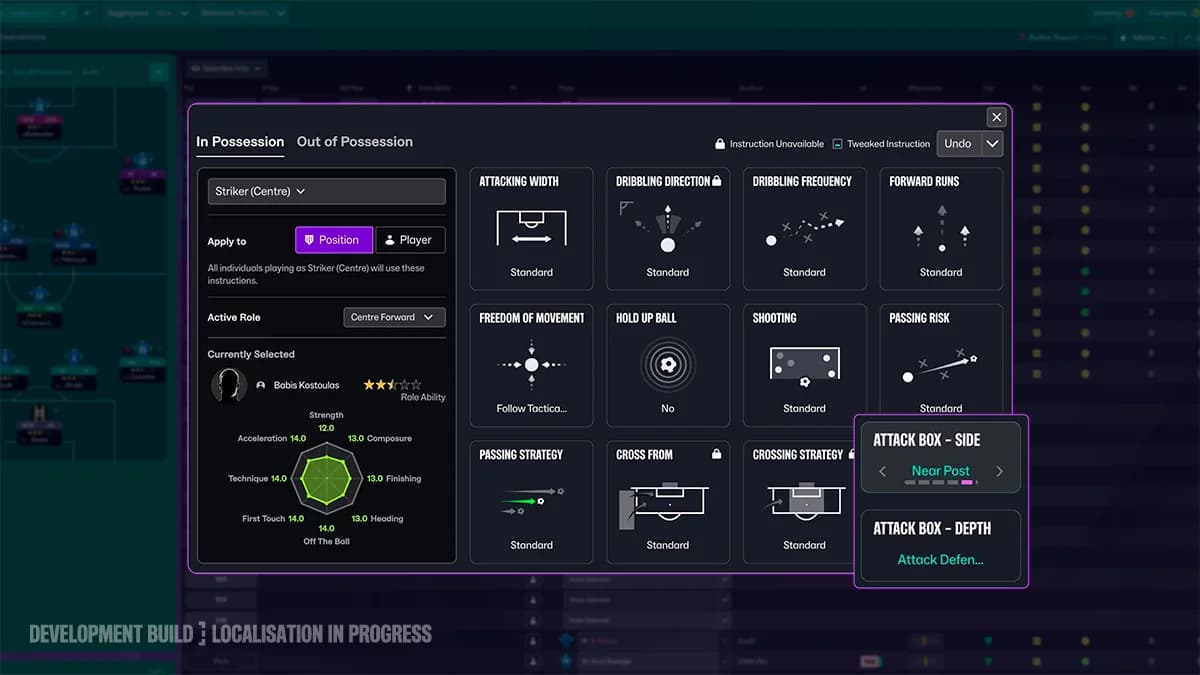
Stretch a narrow defensive block
Go Narrower offers the alternative when your strongest players operate centrally and wide attacks are struggling. It brings players closer together and focuses progression through the middle. Technical quality, Vision, ball control, and Flair help, although concentrating play centrally can also congest that space.
For the wider tactical planning around this setup, the Football Manager 27 guides hub gives you a place to choose your next topic. Keep the immediate decision focused on the opponent's shape: width should answer a narrow block, while central combinations should serve players capable of finding openings there.
Choose patience or urgency for a specific reason
Play With More Patience lowers Tempo, encourages Work Ball Into Box, and discourages shots from distance. It suits attacks that need better shot selection and more controlled possession. Expect fewer chances, with the added drawback that opponents have more time to recover their defensive shape.
Play With More Urgency raises Tempo and adds early crosses and distance shooting. It can change a stagnant spell, but rushed decisions and lower-quality attempts are part of the bargain. A 10-to-15-minute spell is a more measured response than immediately committing to an all-out attack.
Keep the counterattacking plan while the opponent leaves space for it. Against a deep block, change the route or tempo that is failing. When protecting a late lead, prioritise compactness. Go Long, Play With More Patience, and Shut Up Shop solve different problems, so choose the one that matches the next passage of play.