

Follow these Football Manager 27 beginner tips to succeed by auditing your squad, setting manageable tactics, delegating tasks to staff, and prioritizing recruitment needs before your first competitive match.
Your first week should produce a usable starting lineup, a short list of squad gaps, and a plan for the opening friendlies. You do not need to control every part of the club immediately. Staff delegation, Tactical Effectiveness feedback, and the in-game tutorials let you learn one management task at a time.
Choose a club that matches your experience
Select Quick Start Career for a straightforward first save. You choose the club, and the game builds a suitable game world around that choice. Use Advanced Setup Career when you want more control over the database, playable leagues, and starting conditions.
A club you already follow is a practical first choice because you will recognize its players and their usual positions. You can spend more attention learning the management systems instead of learning an unfamiliar squad at the same time.
FC Bayern and PSV are reasonable alternatives if you want an established, strong starting team. Their squad strength makes them useful learning options, but still read the club's expectations before deciding what counts as a successful season.
Give your manager useful credentials
Your manager's playing and non-playing background affects their starting reputation and abilities. Choose stronger credentials for your first career if your priority is learning club management. A low-reputation character adds another challenge before you have learned the tactical and recruitment systems.
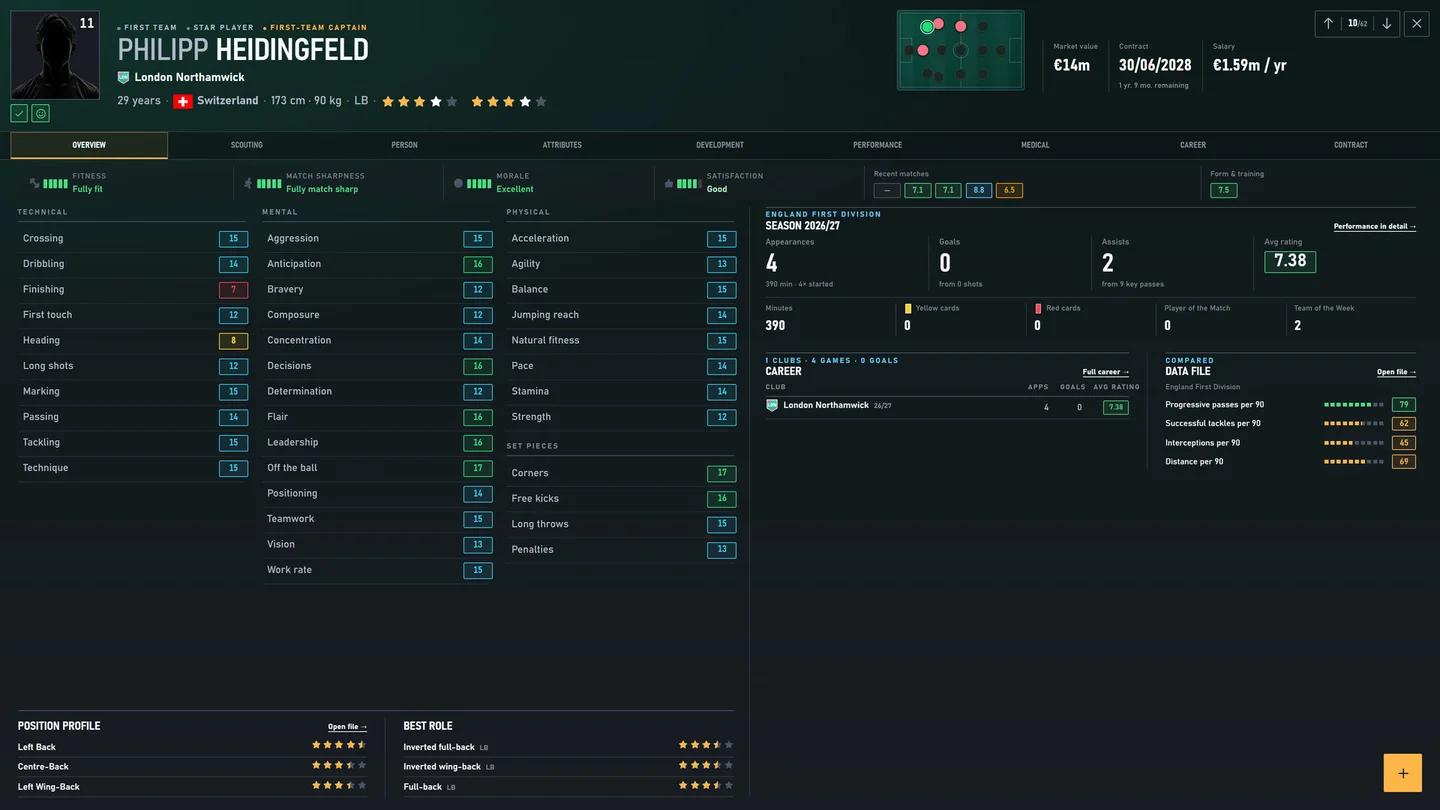
Choose your first career setup
Review expectations, finances, and squad strength
Read the board's expectations before making promises about your first season. Record the targets you are expected to meet, then compare them with the squad and spending room you actually have.
Use this opening audit before approving transfers:
| Check | What to record | Decision it supports |
|---|---|---|
| Board expectations | The club's stated objectives | What your first season needs to achieve |
| Transfer budget | The amount available for new signings | Which recruitment needs you can afford to address |
| Position coverage | Your likely starter and alternative in each position | Where an injury would leave you short |
| Squad strengths | The players and positions your initial lineup can rely on | Which tactical approaches deserve consideration |
Build a provisional lineup from the existing squad. Leave it provisional until you have checked tactical fit and watched players in friendlies.
A position with only one usable option deserves attention even when that starter is strong. Recruitment can provide cover for a shortage; it does not have to replace one of your best players. Keep that distinction in your notes before browsing attractive targets in positions you already cover.
Assess your players before choosing a tactic
Start with a familiar formation that fits your players. A 4-3-3 is a reasonable option when the squad supports it, but the formation's popularity is not a reason to force players into unsuitable jobs.
Use the game's tactical recommendations as a starting point, then inspect Tactical Effectiveness. Its gauges appear across the tactics, training, and recruitment sections and assess four areas of your setup.
| Tactical Effectiveness area | What it assesses | Useful first response |
|---|---|---|
| Tactical understanding | How well players understand the approach | Give the setup time and attention in training |
| Player ability | Whether players can deliver its demands | Adjust the demands or identify a suitable signing |
| Player buy-in | How committed players are to the approach | Review this feedback before treating every problem as a formation issue |
| Information about the next opponent | Your knowledge of the upcoming opposition | Review opponent preparation before the fixture |
Keep the initial instructions manageable
Tactical complexity considers instructions for the team, individual players, and the opposition. Adding instructions increases what your squad must carry out; it does not automatically improve the plan.
Begin with a small set of instructions you can explain. For each one, identify the behavior you want and the players expected to deliver it. Remove instructions you selected only because they sounded useful.
Avoid replacing the entire setup between every friendly. A stable starting approach lets you compare players within the same system, while repeated tactical changes make those comparisons harder.
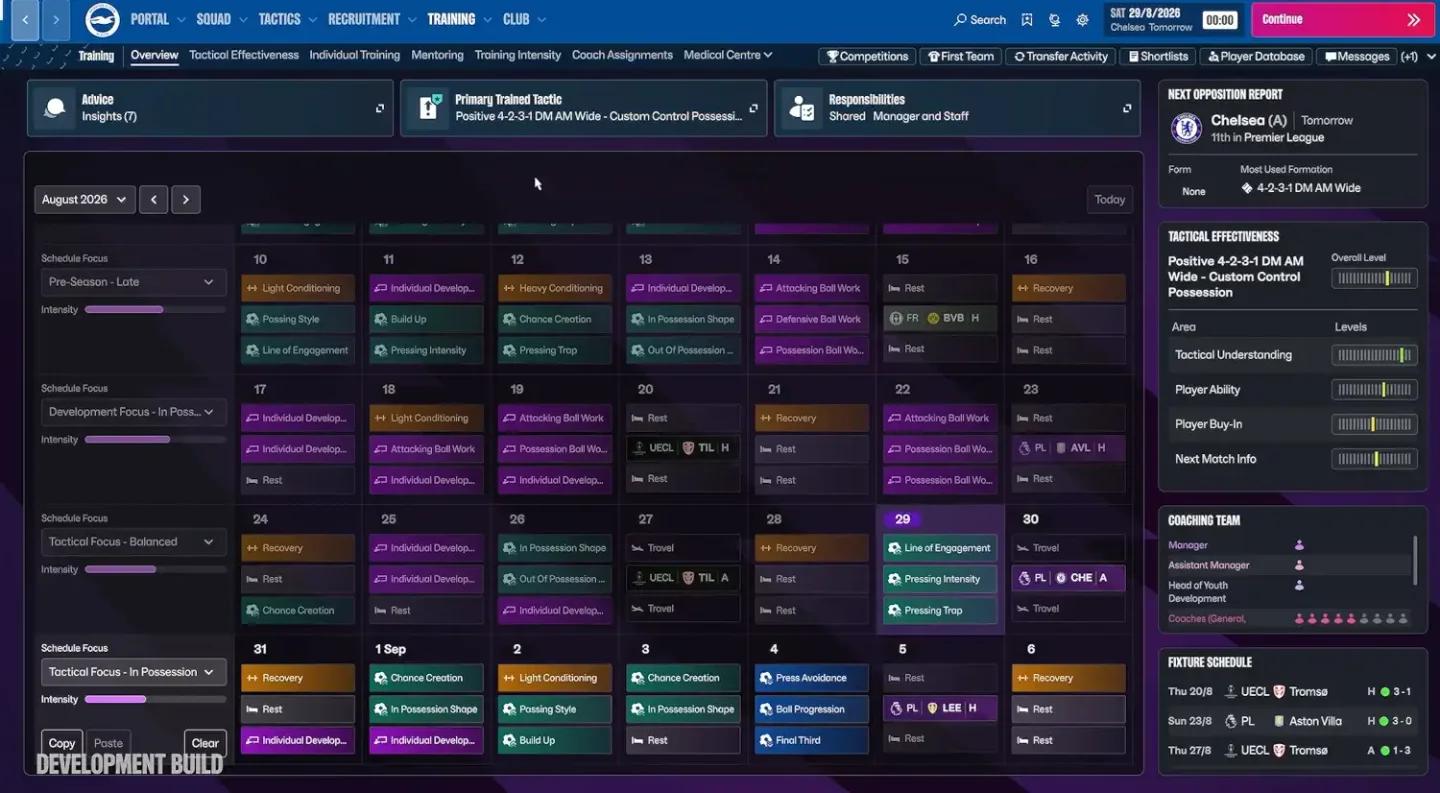
Check the fit before adding detail
Decide which responsibilities to delegate
If the workload of management simulation games feels overwhelming, start by delegating training while you learn tactics and team selection. Football Manager 27 lets you hand tasks to staff instead of managing every area yourself.
Open Club, then select Responsibilities. Review the assignments and choose the tasks you want to handle. The Delegate All to Recommend option lets the game assign responsibilities to recommended staff members.
For a manageable first save:
- Keep tactics and team selection if your immediate goal is learning how the squad performs on the pitch.
- Keep recruitment under your control if identifying and buying players is the part you want to learn first.
- Delegate training if designing schedules would distract from those priorities.
Read the training feedback even when staff handle the schedule. Delegation removes the need to arrange every session, but workload and tactical preparation still affect the team you select.
Use the in-game tutorials when you take control of an unfamiliar area. There is no need to learn training, recruitment, and match management in the same session.
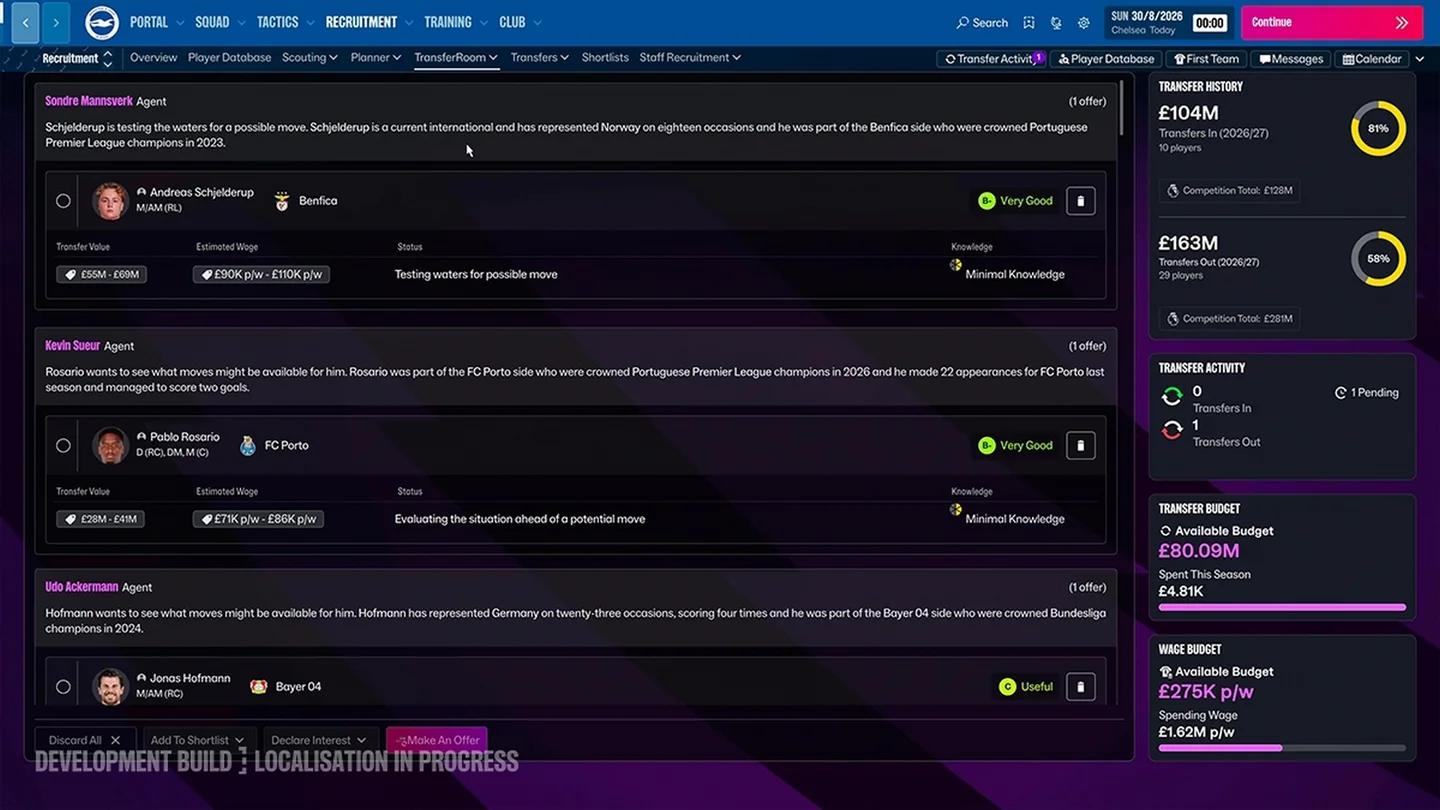
Set a manageable staff workload
Identify your most urgent recruitment needs
Open Recruitment after completing the squad audit. This section includes Recruitment Focus, Scouting Range, and Scouting Budget, so establish what you are searching for before expanding the search.
Rank your needs in this order:
- Uncovered positions. Find alternatives where an injury would leave you without a suitable option.
- Tactical mismatches. Identify positions where the current players cannot comfortably deliver your chosen approach.
- Longer-term development. Search for high-potential young players after the immediate squad has a recruitment plan.
This order is a first-week recommendation, not a requirement to buy three players. A well-covered squad may need observation more than immediate spending.
Compare tactical fit as well as attributes
Scouting reports include Tactical Effectiveness information. A player with attractive technical attributes may fit your system less comfortably than another candidate with lower ratings in some areas.
Compare candidates against the actual vacancy: the position, the demands of your tactic, and the budget you recorded. For an immediate starter, give tactical fit serious weight. For a development signing, consider whether you can accommodate the time needed to learn the approach.
Keep scouting focused on those needs. Do not let a search for promising youngsters replace the search for a position your current lineup cannot cover.
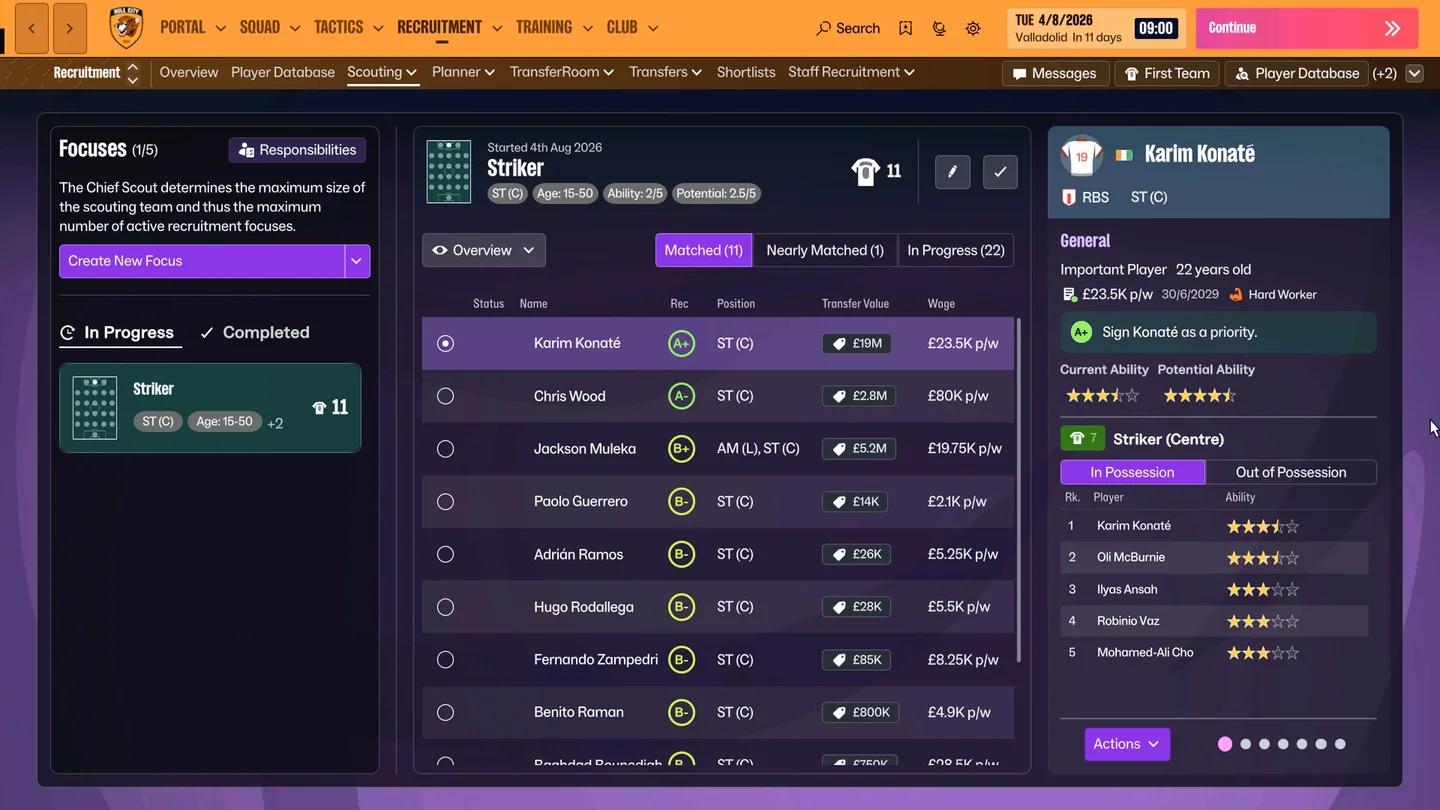
Scout for the gaps you identified
Use early matches to evaluate your plan
Pre-season gives you training time and lower-stakes friendlies before competitive fixtures. Use both to answer questions about the squad instead of judging the entire plan by the first result.
Prepare the squad without exhausting it
Open Training to review the schedule and player workloads over the coming weeks. Football Manager 27 gives training its own main-menu section and supports copying schedules.
Senior training emphasizes match preparation, team chemistry, and learning tactics. Youth training places more attention on individual development. For your opening fixtures, concentrate on whether the senior squad is preparing to perform the approach you selected.
The default schedule is a reasonable starting point. Avoid increasing intensity simply because the season has not started. Rotate players during friendlies so your first-choice lineup does not carry every match's workload.
Watch enough football to diagnose a problem
Watch portions of your early matches instead of only advancing to the result. You do not need to watch 90 minutes in real time to compare how different players handle the same tactical demands.
Give each friendly a specific question:
- Does the starting lineup suit the chosen formation?
- Can the alternative players cover the positions identified in your audit?
- Does a tactical problem return when different players perform the same job?
Use Tactical Tweaks when you want to respond from the touchline without navigating several tactical menus. Each tweak applies multiple tactical changes through a single button. Treat it as a package of adjustments, not as one isolated instruction, when judging what changed on the pitch.
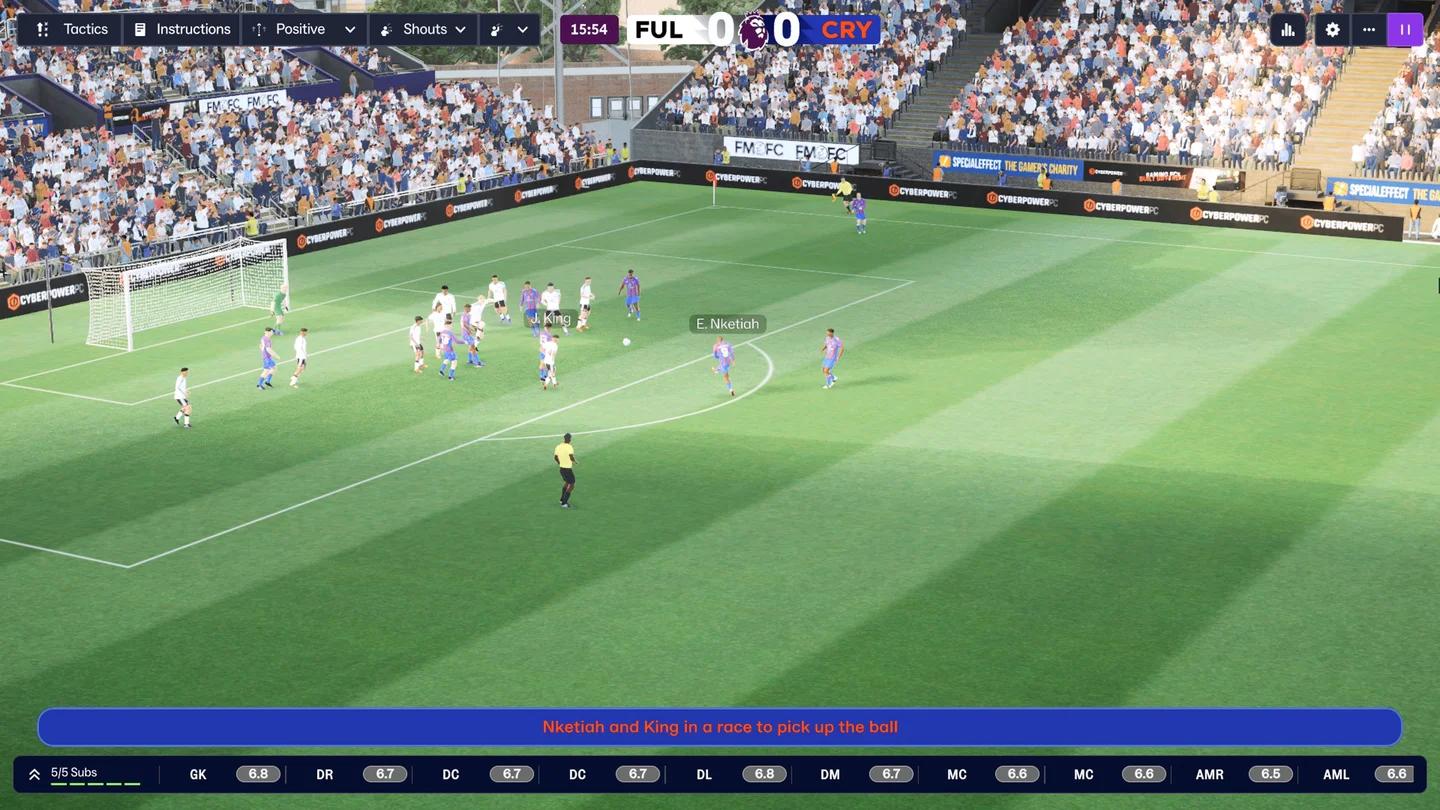
Respond through touchline controls
A defeat can happen even when your decisions were sound. Keep a workable base tactic long enough to compare performances, and make the next change in response to a repeated problem, not the score alone.