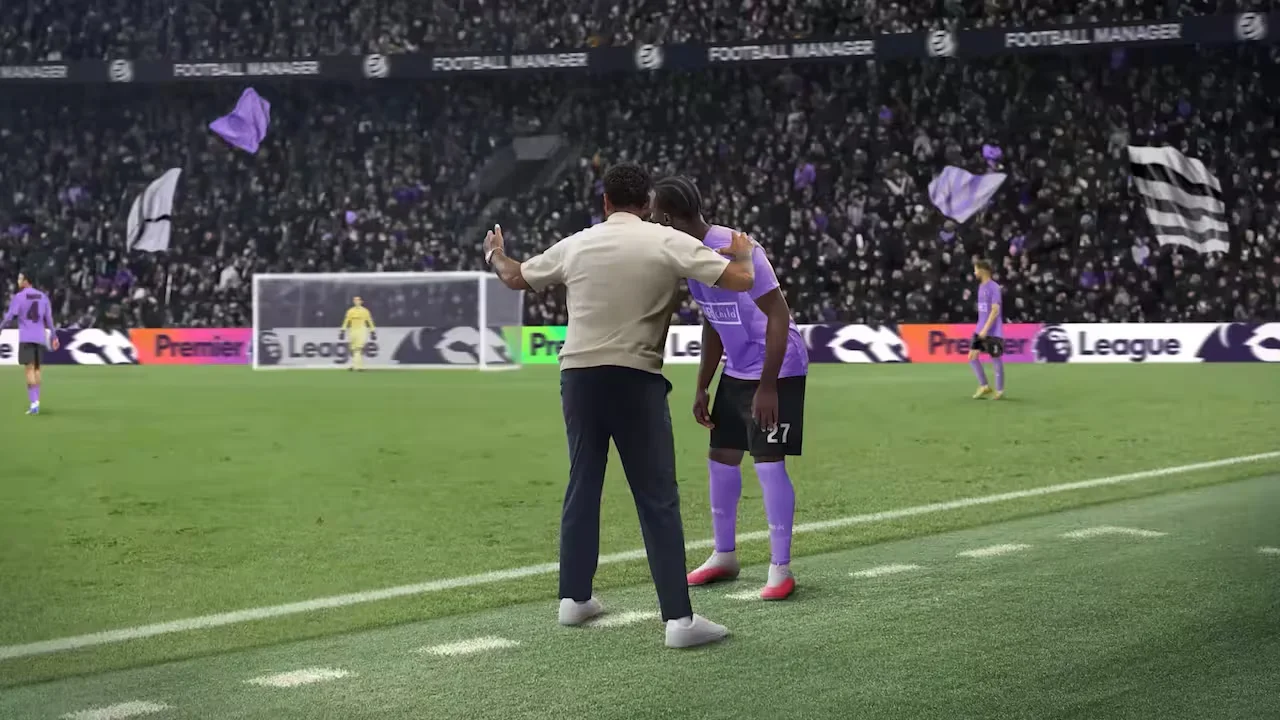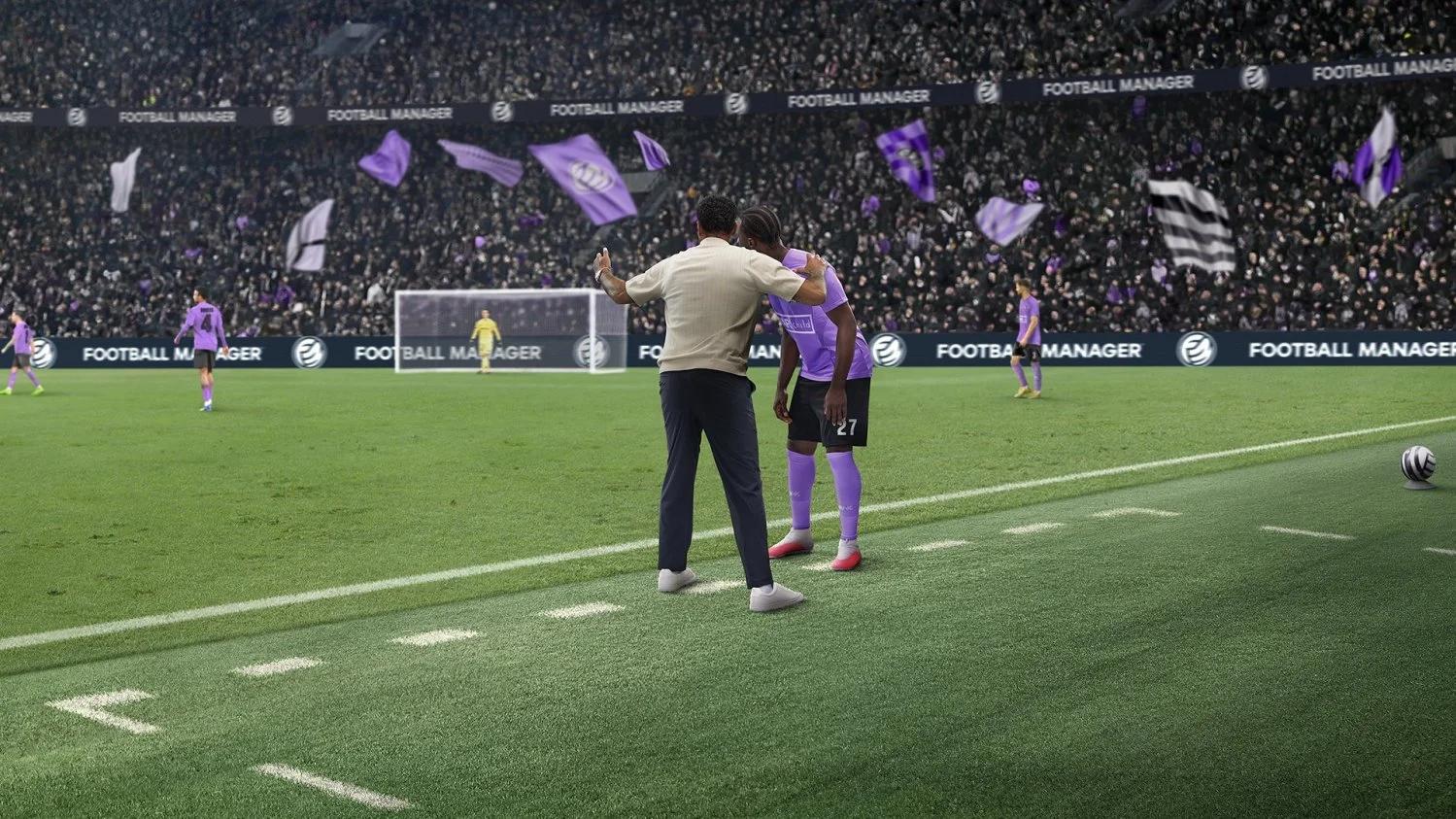

In Football Manager 27 Training, effectively develop players by balancing their individual workload with specific tactical goals, ensuring the team is physically prepared before adding new, demanding training sessions.
Build your plan around two questions: what must the squad execute in its next match, and what must each player learn for their intended job? Keep those answers separate when choosing sessions. A collective pressing problem and a prospect learning a new position call for different work, even when both appear in the same weekly plan.
Understand team and individual training
Open Training from the primary navigation bar. Its redesigned interface lets you copy and paste plans, while visual indicators show the physical demands of your schedule beyond the current week.
Senior training puts greater emphasis on match preparation, team cohesion, and tactical understanding. The previous Units system has been replaced with options focused on executing your tactical plan against the next opponent. Individual training remains available for personal development.
| Training approach | Main purpose | When to prioritize it |
|---|---|---|
| Senior team training | Prepare collective tactical behavior and shared understanding | The squad needs to improve how it executes your approach |
| Individual training | Develop attributes, learn traits, and learn positions | A player needs specific work for their intended job |
| Youth team training | Place greater emphasis on individual skills and development | You are planning a prospect’s longer-term progression |
Team training and individual training solve different problems. Use collective sessions for coordinated behavior, then personal instructions for the player-specific improvements your system needs.
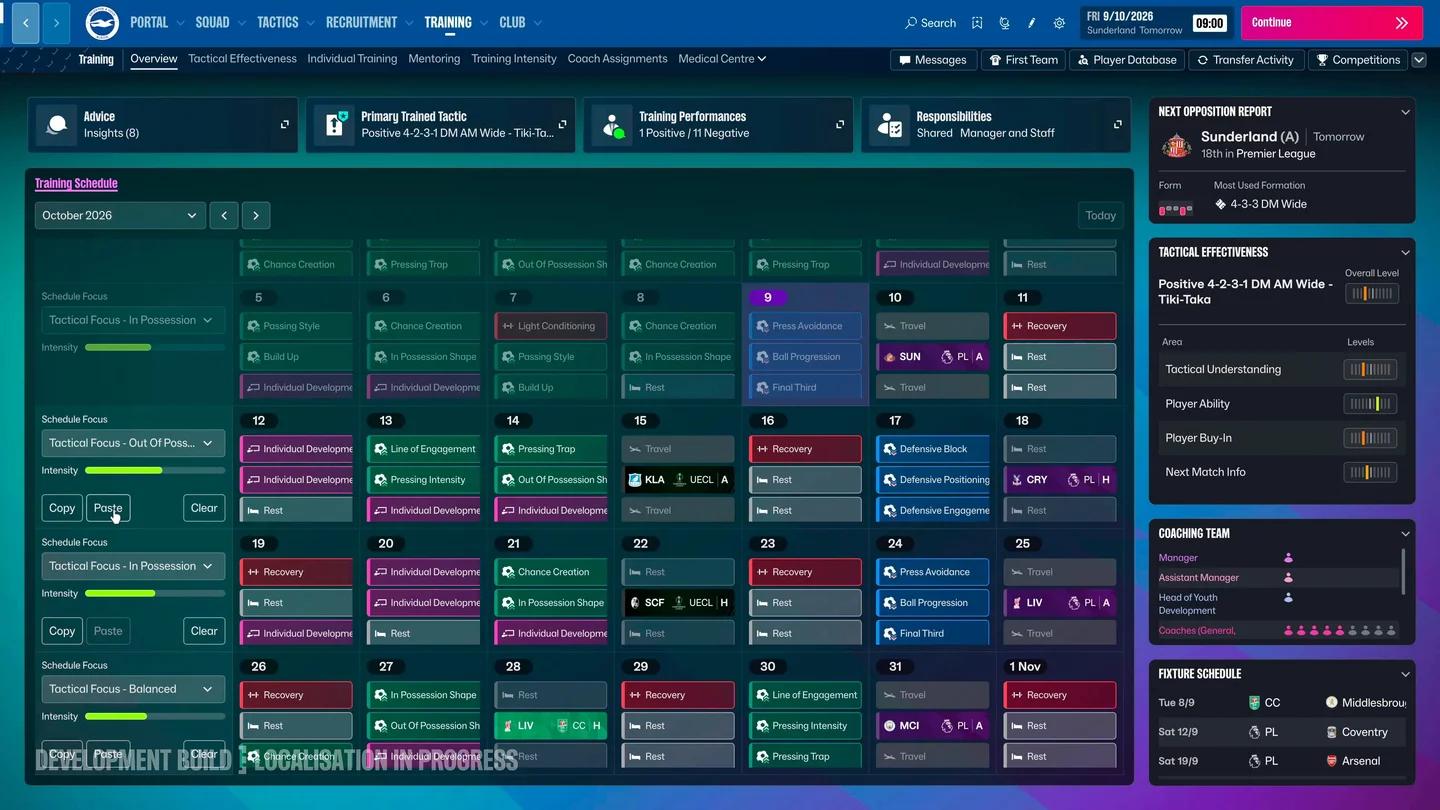
Build the week around your tactic

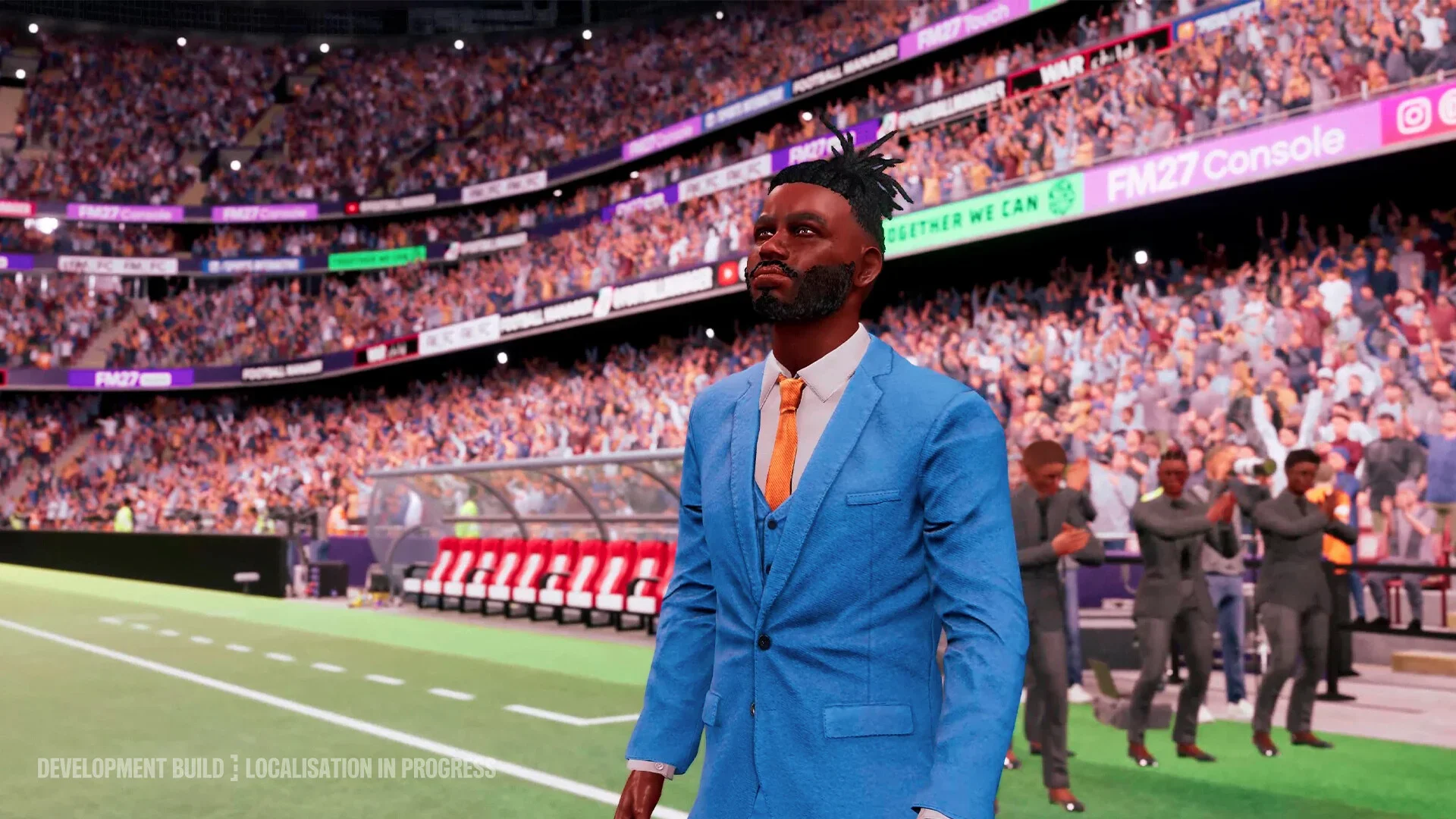
Match training priorities to your tactics
Diagnose the weak part of your plan
Tactical Effectiveness builds on Tactical Familiarity through four connected areas. Gauges in Tactics, Training, and Recruitment help you judge how comfortably the squad can execute your instructions.
Approach this as a diagnosis task in simulation games: identify the problem before changing the schedule. A lack of understanding calls for a different response from a shortage of suitable ability.
| Tactical Effectiveness area | What it represents | Decision to make |
|---|---|---|
| Tactical Understanding | How well the squad understands your instructions | Choose sessions that rehearse the relevant tactical behavior |
| Player Ability | Whether players have the qualities to execute the approach | Reconsider the demands or look for players better suited to them |
| Player Buy-In | The squad’s commitment to your approach | Review your management of the squad alongside its training |
| Next Match Information | Preparation and knowledge concerning the next opponent | Check opposition information before choosing match-preparation priorities |
Choose sessions around a specific football problem. Pressing work suits a team you want to press high, build-up work addresses that phase of possession, and low-block preparation supports a deeper defensive approach. Avoid choosing pressing sessions simply because an aggressive style looks attractive when your actual plan is to defend deeper.
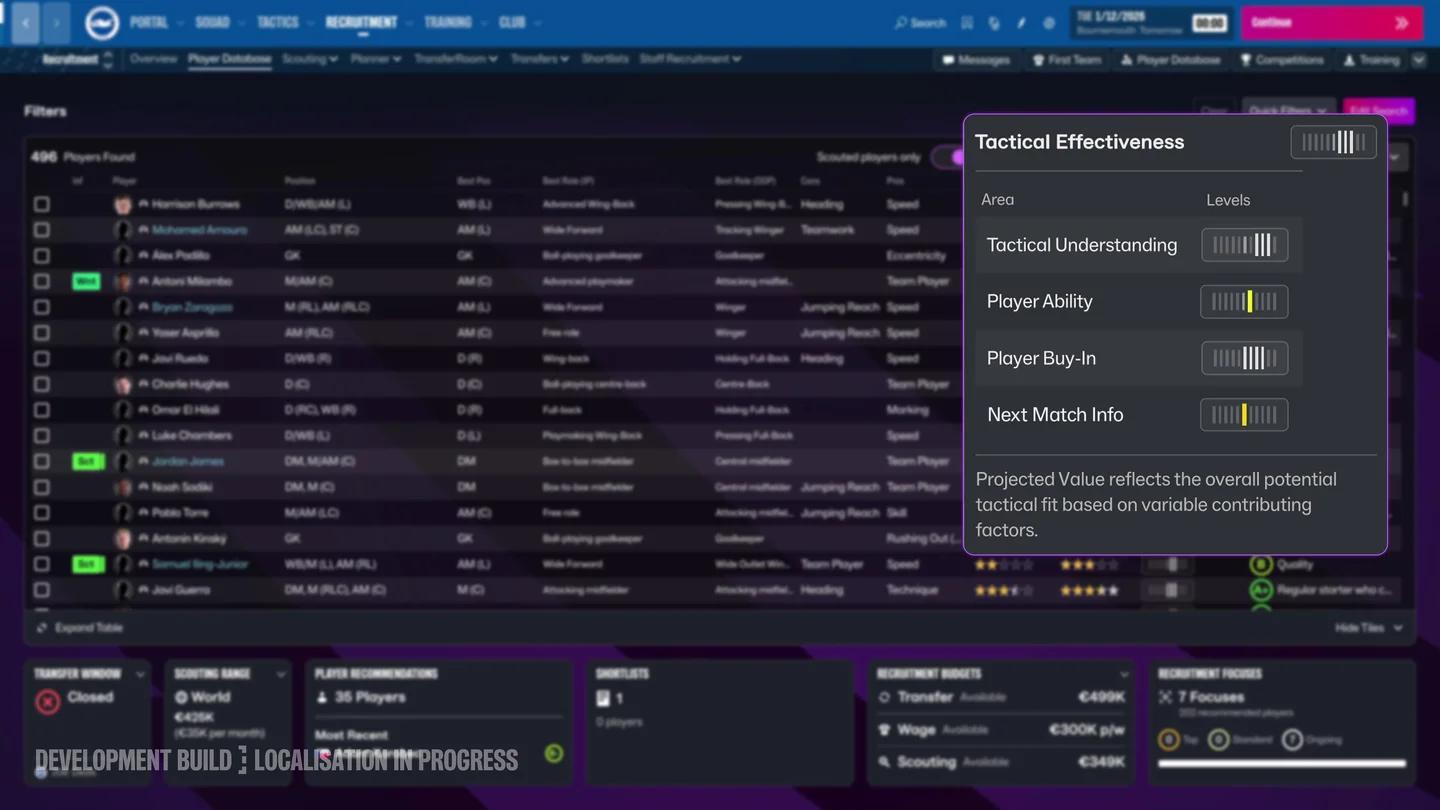
Find the cause before adding work
Keep tactical complexity within reach
Tactical Complexity reflects your positions and the volume of team, player, and opposition instructions. Review all of those layers before deciding that the squad simply needs more training.
A simpler approach can become effective sooner but has more limited potential. A complex system takes longer to learn and can offer a higher long-term ceiling. Choose simplicity when you need an approach the current squad can carry out immediately; add detail gradually when you can commit to teaching it.
Develop players for their intended positions
Give individual work a clear purpose
Personal training instructions can improve attributes and help players learn new traits and positions. Start with the job you want the player to perform, then choose development work that supports it.
Use this sequence:
- Choose the intended position. Decide where the player fits in your tactical plan before assigning personal work.
- Compare their current attributes with that job’s demands. Separate an attribute weakness from a need to learn the position or understand the wider system.
- Choose the relevant individual training instruction. Keep the objective specific enough to review later.
- Check that their team preparation supports the same intended use.
For a player moving into a new position, ask two separate questions: can they perform the individual job, and can they perform it within this team? Positional development does not replace the collective rehearsal needed for your pressing or build-up structure.
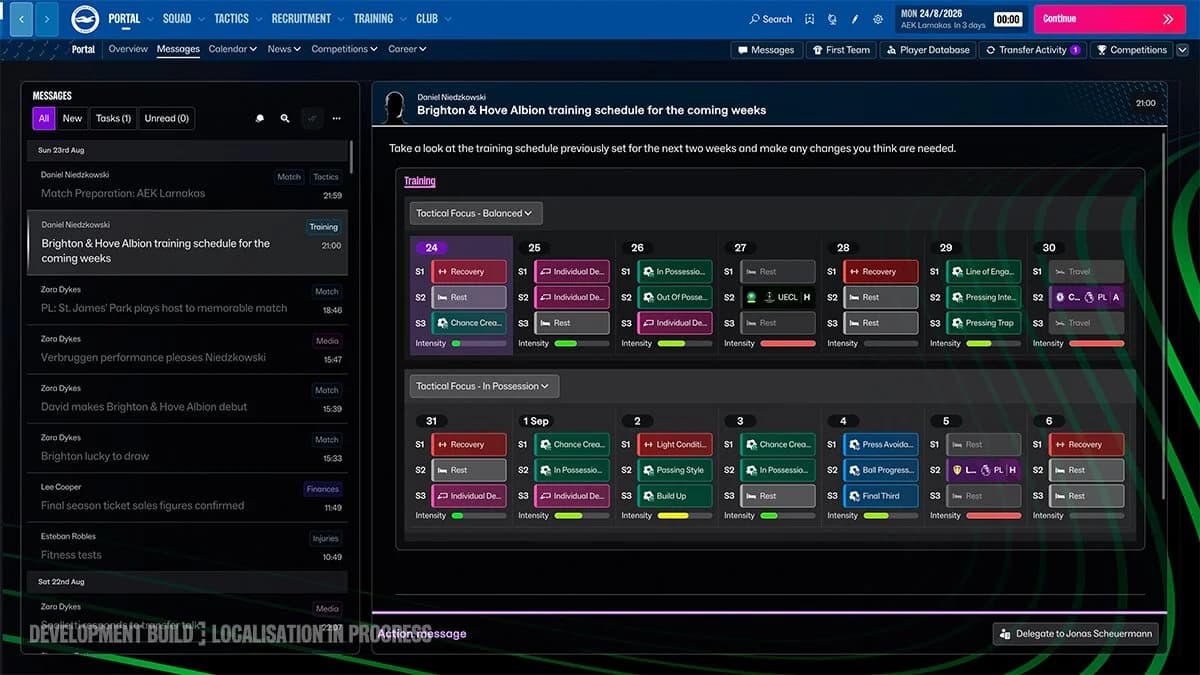
Develop skills for the planned role
Check tactical fit before recruiting
Scout Reports include Tactical Effectiveness information to help distinguish an immediate fit from a player who needs time to learn new concepts. Compare attributes and playstyle with your intended use before signing someone to fill an urgent vacancy.
A strong technical profile does not automatically mean immediate suitability. If you choose a player who needs adaptation, make that learning part of their development plan instead of expecting an instant solution.
Balance training with match workload
Read the coming weeks before copying a plan
The workload display covers both the current week and the longer period ahead. Use that wider view before repeating a schedule, particularly when the fixture pattern changes.
Copying a plan saves setup time, but it does not make the sessions appropriate for every week. Review the demands again after pasting it into a different part of the calendar.
| Situation | Recommended planning response |
|---|---|
| A recurring fixture pattern | Copy a suitable plan, then check its opponent focus and displayed load |
| A more crowded run of fixtures | Reassess the copied sessions against the coming weeks instead of preserving the same workload automatically |
| A demanding team plan plus individual work | Review the combined development priorities before adding more sessions |
| A changed tactical approach | Update the relevant preparation instead of continuing an unrelated schedule |
Use the indicators to guide adjustments, not a fixed intensity rule applied to every player and fixture pattern. If the coming weeks look more demanding, review optional development work and the scope of your tactical preparation before adding further sessions.
Make weekly edits without rebuilding everything
Weekly training schedules can also be edited directly from Inbox, including when managing a club or an international side. Use that route for routine corrections, then open the main training area when you need to compare the wider plan.
For international management, training plans are available during camps. Choose preparation around the selected squad and the tournament or fixture ahead; a club schedule should not be copied without reconsidering that context.
Give young players appropriate playing time
Choose first-team opportunities around a job the prospect can perform now. Promising attributes are one part of that decision, but the tactical demands of the appearance also need to fit their development.
Before selecting a youngster, decide:
- Which position they are being prepared to play.
- Which instructions they need to execute in that appearance.
- Whether the immediate priority is team preparation or longer-term individual work.
- Whether their current assignment asks for more tactical detail than they can handle.
If the intended task is too demanding, simplify it while their understanding develops. Avoid changing the player’s position, personal objective, and tactical responsibilities together without a clear reason; each change introduces another decision to review.
Judge playing opportunities by their purpose, not just the number of minutes you hope to accumulate. An appearance in the intended position gives you a clearer basis for reviewing that development plan than an unrelated assignment elsewhere.
Review progress and adjust your approach
Separate training effort from tactical execution
Regular Training Reviews return, including options to praise or criticize individual players for their efforts. Use those reviews for the behavior they describe, then assess tactical execution separately.
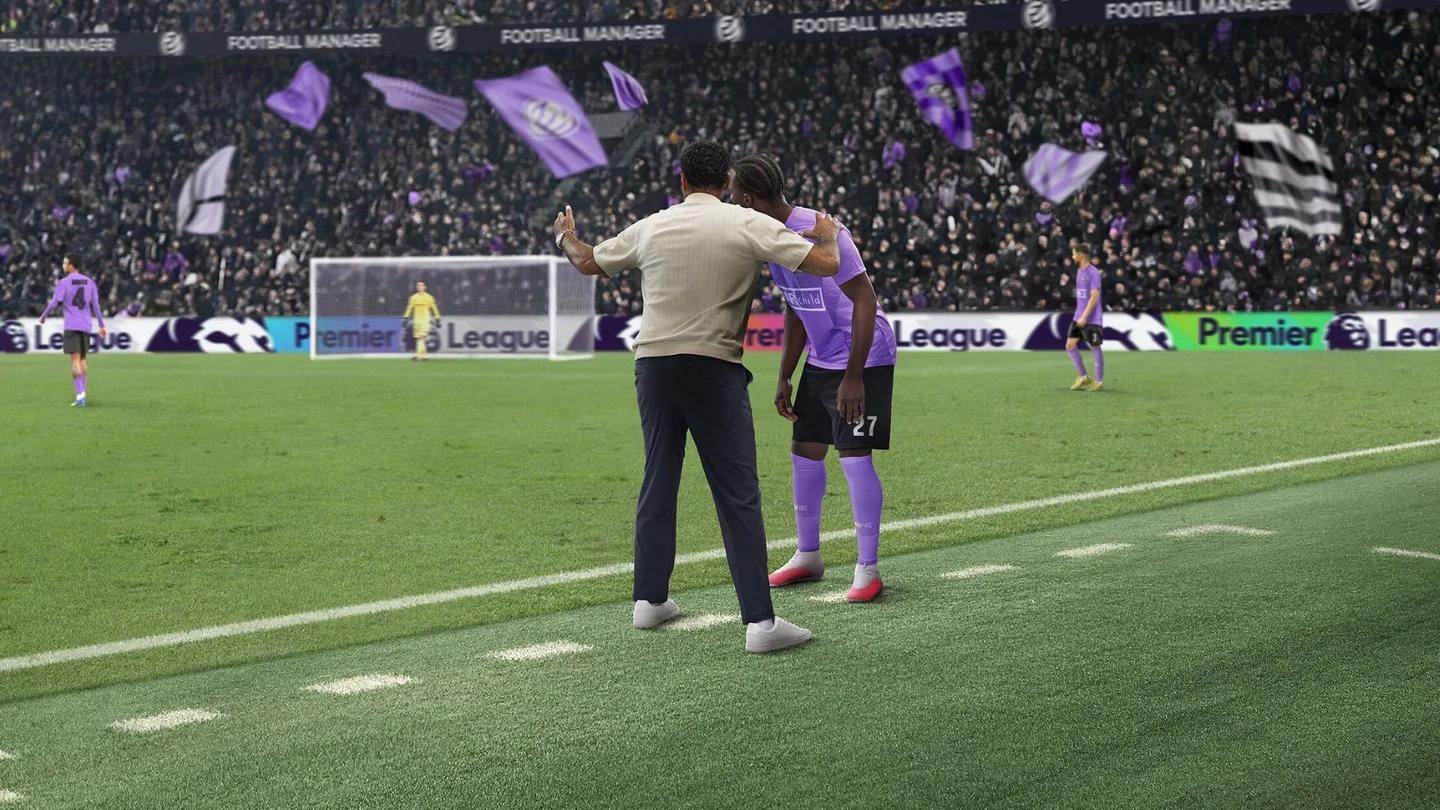
Review effort before changing plans
Tactical Effectiveness fluctuates with training, tactical adjustments, recruitment, player performances, and squad management. Do not judge the entire plan from a single gauge reading immediately after changing the system.
Match analysis adds another check. Heat Maps, Action Zones, and Pass Maps help you inspect positioning, territorial patterns, and passing connections. Compare the area you trained with what the team actually does during matches.
Change the part that needs work
Use a short review sequence after each fixture:
- Identify the tactical behavior that needs attention.
- Check the relevant effectiveness gauges and match patterns.
- Decide whether the response belongs in team training, individual development, tactical instructions, or recruitment.
- Check the workload calendar before applying the change.
If build-up remains the problem, review its preparation and the players being asked to execute it. Keep unrelated parts of the schedule stable while you address that specific weakness.