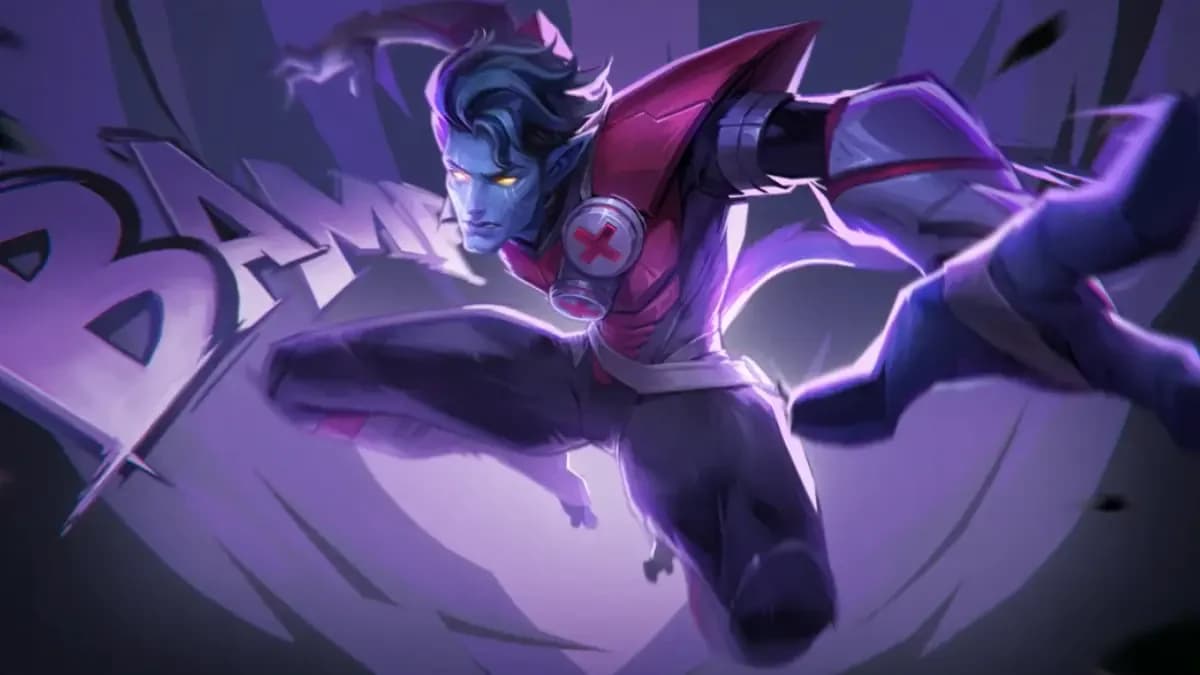

Play Nightcrawler as a mobile healer: protect allies, choose safe teleport endpoints, and coordinate enemy displacement with your teammates’ attacks.
Nightcrawler arrives in Marvel Rivals with Season 11: Doomsday on November 13, 2026. His swords invite aggressive plays, but his Strategist role puts team survival first. Your main decision is whether to join a teammate, bring them back to safety, or help them enter a fight. Learn those movement jobs separately before combining teleports for coordinated dives.
Nightcrawler’s healing and attacks
Nightcrawler has 275 health. His kit supports close-range attacks, but choosing when to approach matters more than staying in melee range. Keep track of injured teammates before looking for an opening behind the enemy frontline.

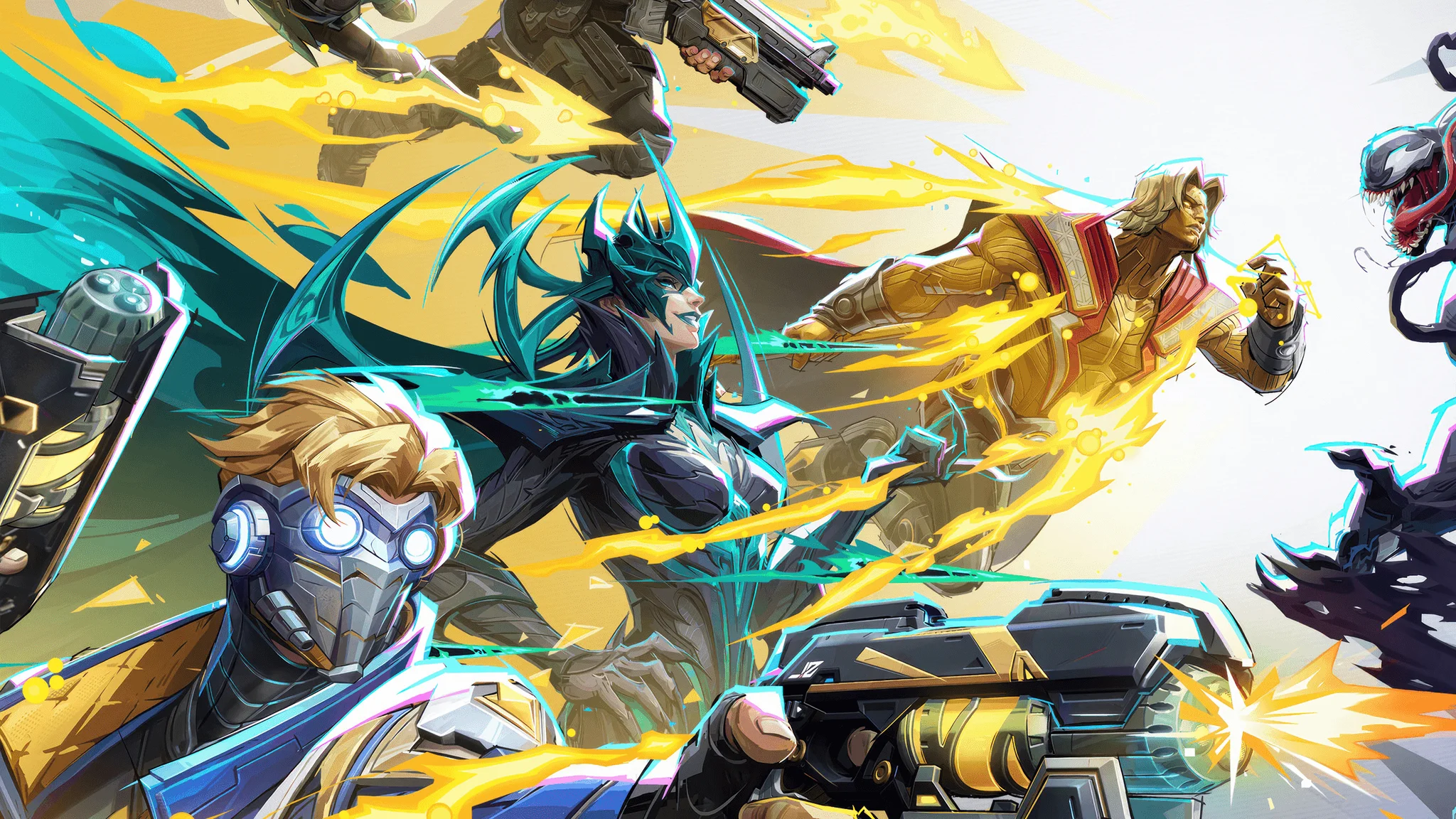
Make Forged Brimstone your default attack
Forged Brimstone (LMB) throws three consecutive grenades that explode on impact, damaging enemies and healing allies. Direct them toward teammates who need support during a fight; dealing damage should not take priority over keeping an endangered ally alive.
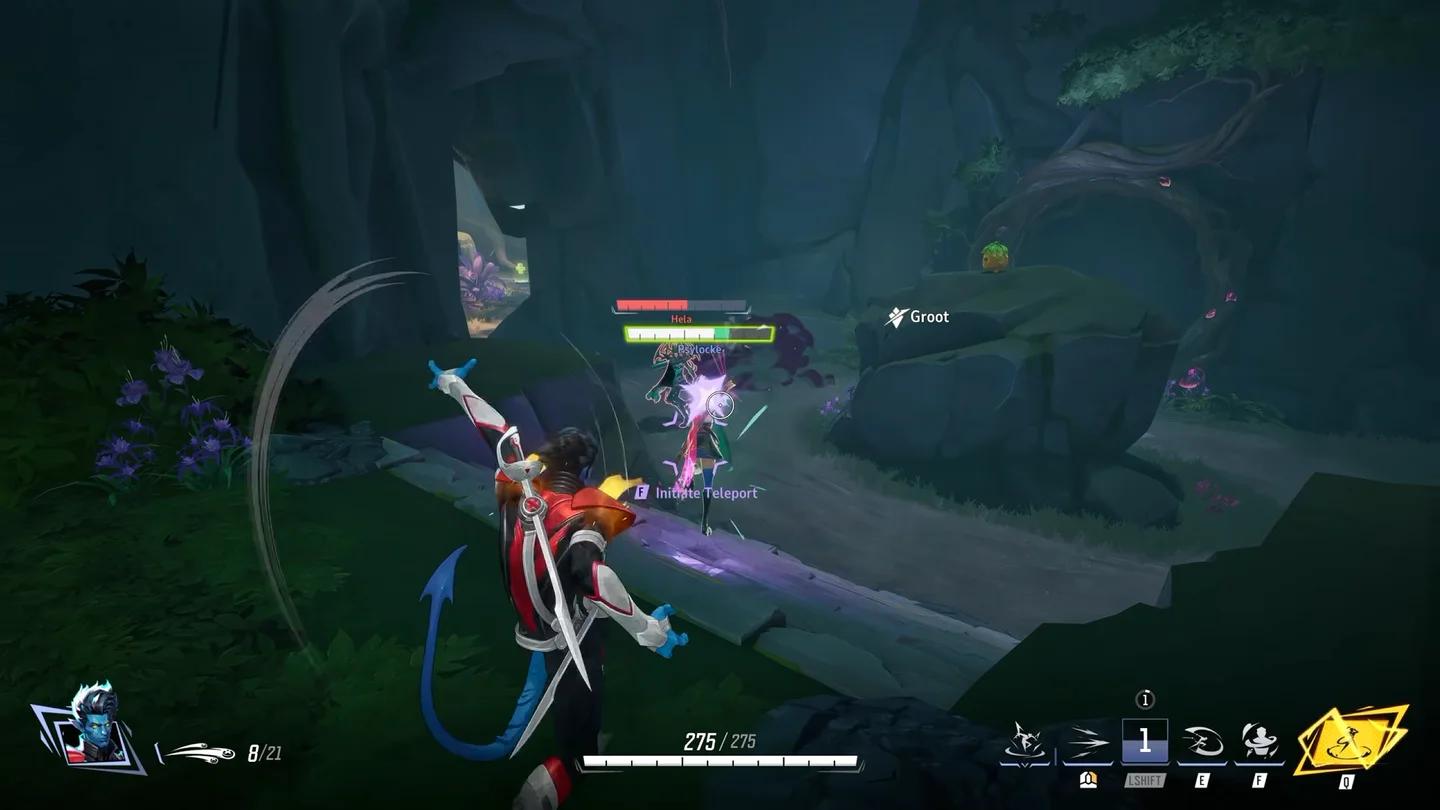
Nightcrawler’s brimstone grenades
Your grenades let you contribute without committing to sword range. Stay with that approach while your team is taking sustained pressure, and look for aggressive opportunities once their immediate healing needs are covered.
Use Three-Sword Style for close threats
Three-Sword Style (RMB) delivers continuous forward thrusts with two cutlasses and the Hopesword. It can deal critical damage.
Use it against enemies already within reach or during a coordinated attack that offers a quick elimination. Avoid turning a short opening into a prolonged chase that leaves your teammates without support.
Which teleport should you use?
Nightcrawler’s movement abilities have different jobs. Choose the problem you need to solve before pressing a movement key.
| Situation | Ability and PC input | Position to check first |
|---|---|---|
| A teammate needs you beside them | Swift Intervention, Shift | The teammate’s surroundings |
| A teammate needs to leave their position | Tandem Teleport, F | Your own departure point |
| You have an opening to pressure the backline | Smoke Shift, E | The place you will return to |
Swift Intervention joins an ally
Swift Intervention teleports you to a targeted ally and gives them an immediate heal, Healing Boost, and healing over time. Choose it when that teammate can continue fighting from their current position with extra support.
Check the pressure around them before following. An ally surrounded by enemies may need extraction, while someone holding a useful position may benefit more from you arriving beside them.
Tandem Teleport moves an ally to you
Tandem Teleport makes a round trip: Nightcrawler travels to an ally and brings them back to his original location. Both characters receive instant healing, healing over time, and a speed boost.
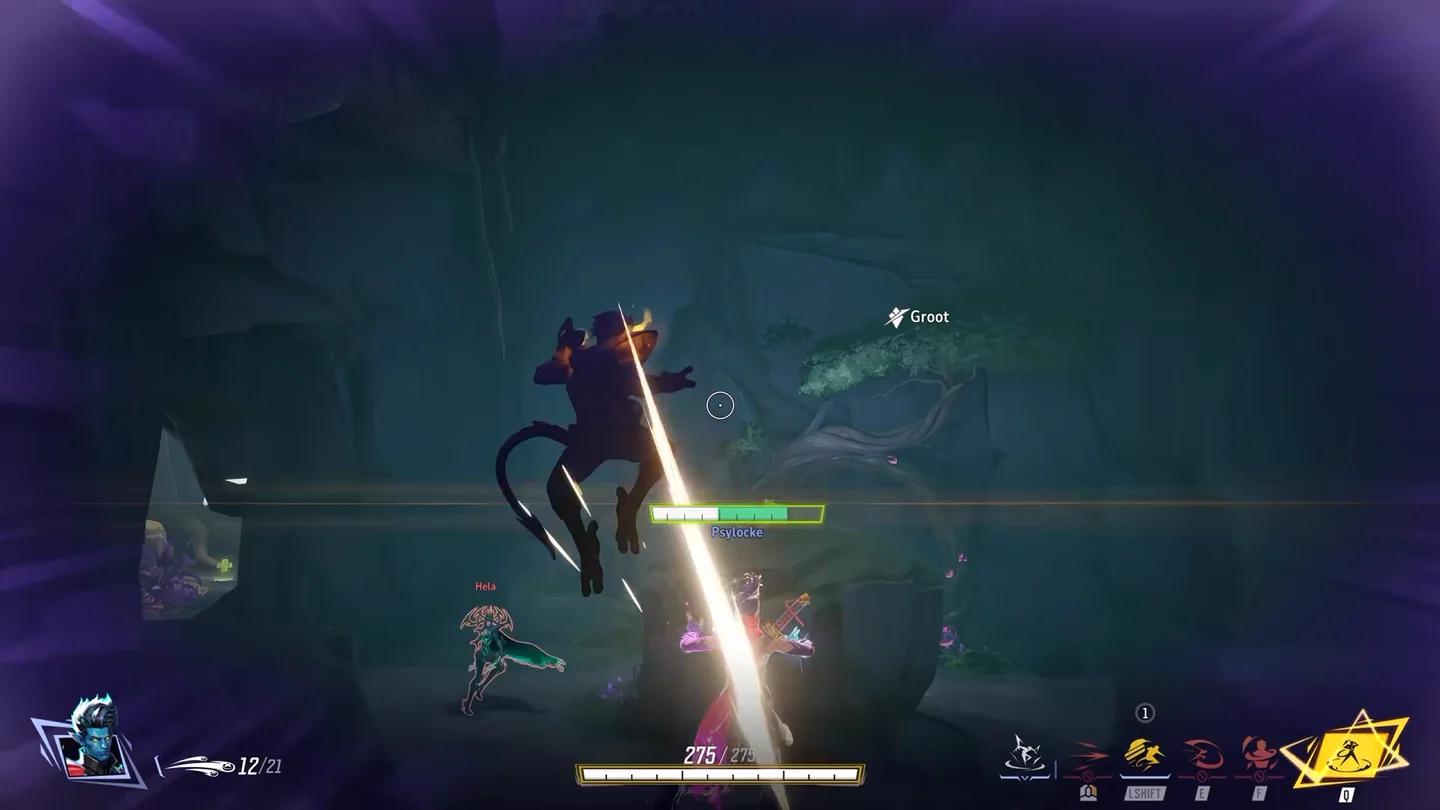
Tandem Teleport’s paired warp
For a rescue, start behind cover or on suitable high ground. Bringing someone away from danger achieves little if your departure point is also exposed.
For an offensive move, choose the intended entry position before inviting a teammate who can initiate. Start with straightforward rescues while learning the ability. Delivering an ally into the enemy formation needs a shared target and an agreed attack, because a failed entry can cost both players.
How to use Smoke Shift safely
Smoke Shift marks your starting point with brimstone smoke, then sends you forward in a spinning slash. Its smoke blast damages and launches enemies while healing allies. You can recast it shortly afterward, and the third activation returns you to the initial mark.
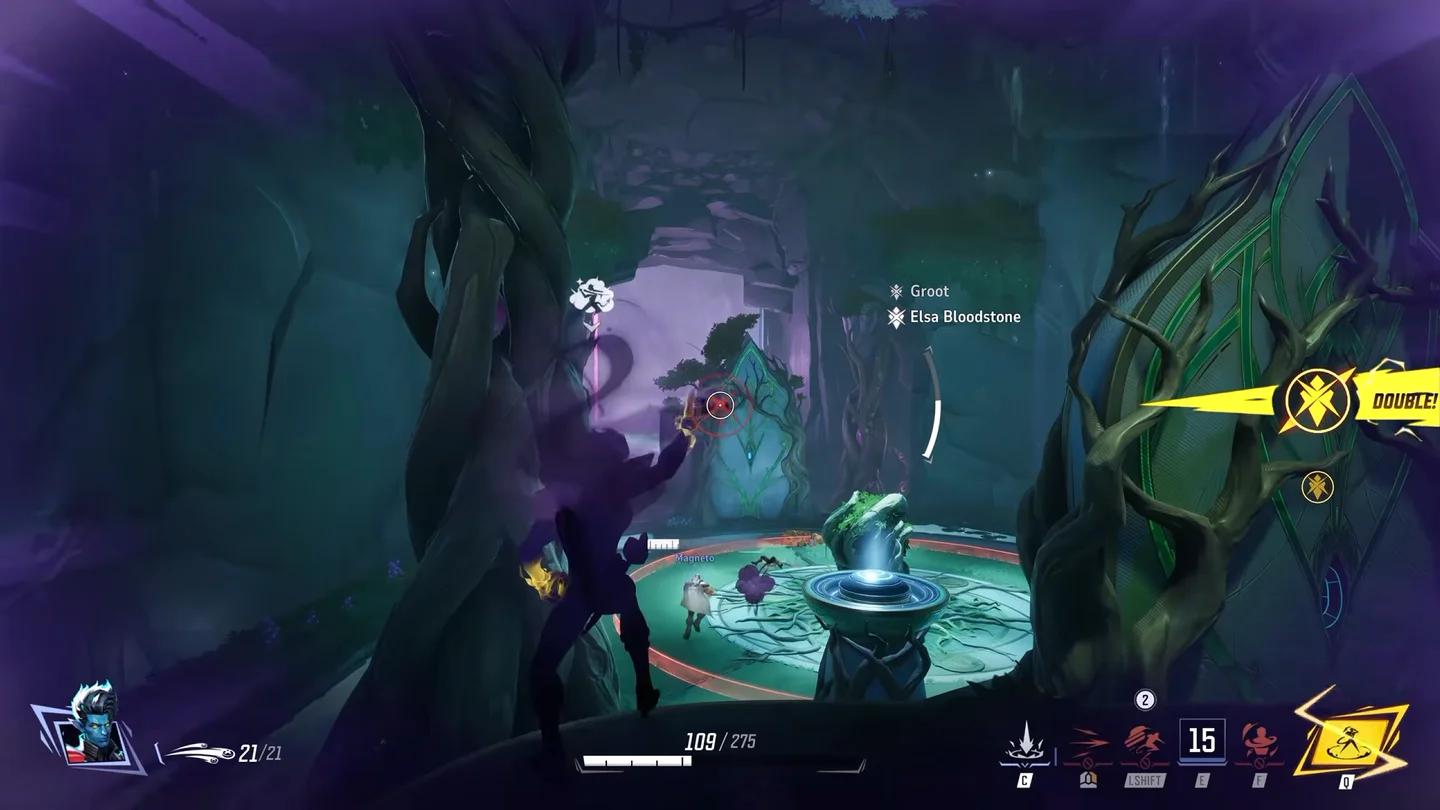
Smoke Shift’s brimstone effects
The starting mark is your escape destination. Set it somewhere you would willingly stand after the enemy notices your attack, not in the middle of an exposed team fight.
Set up the return point before attacking
Crawler Cling helps you prepare elevated positions. Hold Space to crawl up vertical surfaces, then assess whether that location offers a useful starting point for your excursion.
Use this sequence to make your first dives deliberate:
- Choose cover or high ground. Check the departure position before activating Smoke Shift.
- Pick a backline target. Spend the approach on an enemy whose removal would disrupt the opposing team, not on routine frontline damage.
- Commit to a short attack. Use your available opening to pressure or finish the target without extending into a chase.
- Reassess before continuing. If the elimination is slipping away or teammates need support, end the excursion through the return activation.
A dive is worth attempting when you can quickly remove a backline enemy or when your teammates have coordinated an initiation. If neither condition is present, stay focused on healing instead of spending movement merely because it is available.
How to use Phasing Finale
Phasing Finale (Q) starts with a selected destination. You and nearby allies gain Damage Boost, healing over time, and Bonus Health before teleporting there one at a time. A Smoke Domain forms at the destination after that teleport sequence finishes.
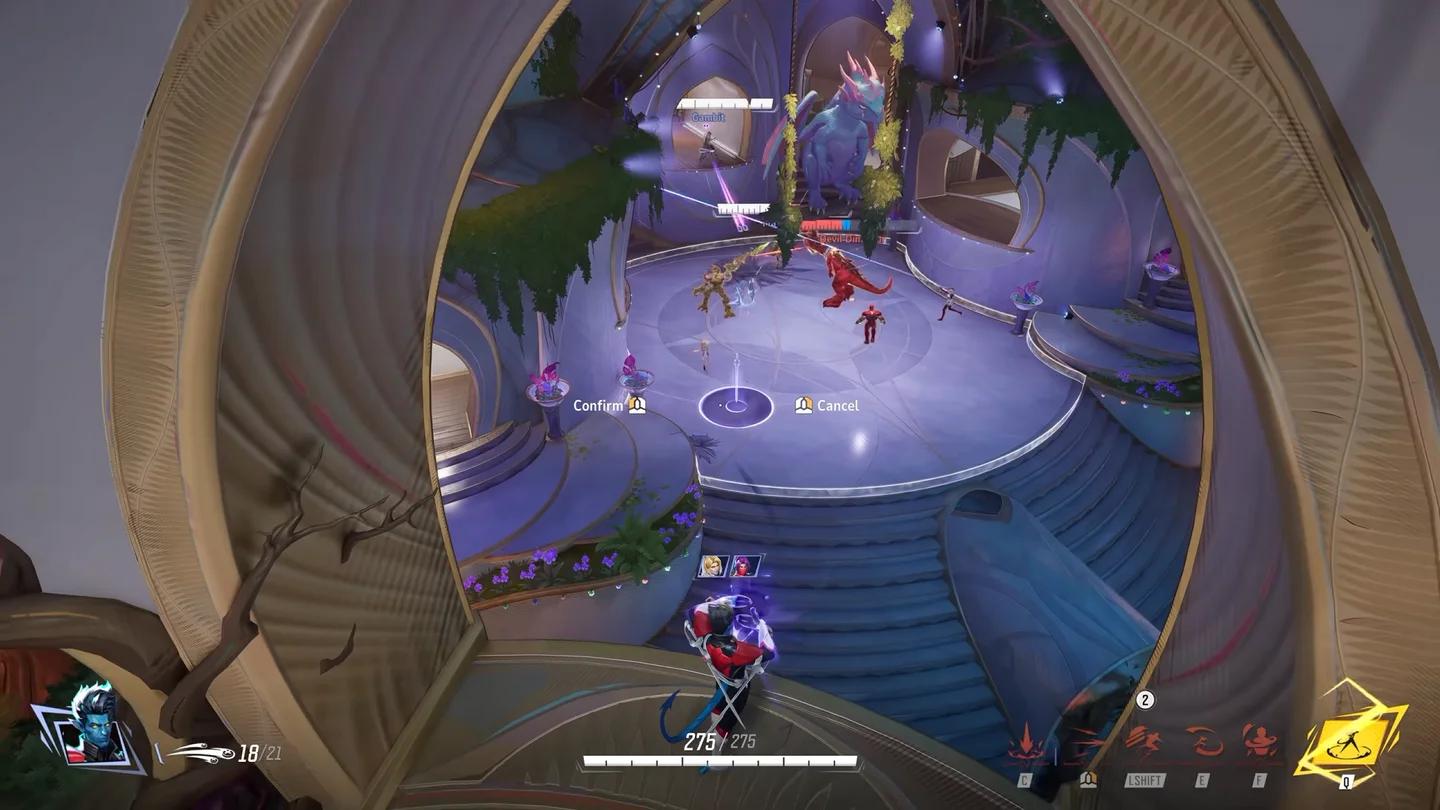
Phasing Finale’s Smoke Domain
Recast the ultimate to teleport and slash enemies inside the Smoke Domain, pulling them to your location. Plan around both the allied relocation and the enemy pull, since each changes where the fight takes place.
Coordinate the pull with teammate damage
Phasing Finale works best as part of an agreed ultimate sequence. Its pull can keep enemies within reach of a teammate’s attack, so check that someone can follow up before spending it to gather targets.
Before casting, answer three questions:
- Who will supply the damage? Identify the teammate whose attack or ultimate you are supporting.
- Where should the team arrive? Choose a destination that supports that attack without leaving arriving allies isolated.
- Where should enemies end up? Position the pull so your teammate can reach the displaced targets.
Favor using the crowd-control portion as a follow-up after a teammate commits their ultimate. Opening with a pull while everyone’s follow-up tools are unavailable wastes the opportunity to convert that grouping into eliminations.
A nearby cliff can also turn Phasing Finale into a terrain KO. Take a clear environmental opportunity, but do not choose a dangerous destination for your allies just to pursue one.
Which teammates work with Nightcrawler?
Nightcrawler has Team-Up effects associated with Rogue and Magik.
Coordinate with an initiator
Blade, Daredevil, Doctor Strange, and Groot are useful partners for planned entries because they can initiate fights with their ultimates. Nightcrawler can help place an initiator where their attack will threaten the enemy formation.
When supporting Daredevil in Marvel Rivals, agree on the target and ultimate timing before arranging the teleport. The same planning applies to the other initiators: decide who enters, what they will use, and which teammates can follow.
Avoid treating an offensive transport as a command your team must improvise around. Confirm the attack first, then use Nightcrawler’s movement to carry out that plan.
Compare Rogue and Magik’s Team-Ups
Each distinguishes a base effect from an enhanced effect gained when the matching partner is on the team.
| Team-Up | Base effect | Enhanced effect with partner |
|---|---|---|
| Protective Siblings, associated with Rogue, C | Briefly vanish as energy damages enemies and heals allies around the departure point. Reappear above the original location and strike downward with three swords, dealing more damage and slowing nearby enemies. | After the downward strike, recalled energy heals allies, damages enemies, and launches enemies toward Nightcrawler. |
| Demon Disciple, associated with Magik, passive | Spatial warps create spell fields that damage enemies and heal allies. This applies to all three Smoke Shift stages, both Tandem Teleport stages, and Swift Intervention’s single stage. | Each warp also creates demonic armor that grants Bonus Health. |
Choose Magik’s enhancement for extra durability during repeated teleports. Choose Rogue’s enhancement when your close-range plan benefits from another way to gather enemies for allied follow-up damage.