Search games, articles, guides...CtrlK
Sign InGet Started

Learn Rage, parries, Special Techniques, and Adaptations to dominate every fight in Marvel's Wolverine from your first session.

Written by Larc
Content Writer
See more GAMES.GG guides on Google
Add us as a preferred source and our guides show up first in your results.

Marvel's Wolverine Guide: How to Replay Missions
Learn how to replay any mission in Marvel's Wolverine, adjust difficulty, and track down every collectible you missed.

Marvel's Wolverine Mission List: All 30 Chapters
All 30 Marvel's Wolverine missions in order, chapter by chapter, plus how long to beat the game and where collectibles appear.
Marvel's Wolverine Guide: Best Adaptations & How to Unlock Them
The best Adaptations in Marvel's Wolverine ranked, covering Rage, parrying, healing, and Critical Strike perks for every playstyle.
Marvel's Wolverine drops you into Logan's world with claws out and enemies everywhere. The combat looks straightforward at first, but the game's real depth sits underneath: a Rage system that controls your survival, a loadout of Special Techniques you can swap on the fly, and passive Adaptations that quietly shape how every fight plays out. Get these systems working together early and the game opens up fast. Miss them and even basic encounters start feeling punishing.
Rage is the engine behind almost everything Logan does in a fight. Successful attacks, parries, and kills all feed the meter, and it has three distinct tiers that each change how dangerous Wolverine becomes.
| Rage Tier | Effect on Logan |
|---|---|
| Tier 1 | Builds combat momentum, basic bonuses |
| Tier 2 | Stronger combos, unlocks Last Stand |
| Tier 3 | Major damage increase, access to brutal Critical Strikes |
Reaching Tier 3 is when combat really shifts. Enemies that were taking a while to bring down start dropping much faster, and Critical Strike opportunities open up more frequently. The key thing beginners miss is that Rage is not just an offense tool. It ties directly into survival, which is where Last Stand comes in.
Marvel's Wolverine Ultimate Beginner's Guide
Last Stand activates automatically when Logan is downed, provided you have reached at least Rage Tier 2 and still have meter available. His Healing Factor kicks in and pulls him back into the fight instead of ending the encounter.
This makes Rage management a genuine defensive skill, not just an offensive one. Burning through your entire meter to deal extra damage in a mid-fight burst sounds appealing, but it leaves you with nothing if a boss lands a punishing combo right after.
The smarter approach is to build Rage steadily through parries and aggression, then let the meter sit at Tier 2 or higher rather than spending it down to zero.
Wolverine's Healing Factor creates a temptation to just absorb hits and keep swinging. That works on weaker enemies early on, but stronger enemies punish passive play hard.
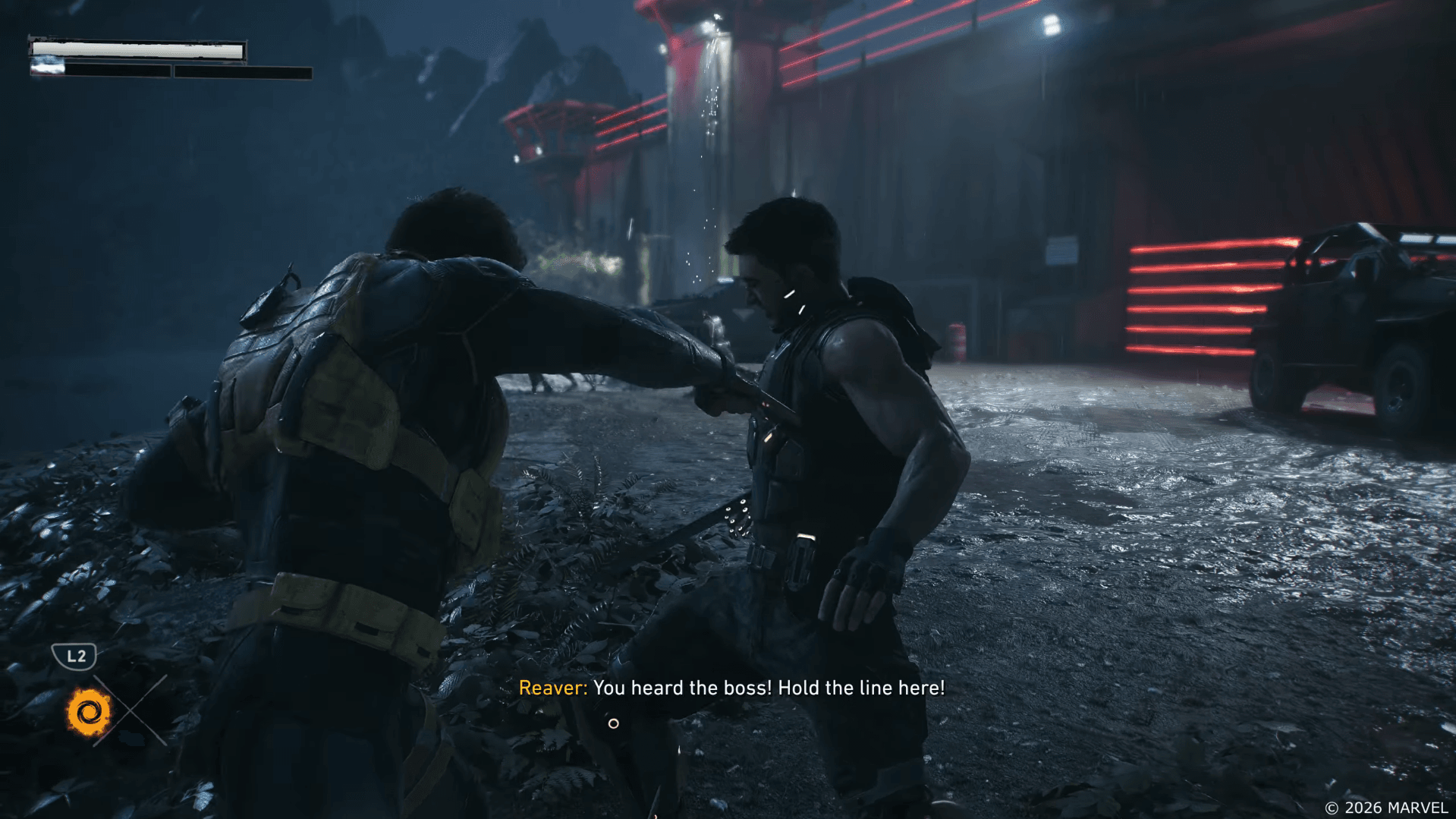
A successful parry does two things at once: it stops incoming pressure and adds to your Rage meter. That makes parrying genuinely rewarding rather than just defensive. Dodging is the better call when an attack is too fast or too dangerous to parry safely, or when you need to reposition quickly.
The combat system also lets you interrupt or cancel attacks mid-combo, so you are never locked into a long string if something dangerous comes out. Getting comfortable with both parry and dodge early means you stop relying entirely on healing, which makes the harder sections much more manageable.

Marvel's Wolverine Ultimate Beginner's Guide
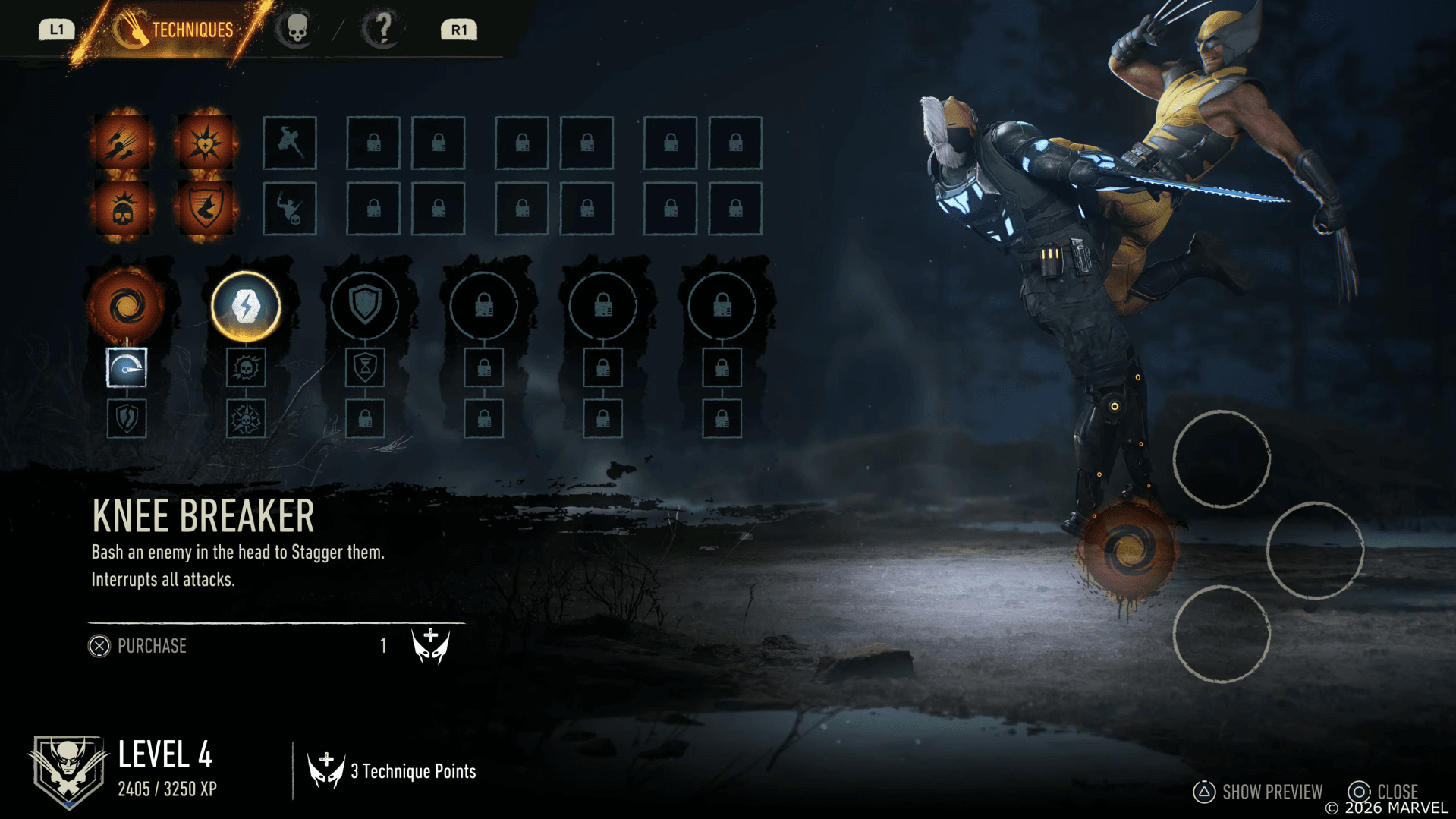
Techniques expand Logan's combat options as the campaign progresses. The more interesting subset is Special Techniques, which are rechargeable abilities that sit in your active loadout. You can equip up to four Special Techniques at once.
Three confirmed examples from the game:
Marvel's Wolverine Ultimate Beginner's Guide
The loadout is not locked in. Swapping Special Techniques between encounters is encouraged, and finding a combination that covers both crowd control and single-target pressure makes a noticeable difference. Do not stick with the first set you unlock just because it is familiar.
Technique Points are the currency for expanding Logan's overall ability tree. Early on, spending points on survivability and defensive tools tends to pay off more than chasing pure damage upgrades. Once parrying and Rage management feel natural, shifting points toward aggression makes sense.
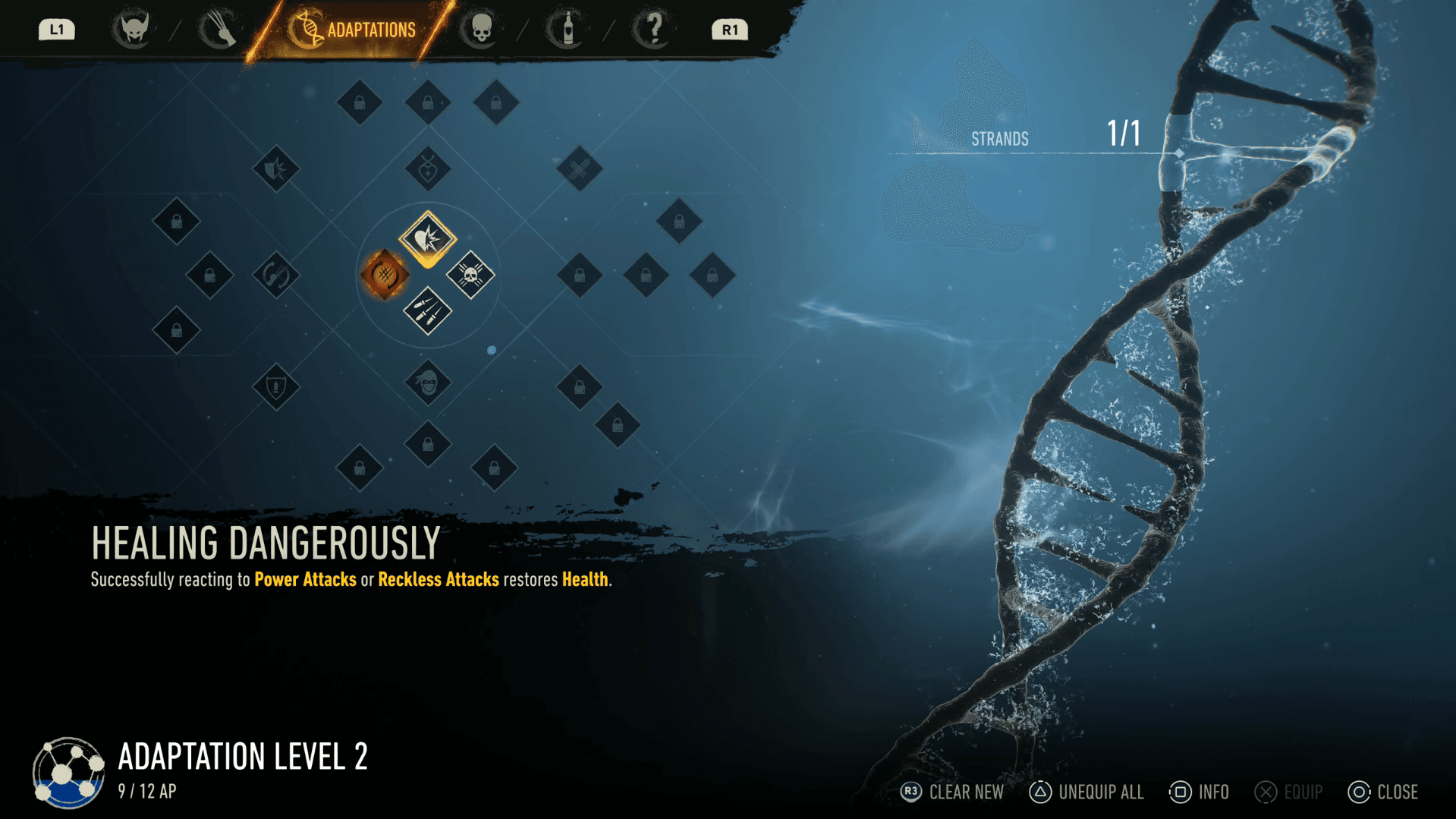
Where Techniques give you active options to use in a fight, Adaptations work passively in the background. They can improve Logan's durability, widen parry windows, or make the Rage meter more effective, among dozens of other options Insomniac has built into the system.
The practical split is simple: Techniques add tools, Adaptations tune performance.
If you are dying too often, switching toward defensive Adaptations can stabilize things without changing how you play. If you are already comfortable with parrying and Rage management, Adaptations that amplify aggression or Rage gain will push your damage higher.
Critical Strikes are high-damage finishing opportunities that appear during combat. Some are triggered through normal fighting, and others open up when working alongside allies like Jean Grey. At Rage Tier 3, more Critical Strike opportunities appear against weakened enemies.
The mistake beginners make is ignoring these prompts and continuing with standard claw attacks out of habit. A single Critical Strike can remove a dangerous enemy from a crowded fight immediately, which is almost always worth more than a few extra hits on a different target.
Pay attention to when these windows appear and prioritize them, especially in fights with multiple strong enemies.
The claws handle most of the work, but the environment adds options that can bypass a lot of the health-chipping grind. Logan can launch toward targets, use nearby hazards, and execute environmental takedowns that remove enemies without grinding through their full health bar. When multiple enemies are attacking at once, moving around the arena and using what is nearby beats standing in place and trading hits.
Enhanced Senses are useful in two separate contexts. During exploration, they help track scents, locate hidden items, and even pick up conversations or music that point toward points of interest. During stealth sections, they let you identify enemy positions before moving in for a takedown.
Stealth does not need to be an all-or-nothing approach. Taking out two or three enemies quietly before a fight starts simply means fewer targets once combat opens up.
Marvel's Wolverine is a linear game rather than an open world, but side paths still hide things worth finding. Raw upgrade materials, collectible whisky bottles, material crates, and Nightmare Doors all appear in areas off the main route.
Suits are worth collecting specifically because the system is not purely cosmetic. Acquiring suits provides health upgrades for Logan, so ignoring them entirely has a real impact on survivability. There are also different claw designs to unlock, including bone, curved, notched, and reflective styles.
Enhanced Senses can help locate optional items in most areas, so activating them before moving to the next objective costs very little time.
Nightmare Doors are optional activities tied to Logan's missing memories. Enhanced Senses can help find them, and entering one puts Logan into a Nightmare Trial, which can involve combat challenges, traversal sequences, or both, all set in dreamlike versions of existing locations.
Completing these unlocks Adaptations and adds context to Logan's backstory. For players who want extra upgrades and more story, they are worth doing whenever one appears rather than saving them for later.
Marvel's Wolverine lets you adjust individual settings rather than switching between preset difficulty levels. The options include:
The Dodge/Parry Input Timing option is the most immediately useful for beginners. If attacks feel like they land before the parry window opens, loosening this setting gives you more room to react without removing the mechanic entirely. Slowing combat speed is another option that works well for learning specific enemy patterns before increasing it again.
Here is the core loop distilled down:
The basic combat loop is: attack and parry to build Rage, use Special Techniques to control fights, hold enough Rage for Last Stand when needed, and push for Tier 3 and Critical Strikes when Logan hits full momentum. Once those systems connect, even the harder early encounters become much more readable.
For more on what to expect before jumping in, the Marvel's Wolverine release date and regional start times guide has everything you need to plan your session. If you are aiming for full completion, the Marvel's Wolverine trophy list breaks down every achievement and what it takes to reach platinum. The full Marvel's Wolverine guide collection covers boss strategies, collectibles, and everything else as you work through the game.