
Overview
Prince of Persia: The Two Thrones drops the Prince back in Babylon after the events of Warrior Within, and things go wrong almost immediately. Kaileena is killed, the Sands of Time are unleashed again, and the Prince ends up a fugitive in his own city with a dark alter ego growing stronger inside him. The story is tighter and more personal than its predecessor, trading Warrior Within's heavy metal posturing for something with actual emotional weight.
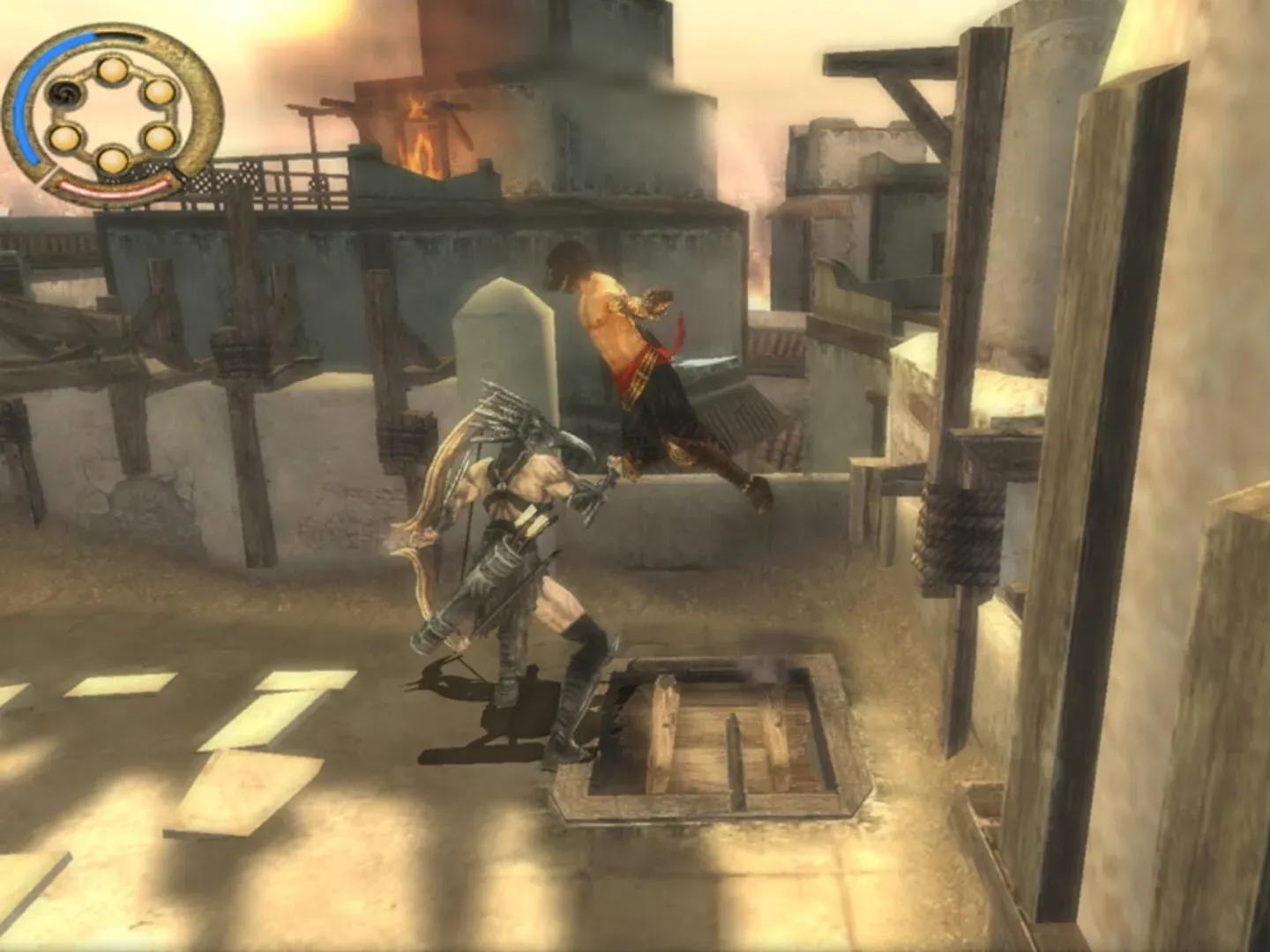
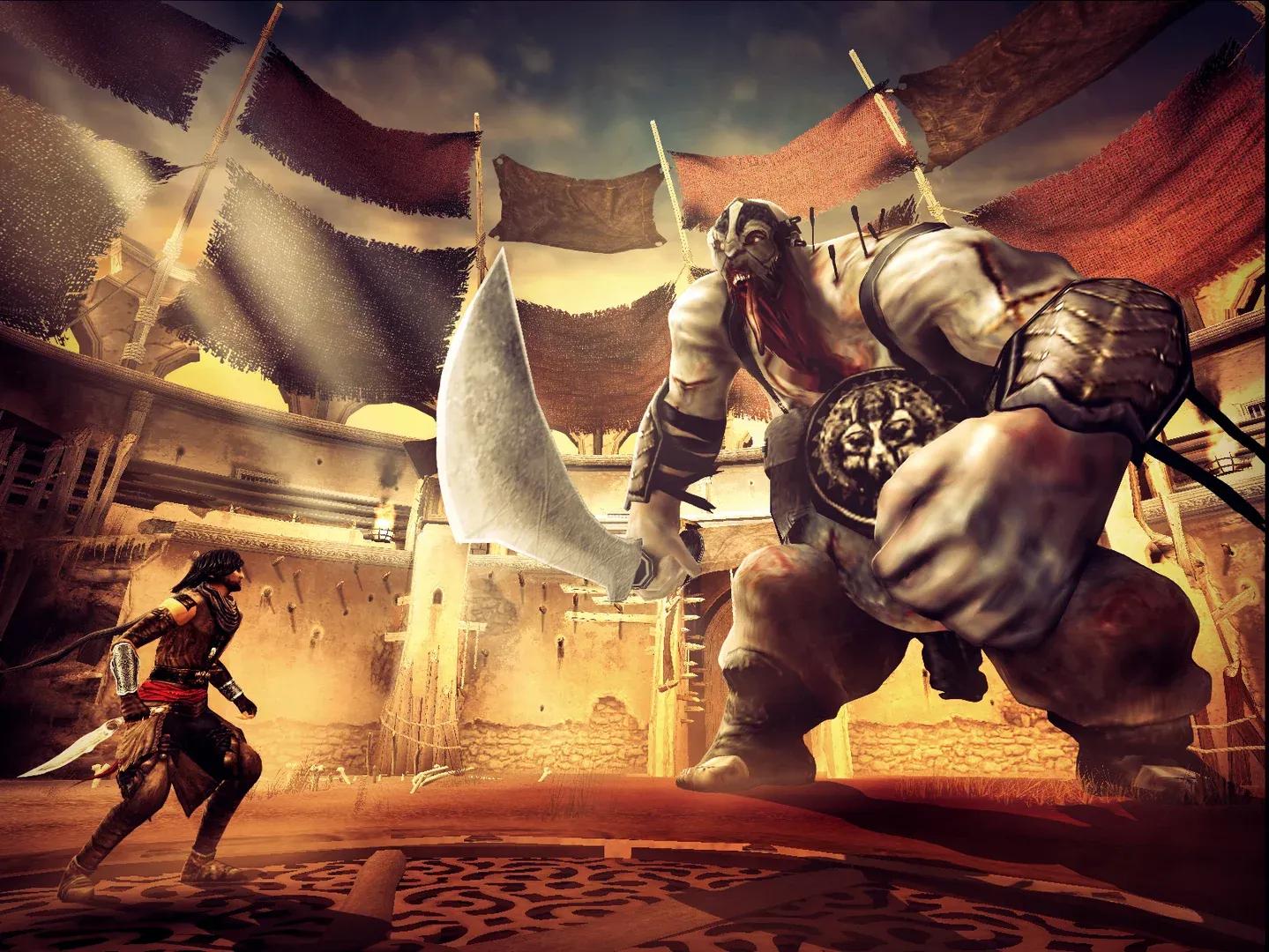
Ubisoft Montreal developed the game with a clear goal: merge the platforming elegance of The Sands of Time with the harder combat of Warrior Within, then add a second playable character on top of it. The result is a game that constantly shifts tone and pace, sometimes within a single level. Babylon itself is a well-designed playground, with rooftop chases, cramped underground corridors, and chaotic street battles all serving different mechanical purposes.
Prince of Persia: The Two Thrones™ content image
What makes the two-character system work?
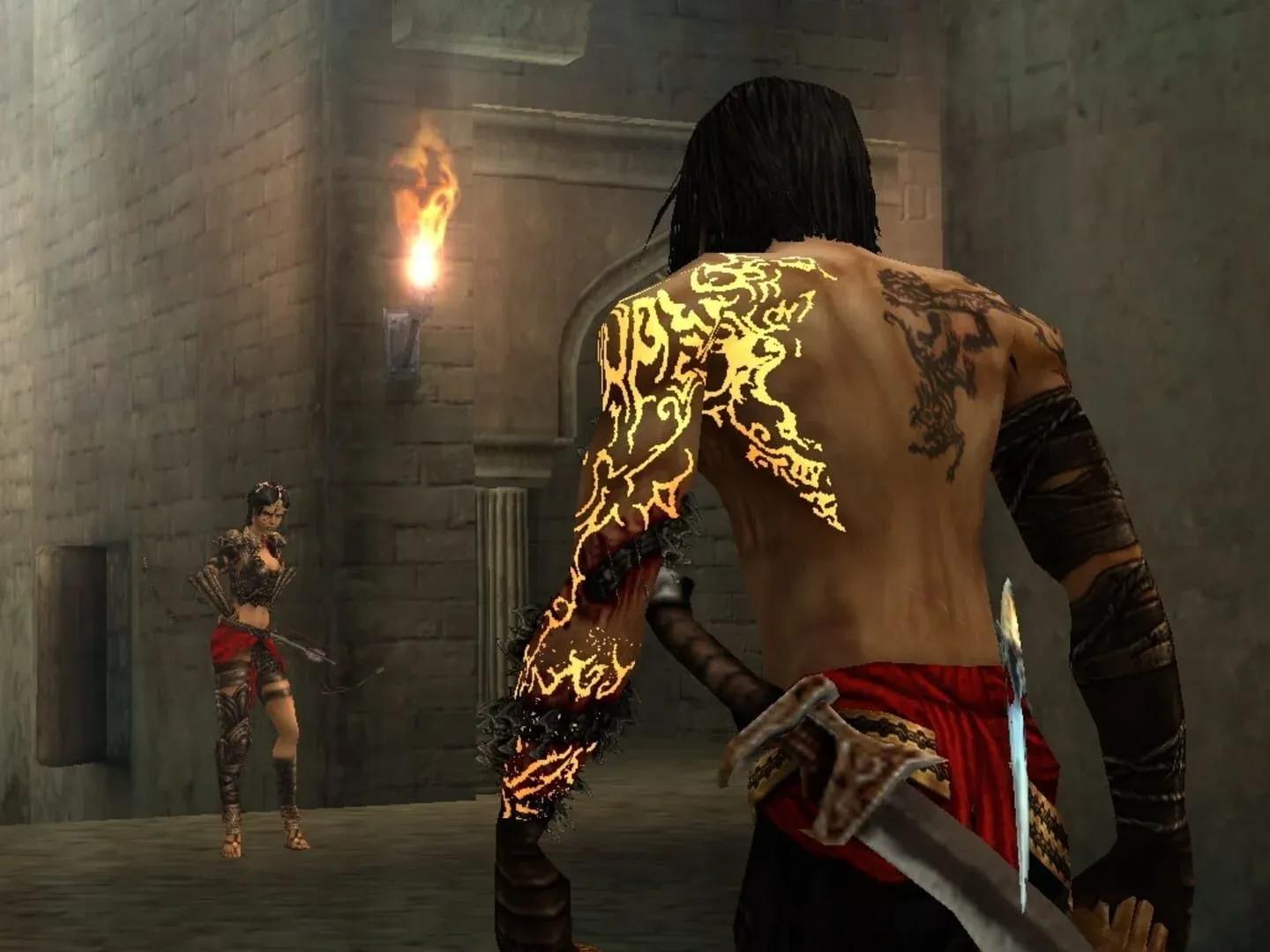
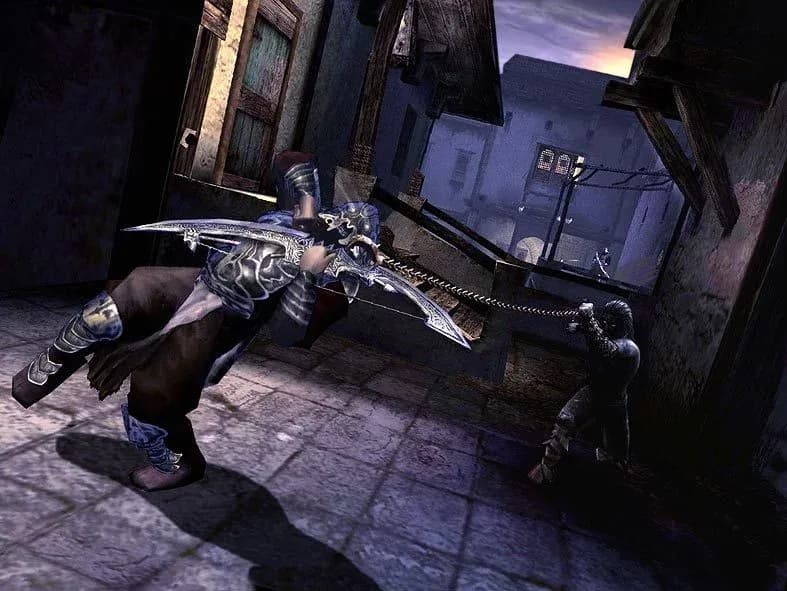
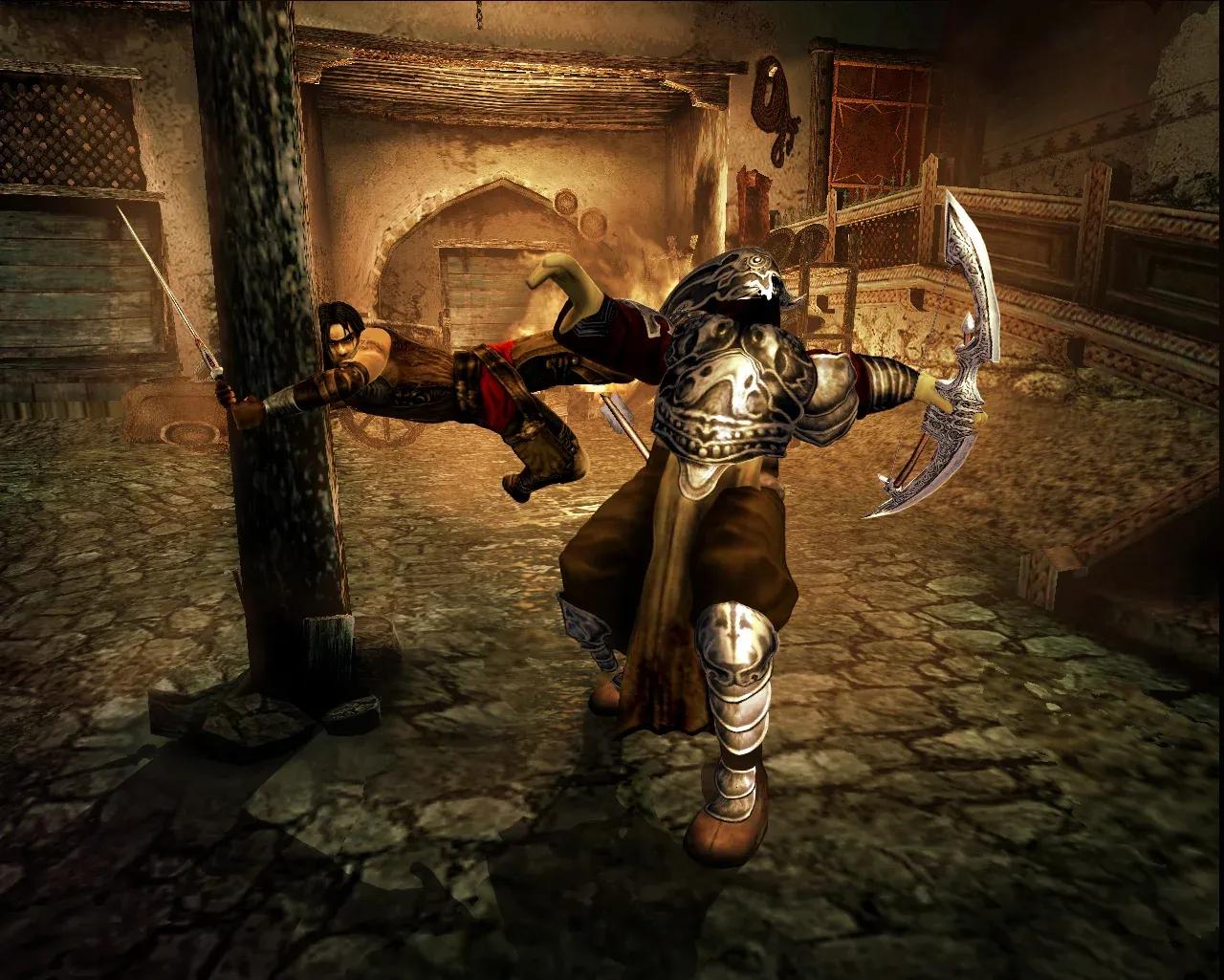
The split between the Prince and the Dark Prince is the game's defining mechanic. The Prince plays much as he did in The Sands of Time: acrobatic, precise, with a rewind ability that saves you from bad jumps and mistimed attacks. The Dark Prince is faster and more aggressive, armed with the Daggertail, a bladed chain that lets you strangle enemies from a distance or swing it in wide arcs through groups. The catch is that the Dark Prince constantly drains your health unless you collect Sand, which keeps combat under constant pressure.
Prince of Persia: The Two Thrones™ content image
Key mechanics across both characters:
- Time rewind to correct mistakes in combat and platforming
- Daggertail chain weapon for ranged and crowd-control attacks
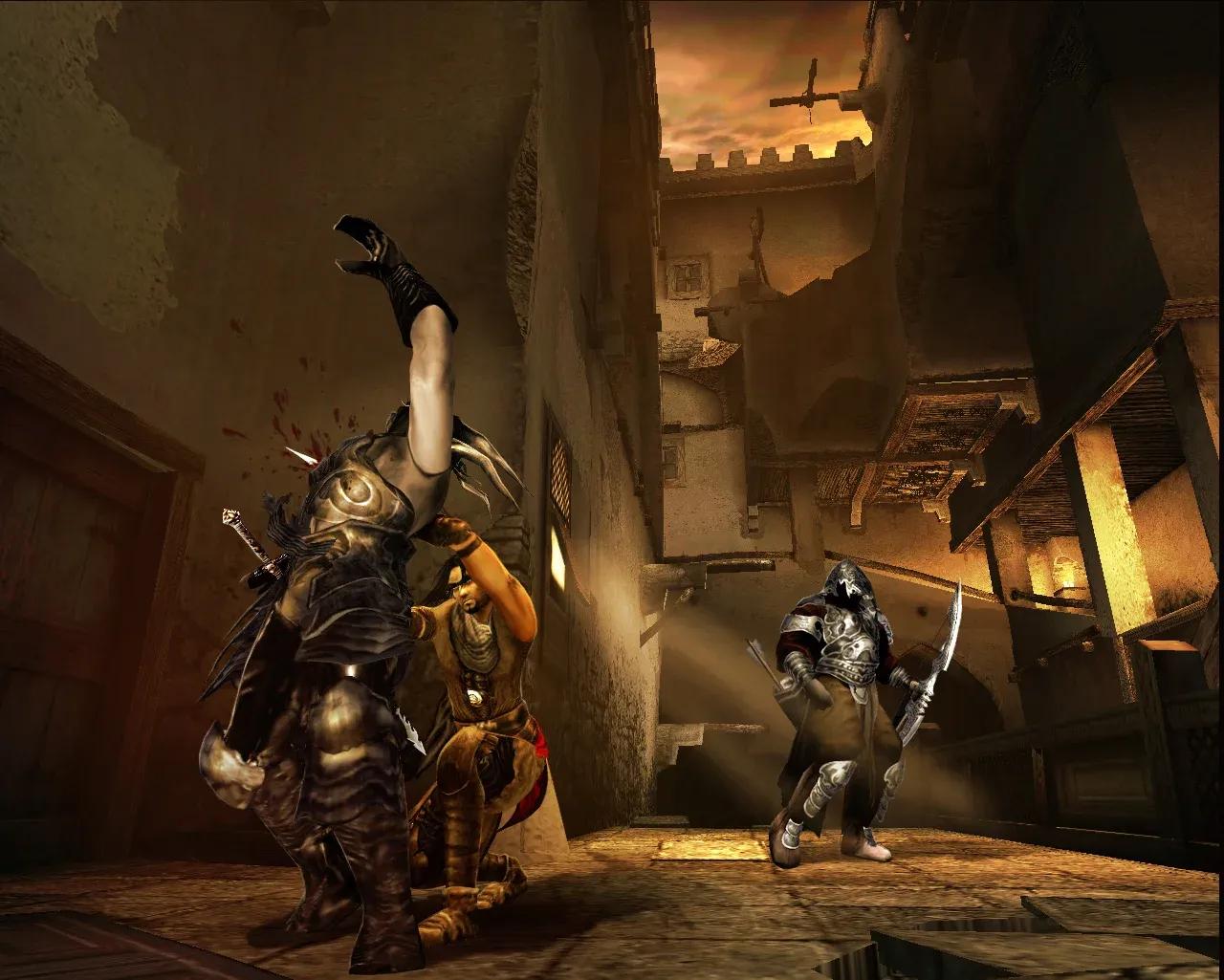
- Stealth kill system for silent decapitations on unaware enemies
- Free-Form Fighting system for stylized combo chains
- Sand-powered slow-motion attacks against multiple enemies
The stealth system is a notable addition. Certain sections let the Prince stalk enemies through shadows and execute them silently, which breaks up the pacing in a way that feels earned rather than bolted on. These moments also feed into the game's darker narrative tone, where the Prince is no longer the carefree acrobat of the first game.
Prince of Persia: The Two Thrones™ content image
World and setting: Babylon under siege
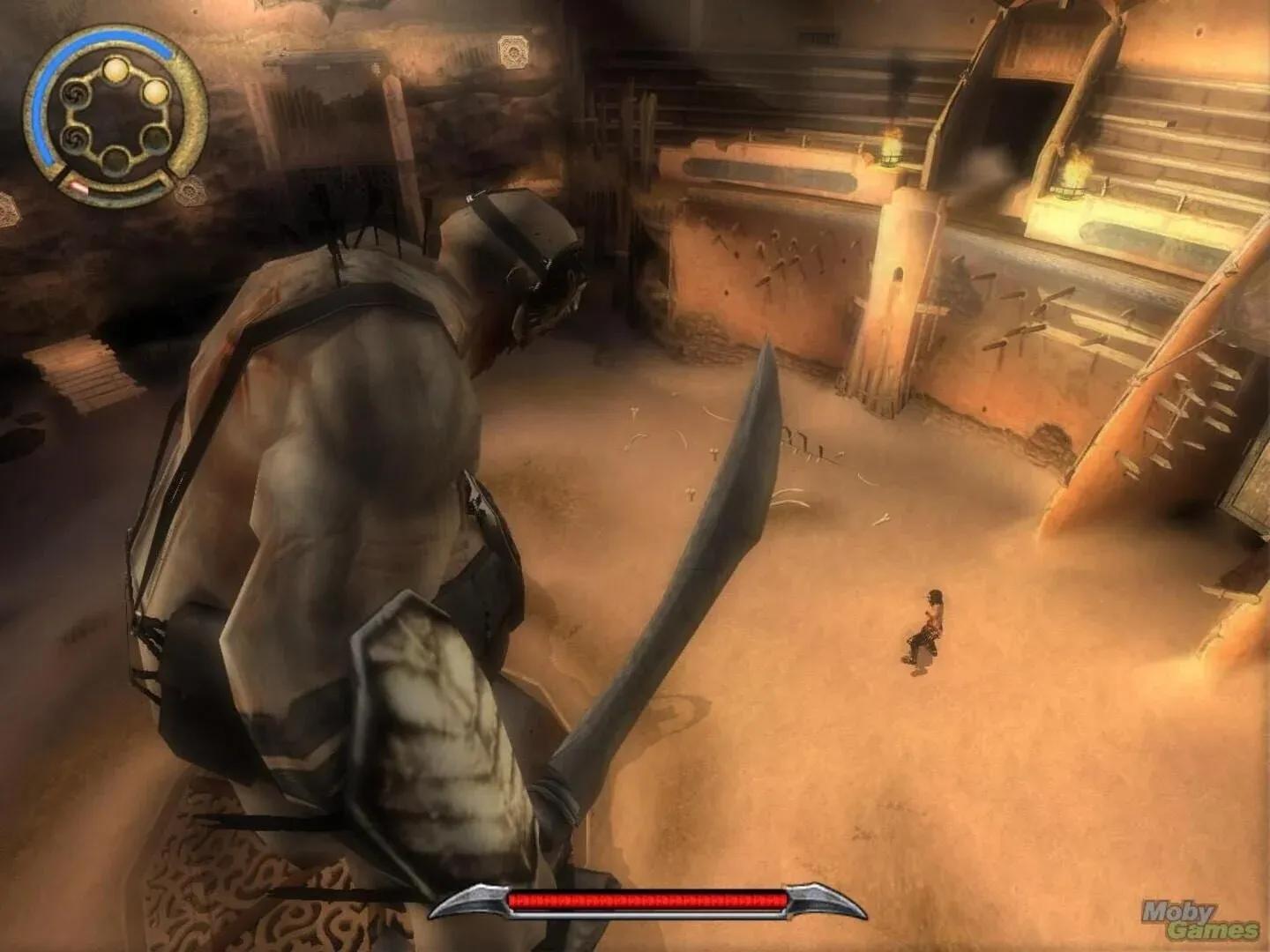
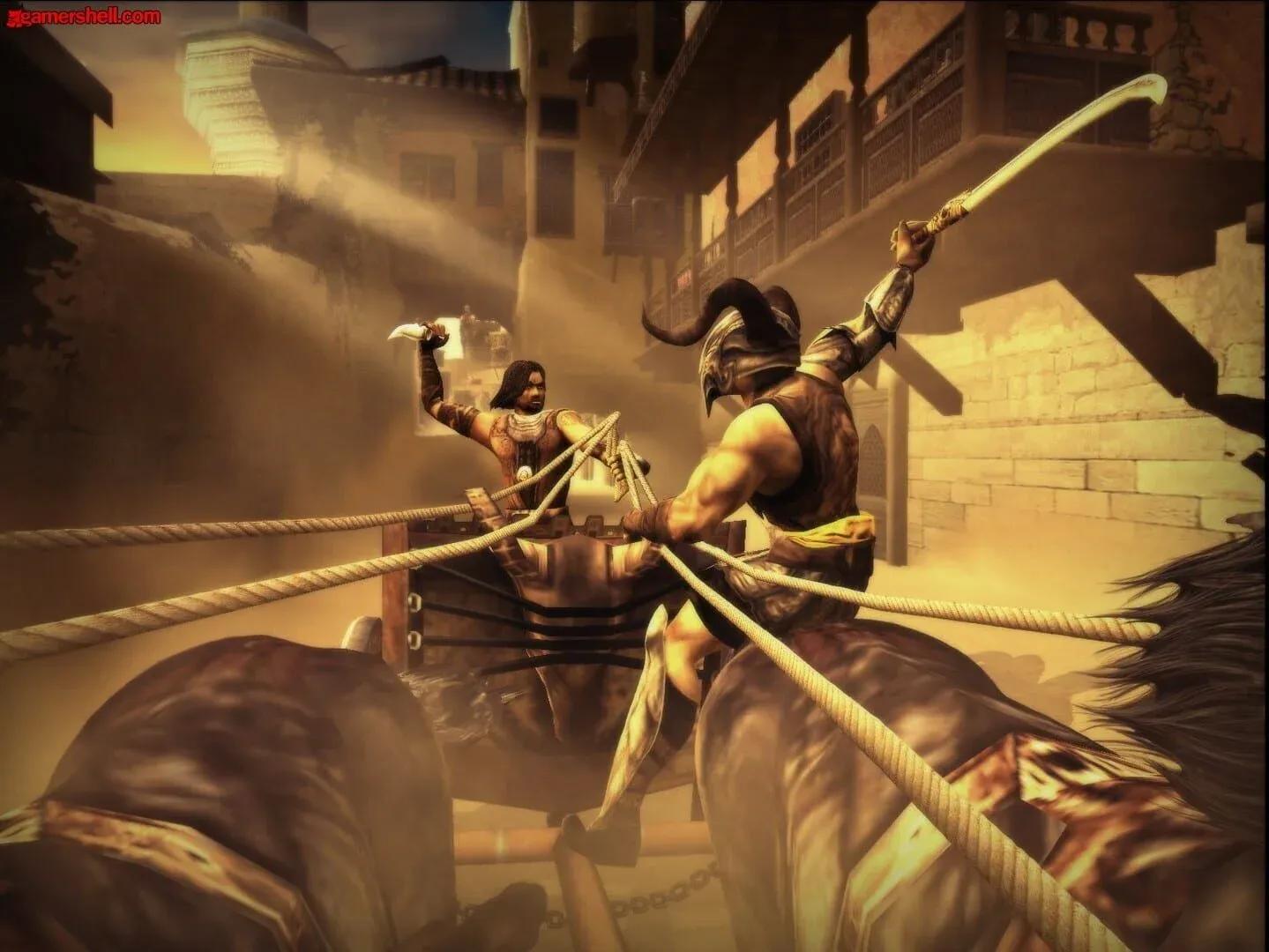
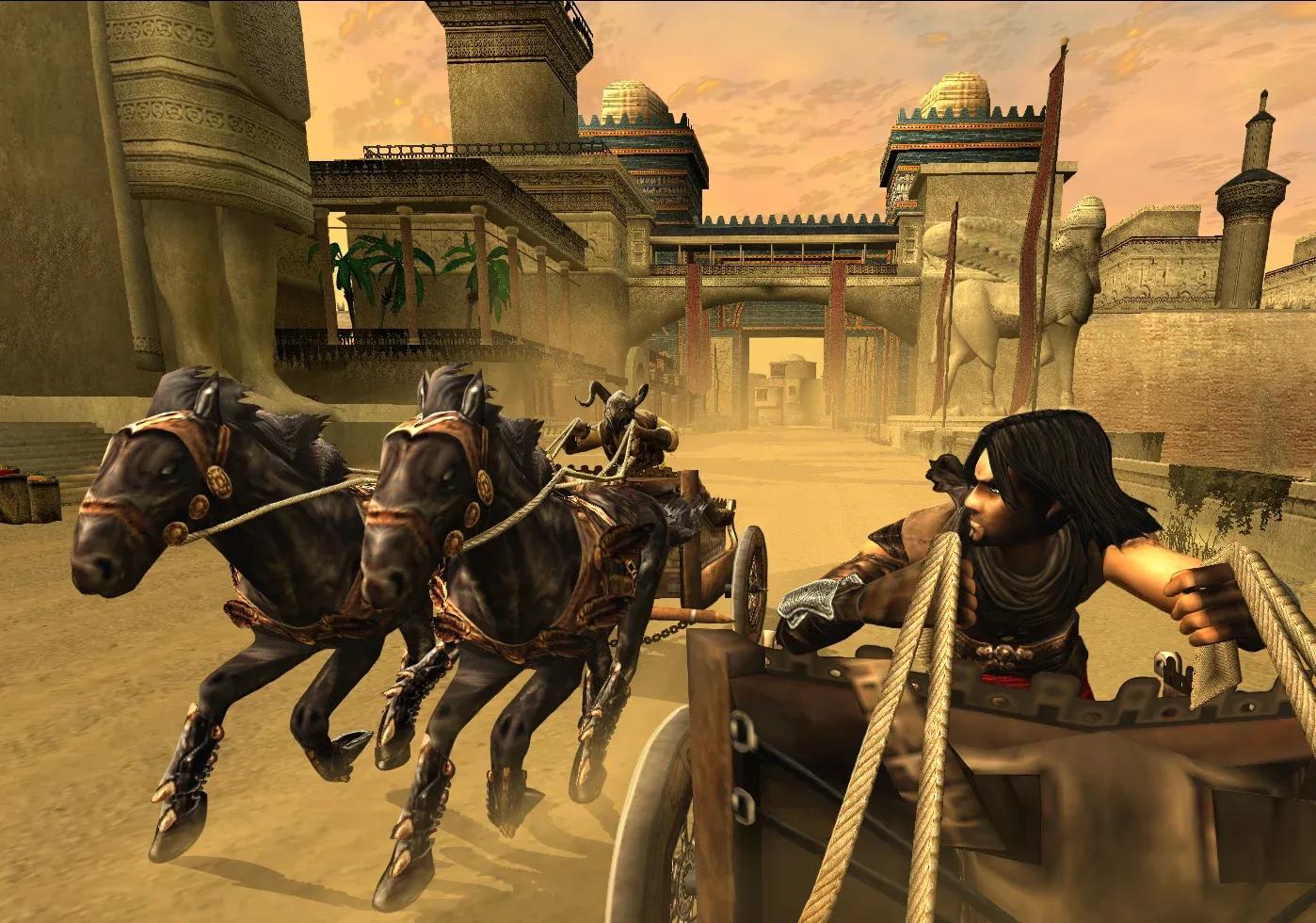
Babylon is one of the better environments in the trilogy. The city has three distinct zones that play differently: the upper city's rooftops reward vertical movement and speed, the streets force you to deal with large enemy groups in tight spaces, and the underground sections are where the stealth mechanics get the most use. The art direction leans toward a war-torn golden city rather than a fantasy abstraction, which grounds the story without stripping out the supernatural elements.
Prince of Persia: The Two Thrones™ content image
The narrative benefits from the setting too. The Prince's internal conflict with the Dark Prince is literally voiced as an ongoing argument, with both personalities commenting on events and each other's decisions. It sounds like a gimmick but it works, partly because the writing is sharper here than in Warrior Within, and partly because the two voices represent genuinely different philosophies about power and violence.
Impact and legacy
The Two Thrones landed in 2005 (with the Steam release following in 2009) and closed the Sands of Time trilogy on strong footing. The game earned scores in the high 70s to mid-80s across major platforms at launch, with particular praise for the dual-character design and the return to storytelling that felt grounded after Warrior Within's detour. The hack-and-slash combat system here influenced how Ubisoft approached character action in later projects, and the stealth kill mechanic showed up in various forms across the studio's subsequent work. For anyone working through Prince of Persia's back catalog, The Two Thrones is where the trilogy's threads finally come together.