
Clover RPG hands you a grimoire at random, then expects you to make it work. Some rolls are genuinely strong from the start. Others need specific passives before they click. And one sits at 1% drop chance while still earning its top placement on merit alone. This guide ranks all seven magic types in Roblox Clover RPG from S down to B, breaks down every kit's spells and passives, and tells you exactly when a reroll is worth the cost.
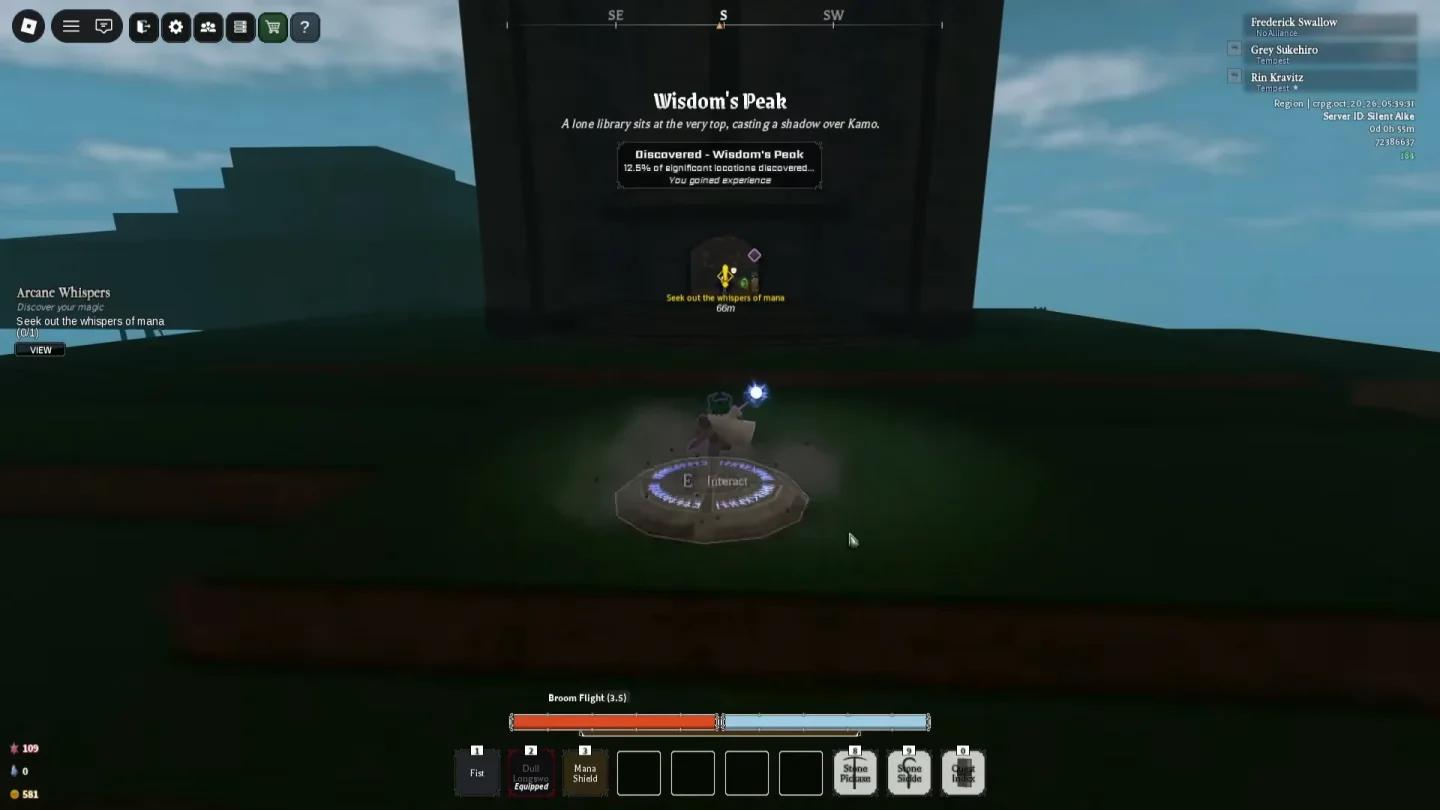
Grimoire magic selection screen
Clover RPG magic tier list at a glance
The full ranking sits across three tiers. S covers the kits with the widest answers to different situations. A covers strong, focused options that reward a specific playstyle. B has one entry that works but asks more of you than the others.
| Tier | Magic | Roll Chance | Best For |
|---|---|---|---|
| S | Light | 22% | All-round offense, healing, support |
| S | Wind | 20% | Aerial casting, displacement |
| S | Time | 1% | Control, reactive recovery, repositioning |
| A | Beast | 5% | Close-range pursuit, aggressive pressure |
| A | Lightning | 15% | Mixed-range offense, M1 synergy |
| A | Flame | 22% | Burn setups, weapon pressure |
| B | Shadow | 15% | Delayed homing attacks, setup windows |
Rankings are based on kit descriptions, passives, and gameplay demonstrations. Damage scaling, boss immunity interactions, and several transformation effects still need further testing. Same-tier entries suit different builds; rarity has no bearing on placement.

S tier: the three best magic types in Clover RPG
Light: the safest pick for any content
Light earns S because no other kit covers as many situations in one package. Blinding Rush closes distance, Aerial Assault launches a target and kicks them back down, and Falling Lance delivers an overhead attack. Slashes of Light and the aim-directed Swords of Conviction round out the offense at various ranges.
The defining tool is Divine Light, which restores your own health on a 60-second cooldown. Holding RMB on activation converts it into Divine Field, an area heal for allies instead. That 60-second recovery is real: spending it on minor chip damage leaves you without recovery when a fight gets serious. The field version's exact self-healing behavior still needs confirmation.
Blindstrike applies blindness on magic hits with a 7-second passive cooldown. Blinding Rush and Falling Lance each return in 9 seconds, giving Light consistent access to movement and ranged pressure. The passive costs 4 Points and 100 Marks; Divine Field costs 4 Points and 200 Marks.
Light does not win on raw damage. Swords of Conviction fires toward your aim rather than auto-tracking, and the heal punishes reckless play. Use the kit to manage distance and protect your health bar, not to brute-force trades.
Wind: aerial efficiency turned into a playstyle
Wind's entire kit points toward one passive: Aerial Efficiency, which cuts airborne Wind spell mana costs by 30%. Gale Rupture launches you and nearby enemies upward. Gale Updraft sends you skyward on its own. Those two spells exist specifically to create the airborne windows the passive rewards.
The remaining five spells extend that identity. Rushing Tempest rushes forward and launches, Tempest Palm grabs and throws upward, Gale Sphere knocks back surrounding enemies, Tempest Blade fires a projectile, and Tornado displaces a crowd. Most cooldowns land at 11 to 12 seconds, with Tornado at 16. Blade Storm adds two extra projectiles when you hold RMB during a Tempest Blade cast, though landing all three on one target is a separate challenge.
Both Aerial Efficiency and Blade Storm cost 4 Points and 300 Marks each. The catch worth knowing: displacement works against you if it puts a target out of your weapon's reach. Knocking someone across the arena wastes an opening. Wind stays S because its control and mana discount reinforce the same aerial playstyle, but you need to know where your spells leave the target before treating every launch as a free combo.
Time: control, recovery, and repositioning in one kit
Rewind reverses damage taken during the last few seconds on a 16-second cooldown. That makes it reactive rather than a standard heal: its value scales with how much damage you just absorbed, not how often you press the button. The exact lookback window and recovery cap remain unconfirmed, so do not treat it as guaranteed death prevention.
Palm Thrust traps a target in an exploding bubble. Chronostasis carries you forward and transfers the bubble to the first enemy hit before a barrage of slashes. Time Stop suspends nearby enemies while draining their health. Slow Zone slows enemies in an area. Warping Blitz teleports you above an opponent and slams down. That is a lot of different answers in one kit.
Chrono Surge lets you spend mana on an instant reposition by holding RMB and dodging. Temporal Overflow adds one orb of storage per 15 magic intensity. Timeflux reduces the mana cost of orb-enhanced abilities. Each of Time's three passives costs 4 Points and 100 Marks. The orb generation rules and the meaning of magic intensity still need in-game confirmation, so avoid committing a stat build around specific orb thresholds until that is clearer.
Time's 1% roll chance is not why it sits in S. Rewind, the control spells, and the repositioning tools earn the placement. There is less certainty about its final balance than Light or Wind, but the range of problems the kit can answer is real.
A tier: strong magic with a focused identity
Beast: built for players who want to stay close
Holy Hunting closes distance. Feral Impact reappears at point-blank range for a double heel strike. Both have 13-second cooldowns. Having two approach tools matters specifically when your first engage fails or the target creates space.
Once in range, Apex Claw provides a slash, Vicious Assault hits around you, and Savage Maul adds a lion's-maw bite. Howling Slash launches an enemy and brings them back down on a 9-second cooldown. Most spells cost 25 Energy, with Holy Hunting at 30.
Beast currently has no magic passives and no built-in healing. That leaves fewer utility options than the S-tier picks, but it does not make the kit weak. The main limitation is commitment: most of this offense wants you close enough for the opponent to swing back. Also, the melee-looking animations do not confirm physical damage scaling, so do not pick a physical-damage race expecting it to buff every Beast spell.
Lightning: spell pressure into weapon pressure
Stormcaller's Respite is what separates Lightning from a generic beam-and-barrage kit. Landing a Lightning ability has a 40% chance to imbue your M1s with thunder for 10 seconds, with an 8-second passive cooldown. That creates a genuine reason to follow spell hits with weapon attacks, though the thunder effect's exact damage properties remain unconfirmed. Stormcaller's Respite costs 4 Points and 300 Marks.
Electro Beam handles line attacks, Lightning Barrage covers close range, Thunder Strike delivers a descending kick, Dragon Impact calls down a large lightning strike, and Volt Surge rounds out the kit (its written effect remains incomplete). Lightning Shroud is a transformation on a 25-second cooldown that modifies your dodges via Lightning Pulse, though neither the stat bonuses nor the dodge enhancement is specific enough to assign numbers yet.
Rain Dancer adds damage while it rains. Useful when available, but a condition-dependent bonus cannot carry a ranking across every fight. Lightning stays A because the mix of attack distances and M1 interaction gives it a practical role in most situations.
Flame: burn setups and weapon synergy
Binding Flame binds nearby humanoids. Fire Stomp creates a damaging eruption that stuns. Together they give Flame more setup than a pure damage kit would have. Fiery Grapple dashes into a grab, Blazing Dive delivers an aerial plunge, and Burst Pistol with Scorching Barrage cover ranged explosive pressure. Blazing Meteor converts an RMB Scorching Barrage cast into one larger meteor.
Amplified Wrath increases M1 damage against burning targets, which makes the burn window valuable beyond its own tick damage. An opponent who is burning and within weapon range gives you a reason to keep attacking between casts. Amplified Wrath costs 3 Points, 25 Insight, and 250 Marks.
Fire Stomp has a 12-second cooldown and costs 25 Energy. Binding Flame is the expensive cast at 18 seconds and 45 Energy. Missing that bind hurts more than whiffing a cheaper approach tool. Infernal Defiance interrupts an execution attempt and briefly stuns nearby enemies on a 60-second cooldown; it is a last-resort option, not a damage tool. Shattering Ember was marked unimplemented in earlier descriptions, so Flame's A placement does not depend on it being active.
B tier: Shadow
Shadow: patient setups with a punishing cooldown gap
Shadow is more interesting than a flat damage ranking suggests. Shadow Annihilation places three lingering orbs around an enemy before they home in. Void Beam summons a hand and fires on recast; holding RMB converts the barrage into a single stronger Focused Beam. The delayed attacks and recast create timing options that most kits do not have.
Shadow Tendril explicitly slows and tethers the target, making it the logical setup tool for those delayed attacks. The problem is its 50-second cooldown. Most of Shadow's other spells return in 10 to 12 seconds, which means you spend the majority of a fight without access to the tool that makes the kit tick.
Dark Piercer rushes forward, Dark Haste releases a close-range burst that briefly cripples (exact restriction unconfirmed), and Dark Cyclone adds a circular slash into a vertical finisher. Fear The Shadows increases Shadow ability damage at night by an unspecified amount. Both Shadow passives cost 4 Points and 100 Marks each.
B tier is an overall verdict, not a claim that Shadow loses every duel. A patient player who enjoys delayed pressure may find it a better personal fit than an aggressive Beast setup. To move it higher, the key questions are how reliably Tendril creates usable follow-ups and how well the homing orbs track evasive players.
Shadow Annihilation homing orbs
What is the best magic for PvE in Clover RPG?
Light is the safest general recommendation for solo PvE. It combines offense at multiple distances with self-healing and an ally-healing passive option. Wind is a strong alternative if airborne casting fits your approach, and Flame's burn-to-M1 loop gives it a natural rhythm for clearing groups.
For group PvE, Light's Divine Field is the clearest support pick. Wind and Flame can affect nearby enemies in groups, but scattering a pack with displacement can make it harder for teammates to hit the same targets. Against bosses, confirm whether grabs, launches, and time bubbles actually apply before planning around them.
What is the best magic for PvP in Clover RPG?
Time suits players who want control and reactive recovery. Wind rewards aerial positioning and displacement. Light provides the broadest mix of offense and disruption. Beast is the close-range pursuit pick. Flame and Lightning both reward weaving spells with M1 pressure, while Shadow favors planned setup windows over raw aggression.
No kit has enough matchup data behind it to call every fight in advance. Pick based on the way you want to win, not on a single tier number.
Race and trait synergies worth knowing
Elf reduces spell mana costs by 15%. Dark Elf adds 5% spell damage and 10% mana regeneration. Elf helps when casting costs are the bottleneck; Dark Elf improves spell damage without a weather or time-of-day condition. Wind already has an airborne mana discount, but the stacking formula with Elf is unverified.
Lesser Angel adds magic resistance and once-per-life lethal-damage protection. That is a different defensive layer from Light's healing or Time's Rewind. Lesser Demon suits builds where weapon hits are central, fitting Flame's burn-to-M1 plan or Lightning's imbued-M1 plan. Beast's melee-looking spells should not be assumed to receive the same physical bonus.
For traits, Arcane Rebound restores 5% mana on a successful parry or dodge (requires Level 20, 10 Intelligence, 4 Points, 50 Marks). Graceful Escape adds 10% dodge frames for 25 Agility and 3 Points. Mob Slayer adds 10% damage against mobs after 150 NPC kills and costs 3 Points; whether every boss qualifies needs checking.
If you play other Black Clover-inspired games on the platform, the Clover Origins grimoire tier list and the Clover Time grimoire tier list break down how those games rank their magic types, which makes for useful comparison when deciding which game to invest in.
How to reroll magic in Clover RPG
Magic is randomly assigned when you speak to the Announcer NPC after reaching level 10. To change it, use a Magic Reroll item. This gives you another random result, not a choice from the tier list.
Magic Rerolls can be purchased from the in-game shop. They also have a low drop chance from the Gladiator and Bael bosses, making them farmable without spending Robux, though exact drop rates are unconfirmed. A character wipe resets all progression, so reserve that route for an intentional fresh start rather than a quick escape from a B-tier roll.
Before spending on a reroll, unlock and try the defining passives for your current magic. Flame without Amplified Wrath and Wind without Aerial Efficiency are both missing their biggest selling points. A kit that suits your playstyle is usually a better investment than grinding for Time's 1% chance.
For more ranked breakdowns across Roblox games, the full Roblox strategy guide collection covers everything from races and traits to weapons and units across the platform's top titles.