Search games, articles, guides...CtrlK
Sign InGet Started
Master the CRTV in Silent Hill: Townfall. Learn signal tracking, RGB alignment, and all 8 radio locations across St. Amelia.

Written by Larc
Content Writer
See more GAMES.GG guides on Google
Add us as a preferred source and our guides show up first in your results.
Silent Hill: Townfall Guide: All Documents & Clues Locations
Find all 85 Documents and Clues in Silent Hill: Townfall, sorted by part, to unlock the Observation and Thorough Inspection trophies.
Silent Hill: Townfall Guide: All New Game Plus Collectibles Locations
Every NG+ exclusive collectible in Silent Hill: Townfall, including Dog Ending coins, Sci-fi Ending steps, and the NG++ Pistol-3000.
Silent Hill: Townfall Guide: All Strange Postcard Locations
Find all 15 Strange Postcards in Silent Hill: Townfall across Parts 1–4 and Part 6 to unlock the Blur Your Eyes trophy.
Silent Hill: Townfall puts a 1996 handheld television in your hands and makes it the center of everything. The CRTV is your compass, your narrative delivery system, and your threat detector all at once. But developer No Code built a deliberate trap into it: to read the signal, you have to look down at the screen, which means you stop watching the world around you. That tension is the whole game. This guide breaks down every layer of the mechanic so you stop getting blindsided and start hunting frequencies with purpose.
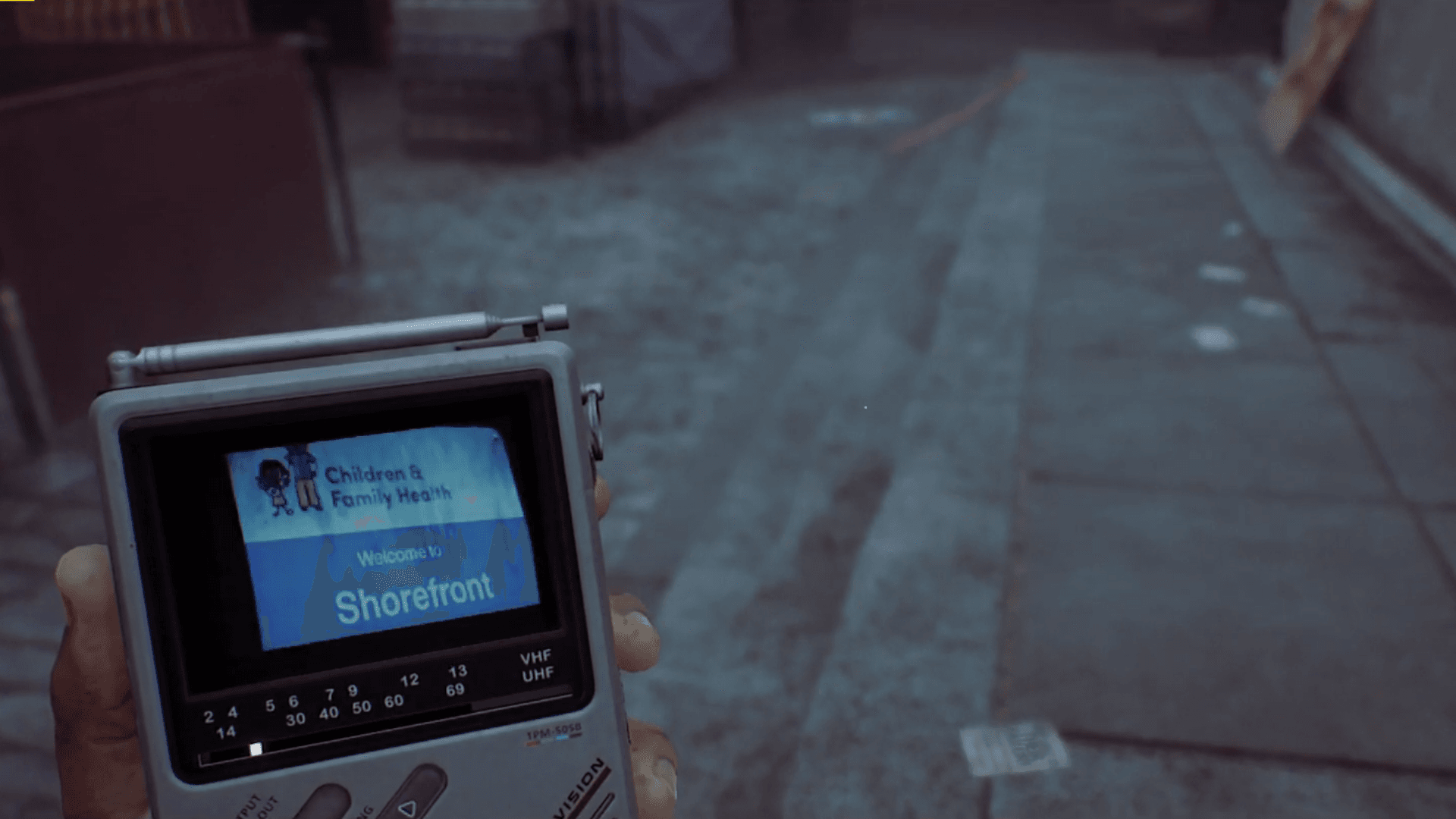
The CRTV is a handheld television that protagonist Simon Ordell carries throughout St. Amelia, a fictional small fishing village set in 1996 and inspired by a real location in Fife, Scotland. There are no experience points, no skill trees, and no combat leveling in Silent Hill: Townfall. Progression runs entirely through signal hunting. Every narrative log, puzzle clue, and story beat is locked behind the CRTV.
The device does not overlay on your HUD like a minimap. To check it, Simon physically tilts his view downward, and your camera follows. That means the game actively removes your peripheral vision every time you need information. This is not an accident. The design forces you to weigh the risk of checking the screen against the danger of what might be moving toward you while you look away.
The core loop works like a hot-and-cold proximity game. As you move through St. Amelia, the CRTV responds to nearby local frequencies. Signal strength increases as you approach a source and degrades as you move away. Here is the exact process for finding and locking a signal:
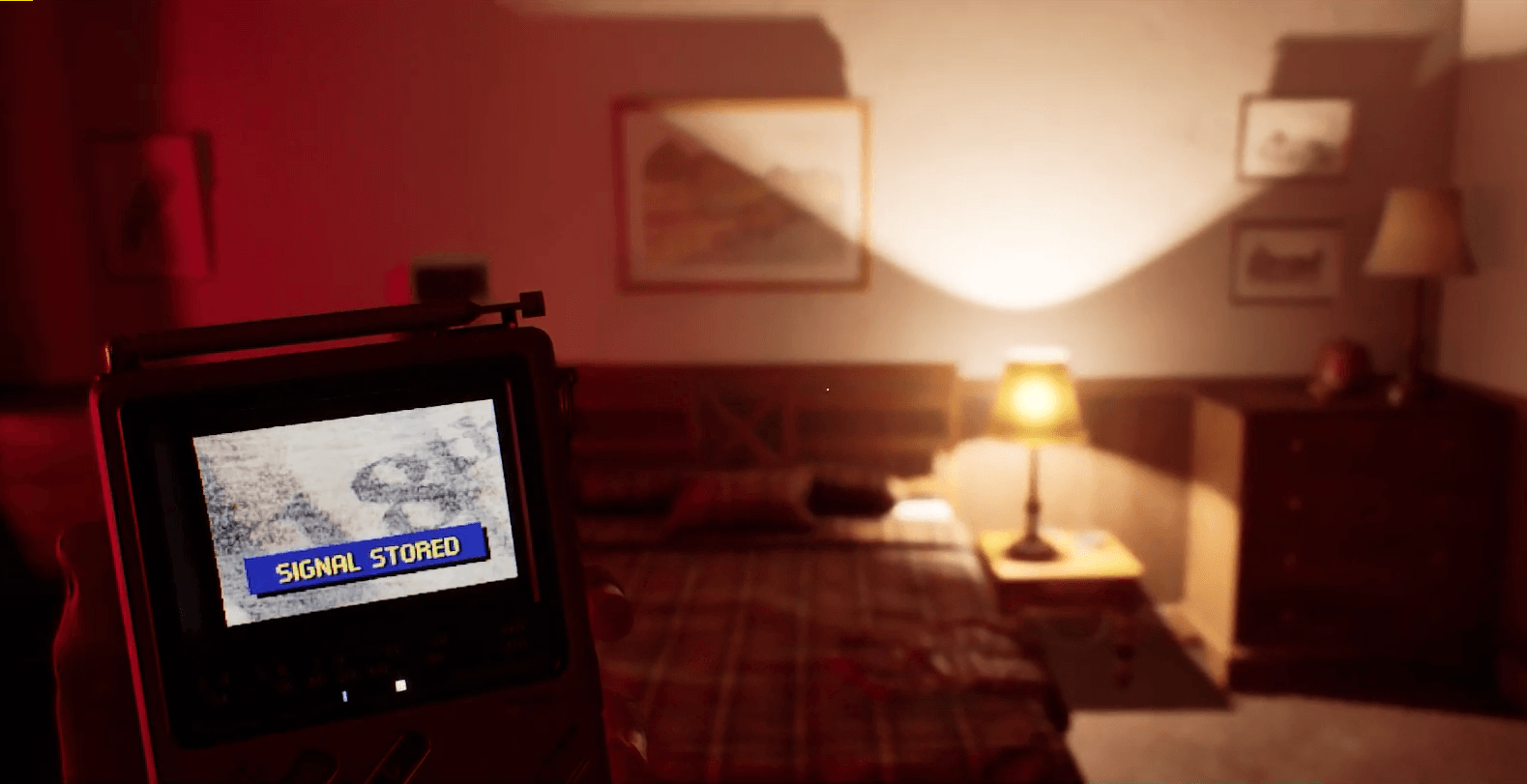
Silent Hill: Townfall CRTV Guide: How to Find Signals & Align RGB
Before tilting the camera down, pay attention to audio. Faint static and environmental distortion often precede a visible signal spike on the CRTV. Leading with your ears keeps the camera up longer and reduces the window where you are exposed.
Once you suspect a signal is nearby, tilt down to check the CRTV waveform. Walk slowly. If the signal degrades, stop immediately and reassess your direction. Sprinting while looking at the screen is the fastest way to walk into a monster encounter or out of the signal zone entirely.
Unlike previous entries in the franchise where the Otherworld arrived as a sweeping set-piece, Silent Hill: Townfall uses localized corruption. The environment reacts dynamically to unstable frequencies. Walls that shift or decay are not random decoration; they indicate proximity to a signal source or an incoming threat. Both of those things matter.
Some signals cannot be isolated until the local environment has power. If a room is completely dark and the CRTV is giving you nothing useful, find the breaker box and restore electricity before scanning again. Skipping this step is the single most common reason players wander aimlessly for longer than they need to.
When signal strength peaks, manually tune the frequency. A successful lock yields narrative logs, hidden documents, or puzzle clues that push the story forward.
Not every signal is equal. The CRTV operates across a broadcast spectrum, and the waveform color tells you what you are about to walk into before you commit. Learning to read the waveform at a glance, rather than stopping to analyze it, is what separates confident play from panicked stumbling.
| Frequency Range | Signal Type | Waveform Color | Threat Level |
|---|---|---|---|
| 88.0 – 92.5 MHz | Echoes of the Past | Steady white static | Low: background lore and minor narrative logs |
| 93.0 – 98.5 MHz | Puzzle Broadcasts | Pulsing blue sine wave | Medium: environmental puzzles requiring codes or item combinations |
| 99.0 – 104.5 MHz | Key Progression | Sharp green jagged lines | Medium: mandatory story paths with minor environmental shifts |
| 105.0 – 108.0 MHz | Crimson Frequencies | Violent deep red distortion | High: severe localized corruption and monster encounters |
The moment you spot a deep red distortion during a quick check, look back up immediately and prepare for a combat or stealth sequence. A pulsing blue sine wave means you have a few extra seconds to fine-tune the puzzle broadcast without worrying about what is behind you.
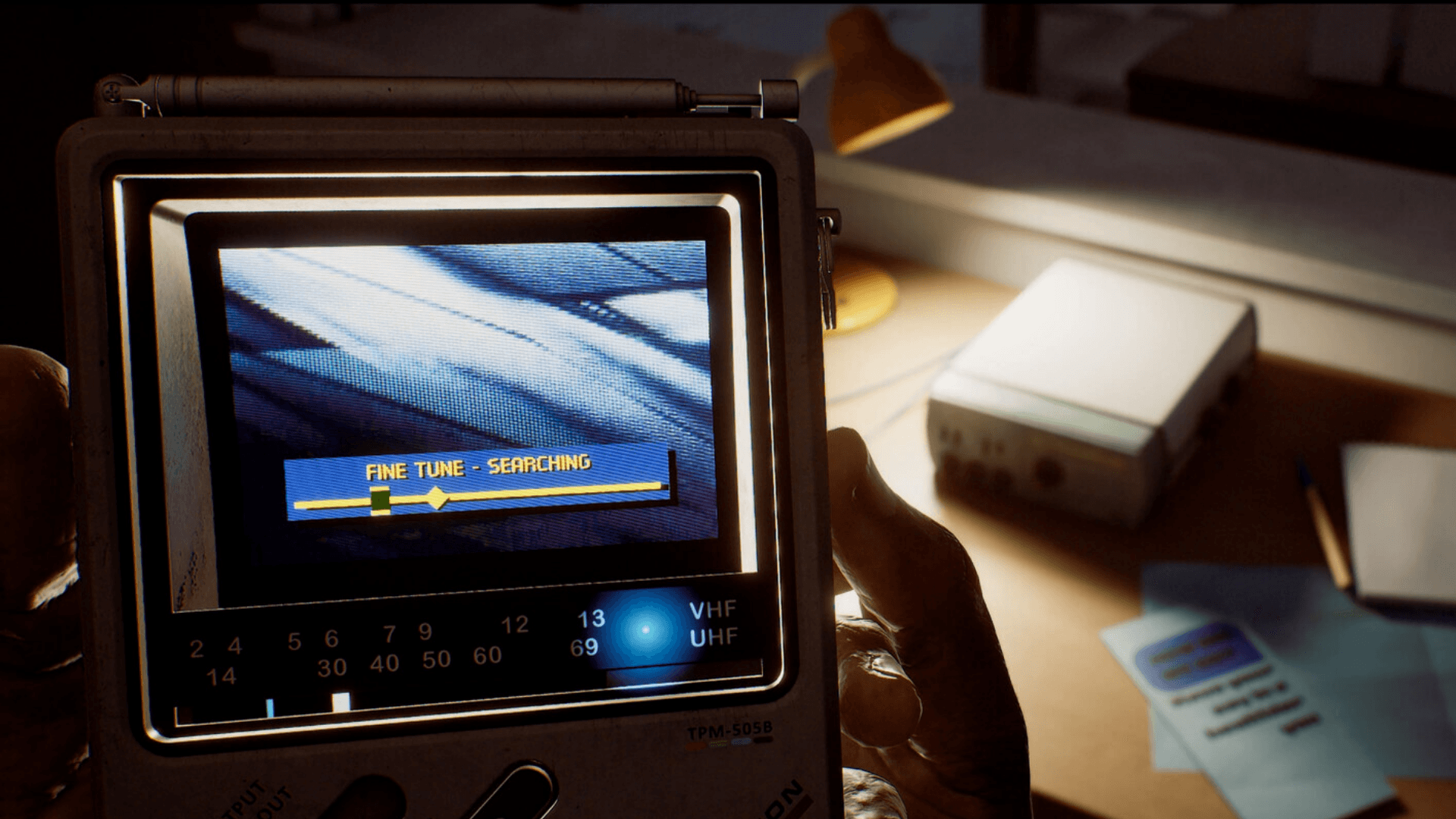
This is the step that stops most players cold. Certain channels, specifically those tied to physical radios found in the world, require a full calibration sequence before the transmission plays. The game introduces this through a CRTV Fine Tuning tutorial prompt the first time you interact with a VHF transceiver, but it covers three separate actions at once, which is easy to miss.
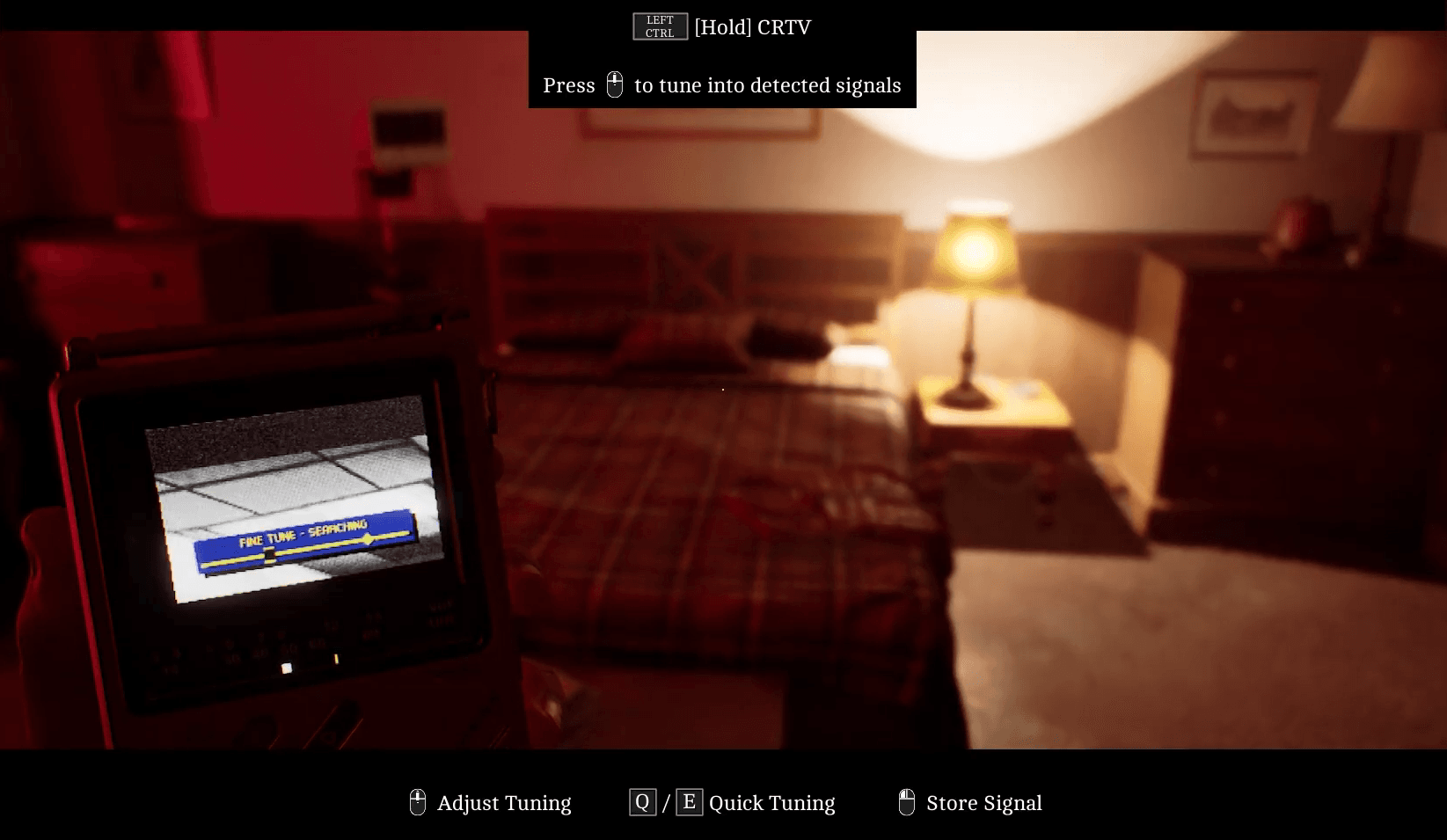
Silent Hill: Townfall CRTV Guide: How to Find Signals & Align RGB
The controls break down like this:
The angle and the alignment are two separate jobs. If you try to push the color channels into position while the CRTV is still tilted incorrectly, they will keep sliding and nothing will lock. Stabilize the angle with the right stick first, then move the colors with the D-pad.
Calibration does not reset. Once a channel is stored, you can leave the area and return without repeating the alignment.
The reason the calibration feels deliberately fussy is because it is. Writer and director Jon McKellan confirmed that the static, bleed, and color separation on the CRTV were produced by running real gameplay footage through old televisions and pocket TVs, damaging cables, and holding magnets against the screens before pulling that degraded video back into the game. The tool does not just look authentic; the source material is authentic.
Most CRTV recordings unlock by simply tuning to a channel number anywhere in the open world. Eight of them are attached to a physical radio sitting on a surface in a specific location, and those are the ones that force the full alignment sequence. Here is every radio, its chapter, and its channel number:
| Chapter | Radio Location | Channel |
|---|---|---|
| 4: Looking for Zoe | Pharmacy back room, Coastal District South | 30 |
| 6: Road to the Medical Centre | Apartment building south of the medical centre, second floor | 25 |
| 8: Many Become One | Other Medical Centre, past the narrow gap | 28 |
| 9: Start Again | Shop in Clara's Wood, table mid-room | 61 |
| 10: Missing Pieces | House #5 on South Bray, left of the television | 59 |
| 14: Fix It | CEG Headquarters main hall, table on the right | 42 |
| 14: Fix It | Room left of the stairs after the central tower puzzle | 42 |
| 15: Another Try | SWDP, beside the bed after using the JOE Key | 55 |
The two Chapter 14 radios both resolve near Channel 42 but are separate recordings that count independently. Clearing one does not clear the other.
A dedicated achievement covers 18 CRTV video signals in total, with radio calibrations included in that count. Only channels that display an actual video recording contribute to the total. Frequencies the CRTV uses to track enemies serve a separate function and do not add to the tally.
None of the recordings gate the main story. They exist for additional context and, in some cases, quietly set up situations Simon encounters later. Skipping them is a viable option, but missing the recordings means missing a significant portion of what makes St. Amelia feel like a real place rather than a backdrop.
After working through all 8 radio locations and the full frequency spectrum, a few errors come up repeatedly:
For everything launching with the game on September 24, 2026, including regional start times and early access details, check the Silent Hill: Townfall release date guide. For the full collection of strategies covering puzzles, encounters, and story progression, the Silent Hill: Townfall guides hub has everything organized by chapter.
If the CRTV mechanic is clicking for you and you want more games that reward careful observation and environmental reading, the puzzle games genre page is worth browsing for your next obsession after finishing St. Amelia.