Character creation in Solasta 2 can feel overwhelming the first time you sit down with it. Six core stats, a dozen backgrounds, eight personalities, and a point-buy system that punishes indecision all demand your attention before you ever take a step in the game world. Get it wrong and you'll feel it for the entire run. Get it right and your party will handle encounters that would otherwise grind you to a halt.
What do stats actually do in Solasta 2?
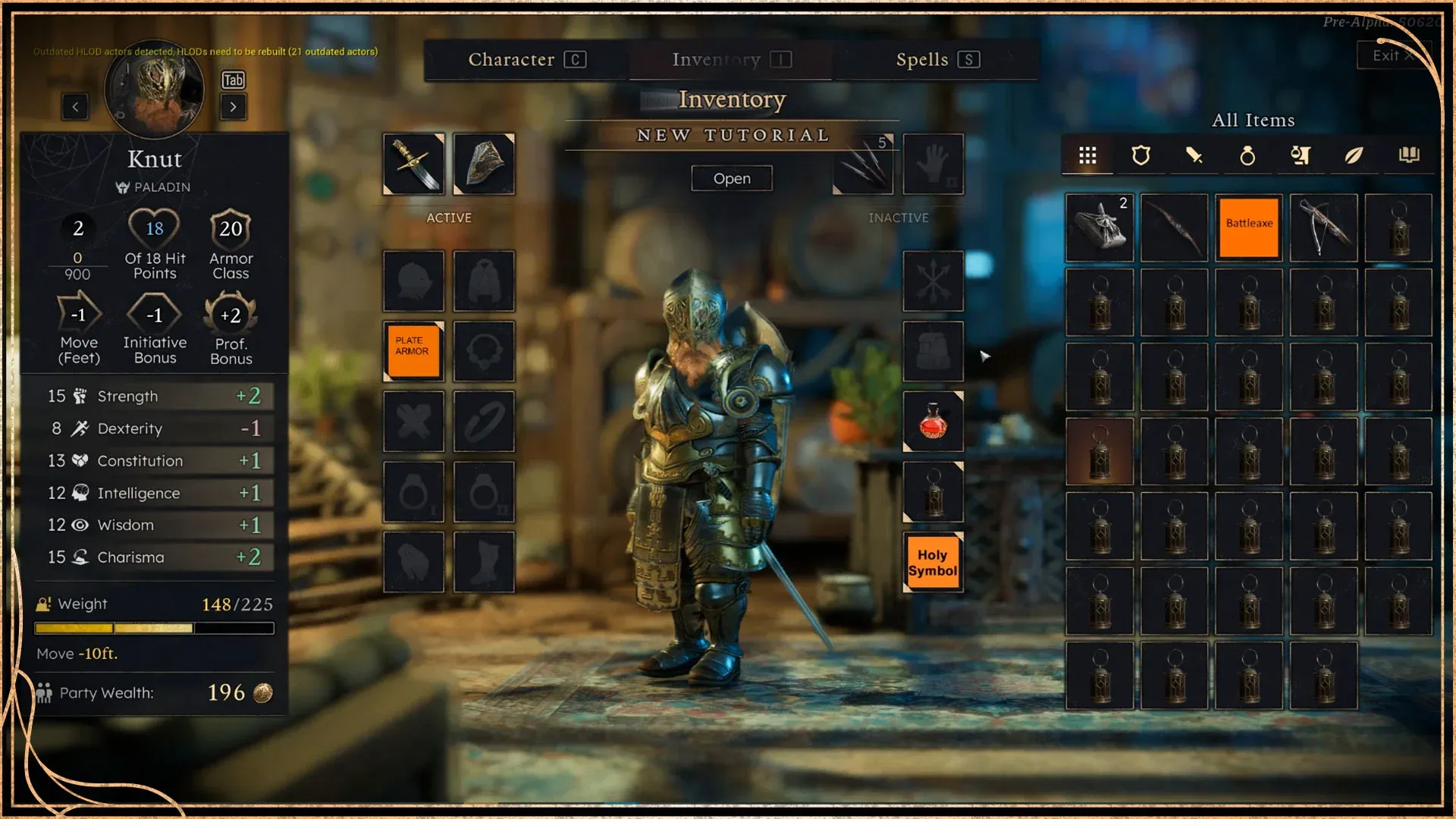
Solasta 2 pulls its stat system directly from Dungeons & Dragons 5e, so veterans of the tabletop ruleset will recognize the six core attributes immediately. For everyone else, here's the breakdown:

Point-buy stat allocation screen
| Stat | What it governs | Best for |
|---|---|---|
| Strength | Raw physical power, melee attack rolls, carrying capacity | Fighter, Paladin |
| Dexterity | Agility, reflexes, dodge chance, finesse weapon attacks | Rogue, Fighter |
| Constitution | Max HP, stamina, resistance to damage and environmental effects | All classes |
| Wisdom | Perception, intuition, resistance to magic, religious abilities | Cleric, Paladin |
| Intelligence | Spell accuracy, recall, reasoning, arcane spellcasting | Wizard, Sorcerer |
| Charisma | Persuasion, deception, NPC interactions, commanding presence | All classes |
Constitution is the one stat every class wants. More HP is never wasted, and the secondary effects on stamina and damage resistance apply to every build regardless of role. Charisma sits at the other end of the spectrum: if your character never talks their way through encounters, it can safely sit at 8 without hurting your combat performance.


How should you spend your 27 starting points?
The point-buy system gives you exactly 27 points to distribute across all six stats at character creation. Spreading them evenly across everything feels safe but actually leaves you mediocre at everything and exceptional at nothing.
The standard array approach is a proven starting point. Assign your points in this priority order:
- 15 to your primary class stat (the one your class depends on most)
- 14 to your second priority, usually Constitution or Dexterity
- 13 to a supporting stat you want but don't need to max
- 12 to a secondary support stat, often the other of Constitution or Dexterity
- 10 to a stat you'd like but can afford to leave moderate, such as Charisma
- 8 to your dump stat, the one your class has no use for
For magic users, Strength is almost always the dump stat. For melee builds, either Wisdom or Intelligence takes that slot. The logic is simple: points spent on a stat your class never references are points stolen from the stats that determine whether you hit, survive, or succeed.
For a deeper look at optimal stat priorities per class, the Solasta 2 Wiki on FextraLife tracks class-specific recommendations alongside ability descriptions as the game updates through Early Access.
Understanding the three character attributes
Beyond the six core stats, three additional attributes shape who your character is: personality, ancestry, and background. Each works differently and carries a different weight in terms of mechanical impact.

Personality selection at character creation
Which personality should you pick?
Personality controls how your character speaks, reacts to NPCs, and handles social encounters. There are eight options, and none of them add stats. This is pure roleplay territory.
| Personality | How they come across |
|---|---|
| Caregiver | Optimistic, helpful, light-hearted |
| Everyman | Friendly, team-oriented, a bit unremarkable |
| Hero | Passionate and eager, occasionally over the top |
| Innocent | Cautious, soft-spoken, avoids conflict |
| Jester | Cynical and provocative, jokes at the worst moments |
| Outlaw | Ambitious, nonconformist, edges toward aggressive |
| Ruler | Pragmatic, blunt, reads as cold to others |
| Sage | Curious, talkative, asks questions about everything |
This choice cannot be changed after you confirm your party, so pick one that matches how you want your character to sound in dialogue. The Ruler and Jester personalities tend to produce the most entertaining responses in tense situations, while Innocent and Caregiver lean toward cooperative, diplomatic exchanges.
Which ancestry should you pick?
Ancestry ties directly to your race, whether that's Dwarf, Elf, Halfling, or Human. Some races, particularly Elves, include subrace options that add additional stat bonuses and trait inclinations on top of the base racial features. For most players, ancestry is a secondary concern during character creation, but anyone trying to squeeze maximum efficiency from a build should cross-reference their chosen race's bonuses against their stat priorities.

Elf subrace ancestry options
Which background should you pick?
Background is the most mechanically significant of the three attributes. Each background adds specific stat bonuses, skill proficiencies, and an Origin Feat that gives your character a passive ability from the start of the game. Here's the full list:
| Background | Key stats | Origin feat |
|---|---|---|
| Academic | Dexterity, Constitution, Intelligence | Magic Initiate (Wizard) |
| Acolyte | Constitution, Intelligence, Wisdom | None listed |
| Aristocrat | Strength, Constitution, Charisma | Skilled |
| Artist | Dexterity, Wisdom, Charisma | Skilled |
| Ascetic | Dexterity, Constitution, Wisdom | Robust |
| Lawkeeper | Strength, Constitution, Wisdom | Vigilant |
| Lowlife | Strength, Dexterity, Charisma | Quick |
| Occultist | Dexterity, Constitution, Charisma | Magic Initiate (Wizard) |
| Philosopher | Intelligence, Wisdom, Charisma | Skilled |
| Sellsword | Strength, Intelligence, Constitution | Ready for War |
| Spy | Dexterity, Intelligence, Charisma | Vigilant |
| Wanderer | Strength, Dexterity, Constitution | Savage Attacker |
The Sellsword background pairs naturally with melee-heavy classes like Fighter and Paladin, offering Strength and Constitution boosts alongside the Ready for War feat. Academic and Occultist both open access to Magic Initiate (Wizard), making them strong picks for arcane classes that want extra spell options at level one. Wanderer with Savage Attacker is worth considering for any build that relies on high-damage weapon strikes.
Building a balanced party, not just a single character
One detail that catches new players off guard: you're building a full party in Solasta 2, not a single protagonist. That means your stat allocation decisions stack across multiple characters, and gaps in one character's toolkit can be covered by another.
A party with two Constitution-heavy frontliners and two Intelligence or Wisdom-focused casters covers most combat scenarios. Where players run into trouble is building four characters with overlapping stat priorities and then wondering why nobody can handle persuasion checks or spot hidden enemies.
Think about the party as a system. Every character doesn't need high Charisma, but someone should have it. Every character doesn't need Perception proficiency, but leaving it uncovered entirely will cost you in exploration.
For the latest balance changes and any stat adjustments made during Early Access, check the Solasta 2 patch notes to stay current with how numbers may have shifted since launch.
For more RPG character building strategies and class guides, browse the latest guides on GAMES.GG to find breakdowns across every major title.