


Survival in The Blood of Dawnwalker works differently depending on whether the sun is up or down. During the day, Coen is a human who relies on crafted items and food to stay alive. At night, he's a vampire who heals by drinking blood, and the game tracks every drop he takes. Getting this system wrong early on means running into fights already at half health with no recovery options left.
How does healing work as a human during the day?
Coen's health does not passively regenerate while he's in human form. Every hit you take during daylight hours stays on the bar until you manually heal, so keeping a stocked inventory is the difference between surviving an ambush and reloading a save.
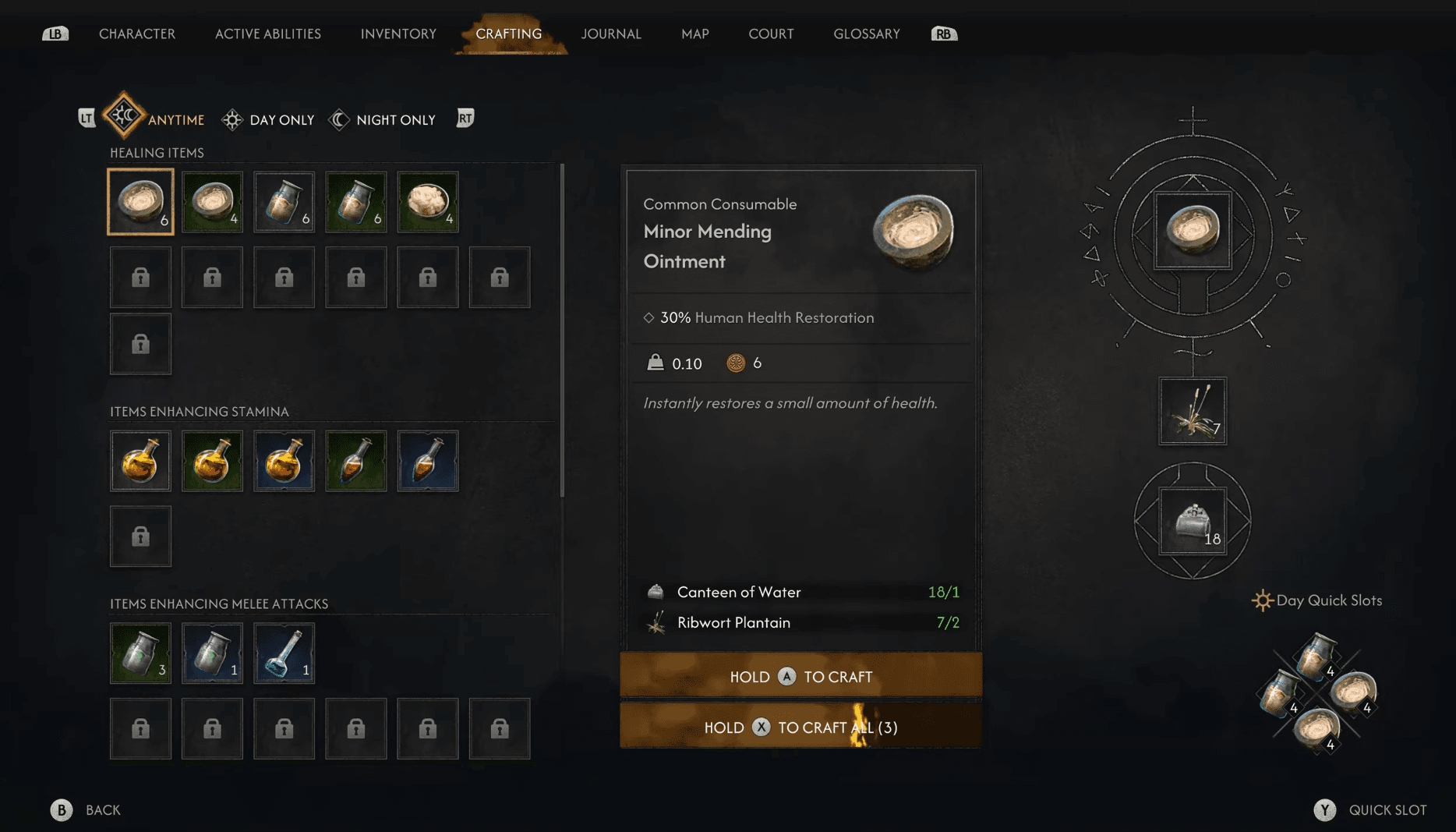
Crafting ointments, salves, and balms
The main healing items for daytime play are Ointments, Salves, and Balms. You craft these from materials looted across Vale Sangora, and the quality of the item directly determines how much health it restores. A Minor Mending Ointment gets you through the early game, but you'll want to upgrade to higher-tier versions as enemy damage scales up.
Crafted food items also restore health and are worth keeping around. Some recipes require multiple ingredients but produce significantly better results than basic consumables. More recipes unlock by finding Manuals scattered across Vale Sangora or by gathering the required crafting materials first.
The Blood of Dawnwalker Guide: How to Heal as a Vampire & Human
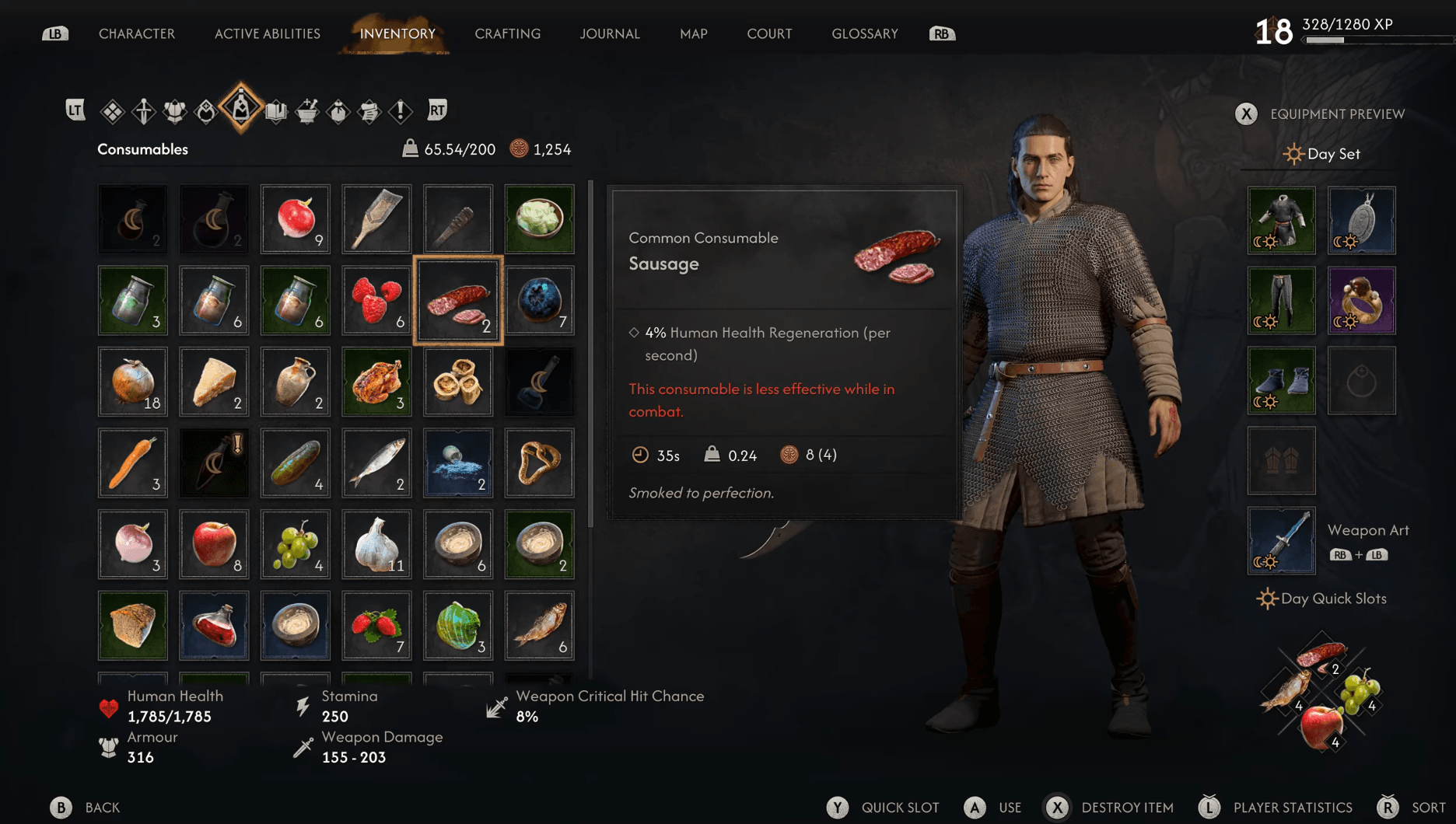
Setting up your quick slot correctly
The quick slot system has two separate loadouts: one for day and one for night. Make sure your healing item is slotted into the daytime set specifically, because the game won't automatically carry it over. Assigning a healing item to the quick slot means you can use it mid-combat without pausing to dig through your inventory.
The Blood of Dawnwalker Guide: How to Heal as a Vampire & Human
How do you heal as a vampire at night?
Night flips the entire system. Your health bar now represents your hunger level, and you start each night already thirsting for blood. Vampiric abilities become available, but they cost health to use, so feeding isn't optional.
Voracious Bite
Voracious Bite is the core healing skill for nighttime play. It works both in and out of combat, which makes it more flexible than any consumable.
Outside of combat, hold the focus button, lock onto a target (humans, animals, or monsters like kobolds), then hold the prompt to feed. You can be interrupted if an enemy attacks during the drain. In combat, activating Voracious Bite deals damage based on its current level in the Character – Vampirism panel, uses one activation charge, and cannot be interrupted once it starts.
Two things worth knowing: Voracious Bite does not work on large creatures like bears, and it has no effect on spectral enemies that lack blood. Plan around those exceptions before committing to a fight.
The Nourishing Blood perk increases the amount of health recovered per feed, making it a strong early pickup if you want to stay topped up between encounters.

The Blood of Dawnwalker Guide: How to Heal as a Vampire & Human
Feeding on humans vs. animals
Human blood is the most efficient heal in the game. You can choose to drain a target partially, which knocks them unconscious, or drain them completely, which kills them. The tradeoff is Corruption: every time you feed on a human, your Corruption level rises. Feed too heavily on humans throughout the run and it will push you toward the vampiric story path, which locks out certain endings.
Feeding on animals heals less efficiently but does not raise Corruption. If you're trying to preserve your humanity, animals are the safer option even if the returns are smaller.
Blood vials as consumables
Vials of blood function as the nighttime equivalent of ointments. They're looted from enemies and containers, and they restore a flat amount of health depending on the type: Animal, Human, or Vrakhiri blood. You can only use them while in vampiric form at night, so they don't carry over as daytime options. Collect them whenever you see them.
Vial of Animal Blood and Vial of Human Blood can also be crafted with an infusion buff that temporarily increases your maximum health, making them more than just a straight heal in tough encounters.
Monster drop healing items
Several items drop specifically from monsters and undead enemies:
- Tainted Marrow restores health and drops from undead foes.
- Kobold's Blood heals and comes from kobold enemies.
- Murohn's Blood also provides healing from specific monster types.
- Anachora Ivy is a unique restorative found only inside Anachora, a nightmare realm accessed through certain quests. It cannot be obtained anywhere else.
What skills and perks improve healing?
The Vampirism skill tree has several nodes that directly affect survivability. These are worth prioritizing over pure damage options, especially on higher difficulty settings.
Closing Wounds pairs well with Blood Theft because one handles passive regen while the other recovers grey health aggressively during fights. Scarlet Shield rewards mechanical skill since it only triggers on perfect blocks, but the return is strong for players who have the timing down.
For a broader look at how to build Coen from the start, the beginner's guide covering early skills and combat basics is worth checking before you commit skill points.
What gear should you look for to improve healing?
Armor and accessories can carry passive bonuses that stack with your active healing. The four types to look for are:
- Maximum vampiric health (larger total health pool)
- Vampiric health segment regeneration (passive regen rate)
- Blood drinking restoration (more health per feed)
- Lifesteal from attacks (heals on hit)
Lifesteal gear works especially well with aggressive playstyles that keep you in melee range. Segment regeneration gear suits players who prefer to disengage and recover between waves. Check both armor and accessories when you visit vendors, since the bonuses appear across both slots.
Keeping your gear at the appropriate level matters too. Underleveled armor means you're taking more damage than you need to, which puts more pressure on your healing. The weapon and armor upgrade guide covers how to spend Dinarius and keep your loadout scaled correctly.
How does Corruption affect your healing choices?
Corruption is the long-term cost of relying on human blood. It rises every time you feed on a human, and higher Corruption unlocks advanced vampiric perks at shrines. That creates a genuine tension: the most efficient healing method is also the one that pushes you toward the vampiric ending.
Players who want to preserve Coen's humanity should lean on animal feeding, blood vials, and passive skill healing to avoid spiking Corruption unnecessarily. Players leaning into the vampire path can feed freely and use the Corruption gains to unlock shrine perks faster.
Your feeding habits accumulate across the full run, so the decisions you make in the first few nights carry forward. There's no reset button.
For everything else you need to survive Vale Sangora, browse the full Blood of Dawnwalker strategy guides collection.