
Biggest discounts, free games, and limited-time offers across every major gaming store.
Never pay full price again.
Overview
The Curse of Monkey Island drops players back into the boots of Guybrush Threepwood, the Caribbean's most haplessly ambitious wannabe pirate. The third entry in LucasArts' long-running series, it picks up after the events of LeChuck's Revenge with Guybrush accidentally cursing his love Elaine Marley by slipping a cursed ring onto her finger, transforming her into a golden statue. Lifting that curse means sailing across multiple islands, outwitting a resurrected LeChuck, and talking your way past some of the most memorable characters in adventure game history.
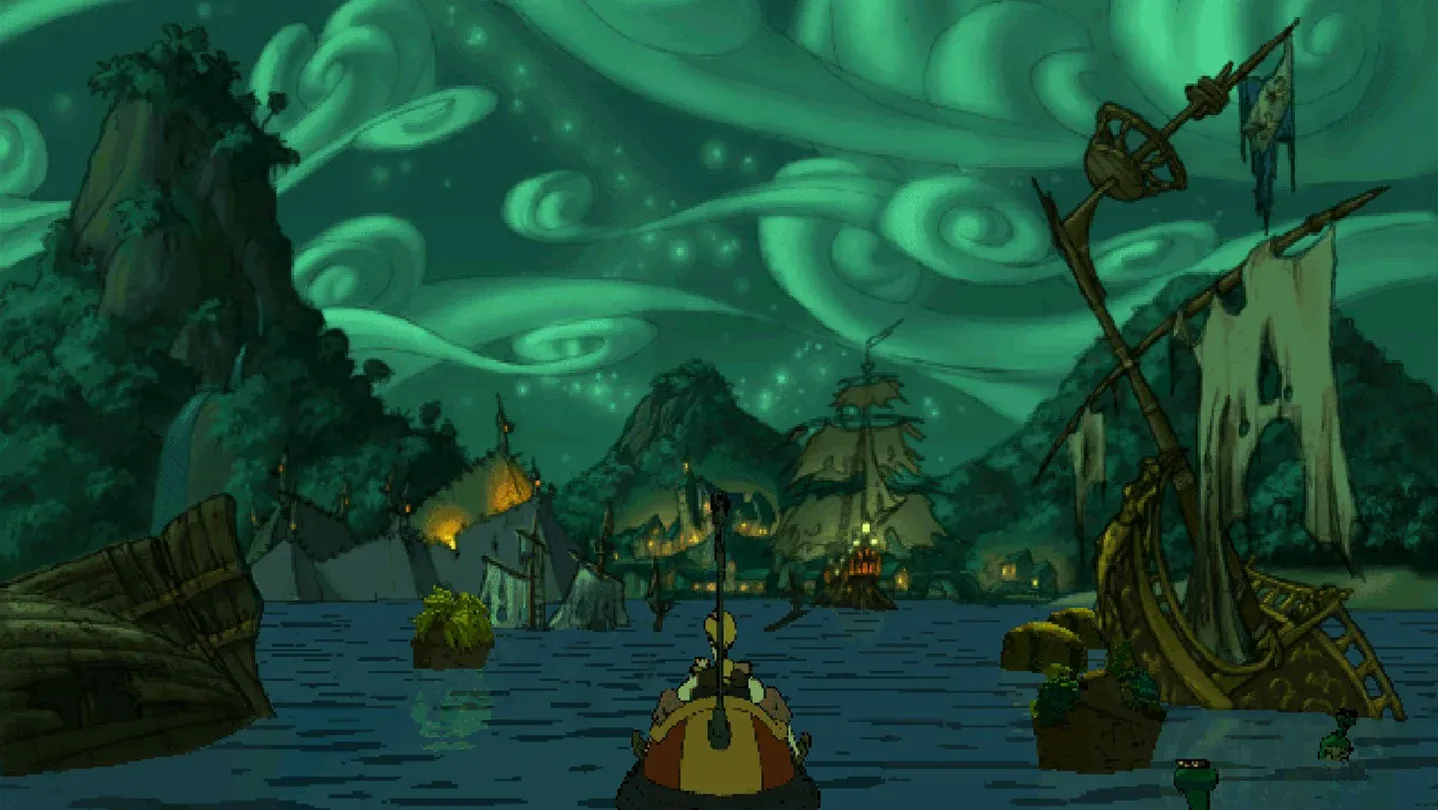
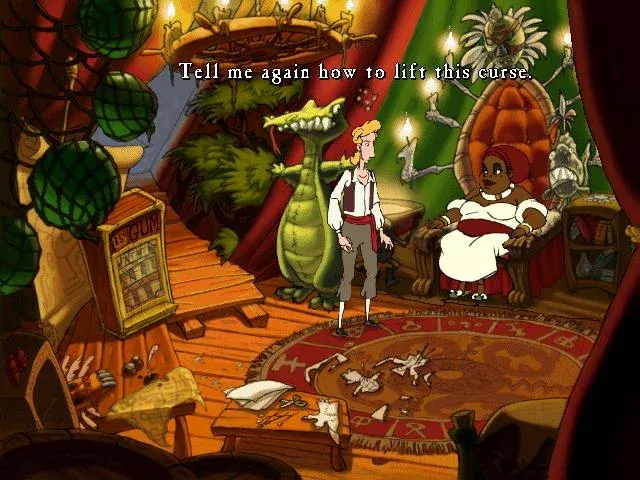
What separates this entry from its predecessors is the jump to hand-drawn cartoon art, a style that holds up remarkably well. The visuals lean into a warm, exaggerated Caribbean aesthetic that gives every location a distinct personality. Combine that with a fully voiced cast, including Dominic Armato returning as Guybrush, and the whole thing feels more alive than the earlier SCUMM-engine entries.
Gameplay and mechanics
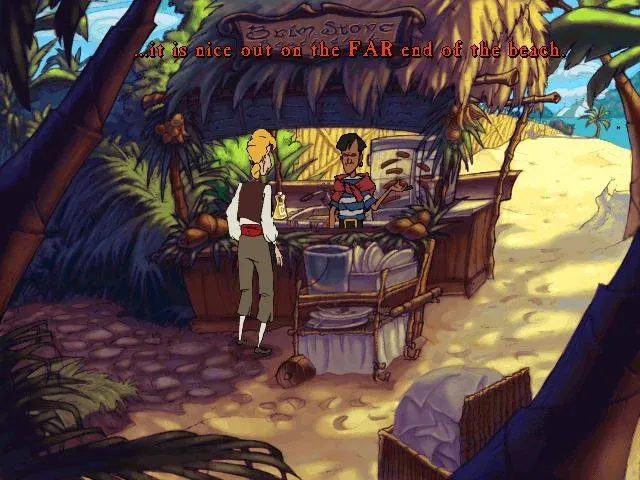
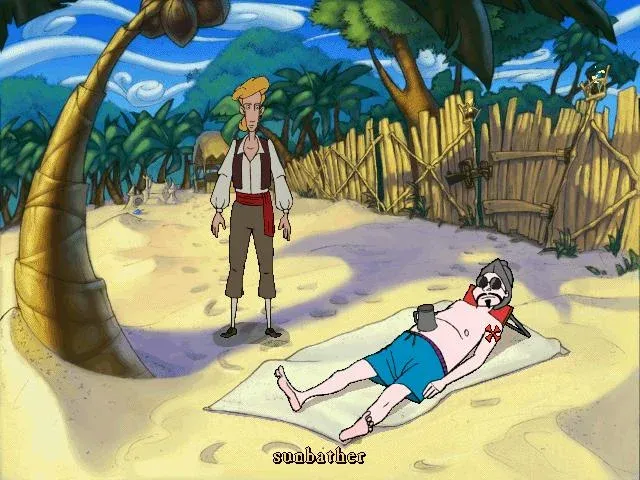
At its core, The Curse of Monkey Island is a traditional point-and-click adventure. Players explore locations, collect items, and combine them in ways that range from logical to completely absurd. The puzzle design sits firmly in the LucasArts tradition: solutions are never arbitrary, but they often require the kind of lateral thinking that makes solving them genuinely satisfying.
The Curse of Monkey Island content image
Key mechanics players will encounter:
- Inventory-based puzzle solving
- Dialogue trees with comedic branching options
- Insult sword fighting, a series staple
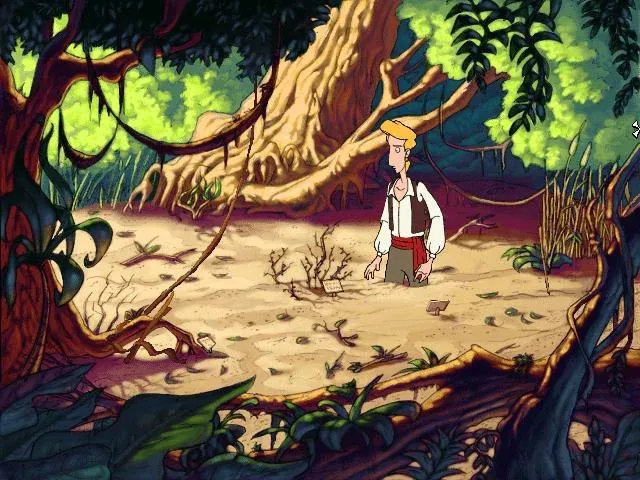
- Island exploration across multiple distinct locations
- Item combination and environmental interaction
The Curse of Monkey Island content image
The insult sword fighting mechanic deserves a special mention. Rather than reflexes, it tests your ability to match comeback lines to the right insults, which sounds ridiculous and absolutely is, but it's also one of the cleverest combat systems in any adventure game. The whole game operates on that same principle: problems that look unsolvable until they suddenly aren't.
World and setting
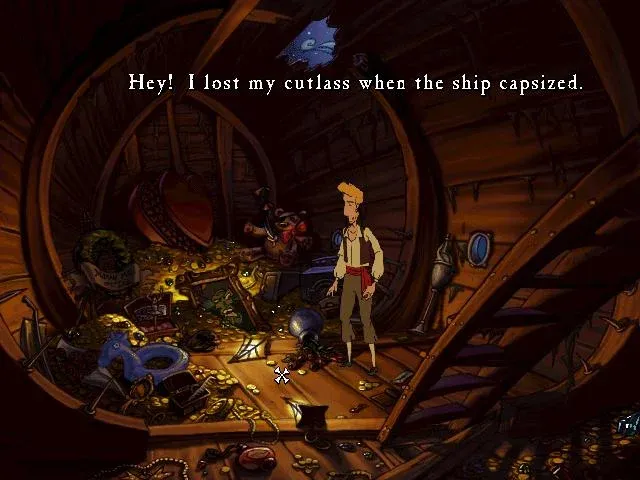
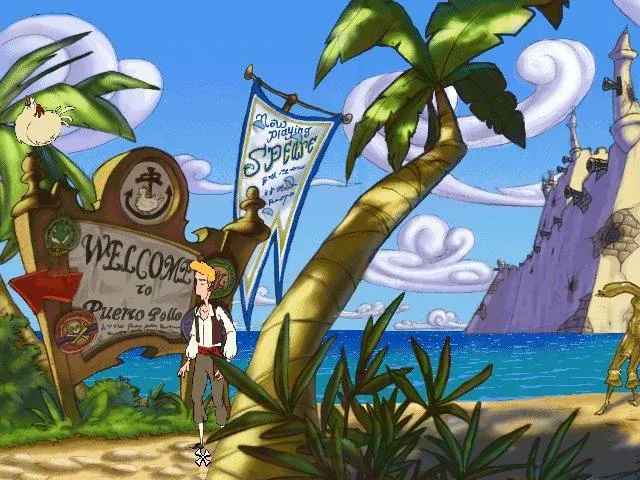
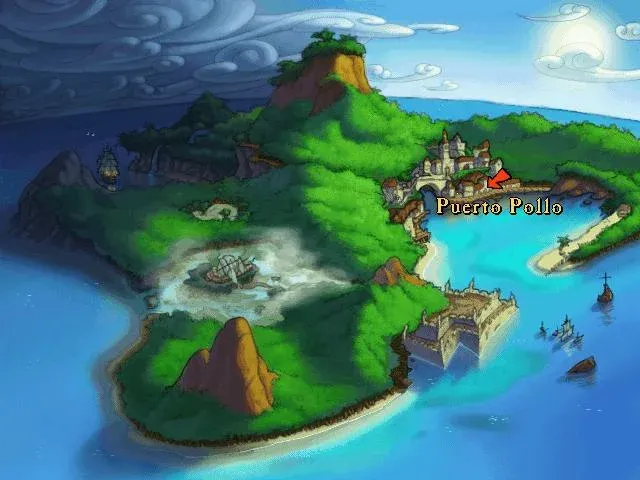
The game spans several Caribbean-inspired locations, from the bustling port town of Puerto Pollo to the haunted Skull Island and beyond. Each area has its own cast of characters, visual identity, and set of puzzles that tie into the broader story. The writing keeps things moving at a sharp pace, with jokes that land because they're actually written well rather than just telegraphed.
The Curse of Monkey Island content image
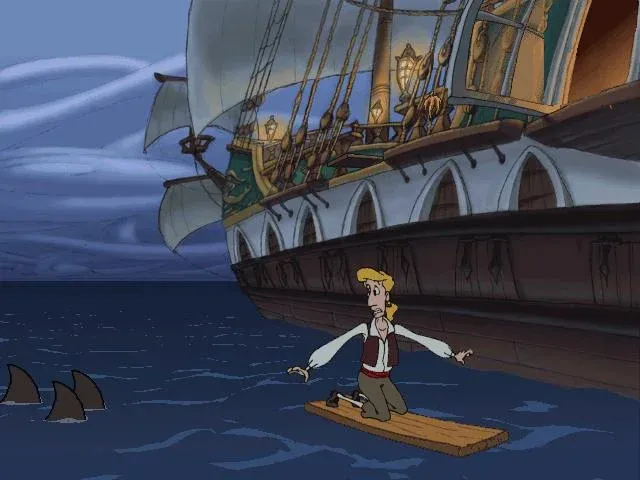
LeChuck serves as the main antagonist across the series, and here he's back as a zombie pirate with a grudge that feels genuinely threatening despite the comedic tone. The balance between genuine stakes and absurdist humor is something the game manages better than most adventure games of its era.
Visual and audio design
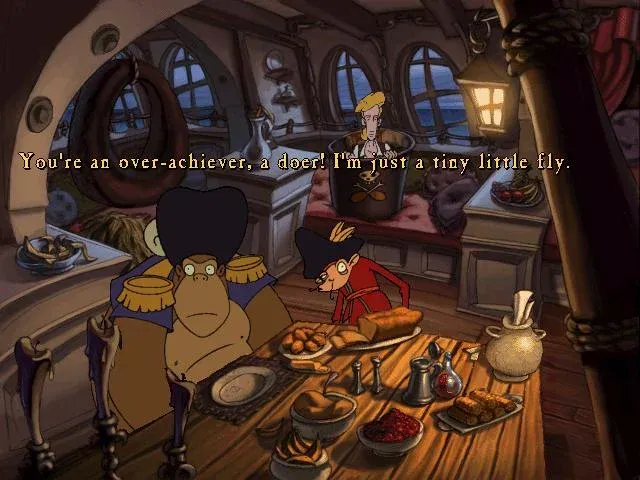
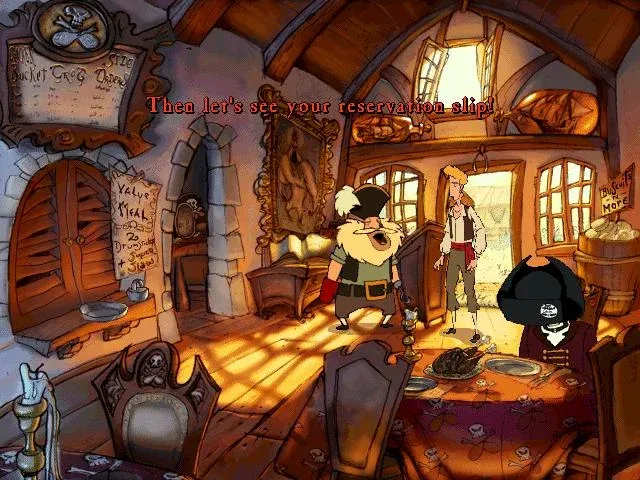
The hand-drawn art style was a deliberate shift from the pixel graphics of the first two games, and it gives The Curse of Monkey Island a look that feels closer to a Saturday morning cartoon than a traditional adventure game. Every scene is richly detailed, and the color palette leans into tropical warmth without becoming garish.
The musical score matches the visuals beat for beat. Michael Land's compositions blend Caribbean rhythms with swelling pirate-adventure themes, and the dynamic music system shifts the tone subtly as scenes change. Paired with the voice cast's committed performances, the audio work elevates what could have been a straightforward genre entry into something that genuinely feels like an interactive animated film.
The Curse of Monkey Island content image
For fans of classic point-and-click adventure games, The Curse of Monkey Island represents the genre at a high-water mark. The puzzle design respects the player's intelligence, the writing earns its laughs, and the production values hold up across nearly three decades. It's available on Windows, macOS, Steam, and Xbox, making it easy to pick up whether you're revisiting it or coming in fresh.