Search games, articles, guides...CtrlK
Sign InGet Started

Master the post-update meta in CFB 27 with the best offensive playbooks and settings for Oregon State and Colorado.

Written by Abdalla
Content Writer
See more GAMES.GG guides on Google
Add us as a preferred source and our guides show up first in your results.
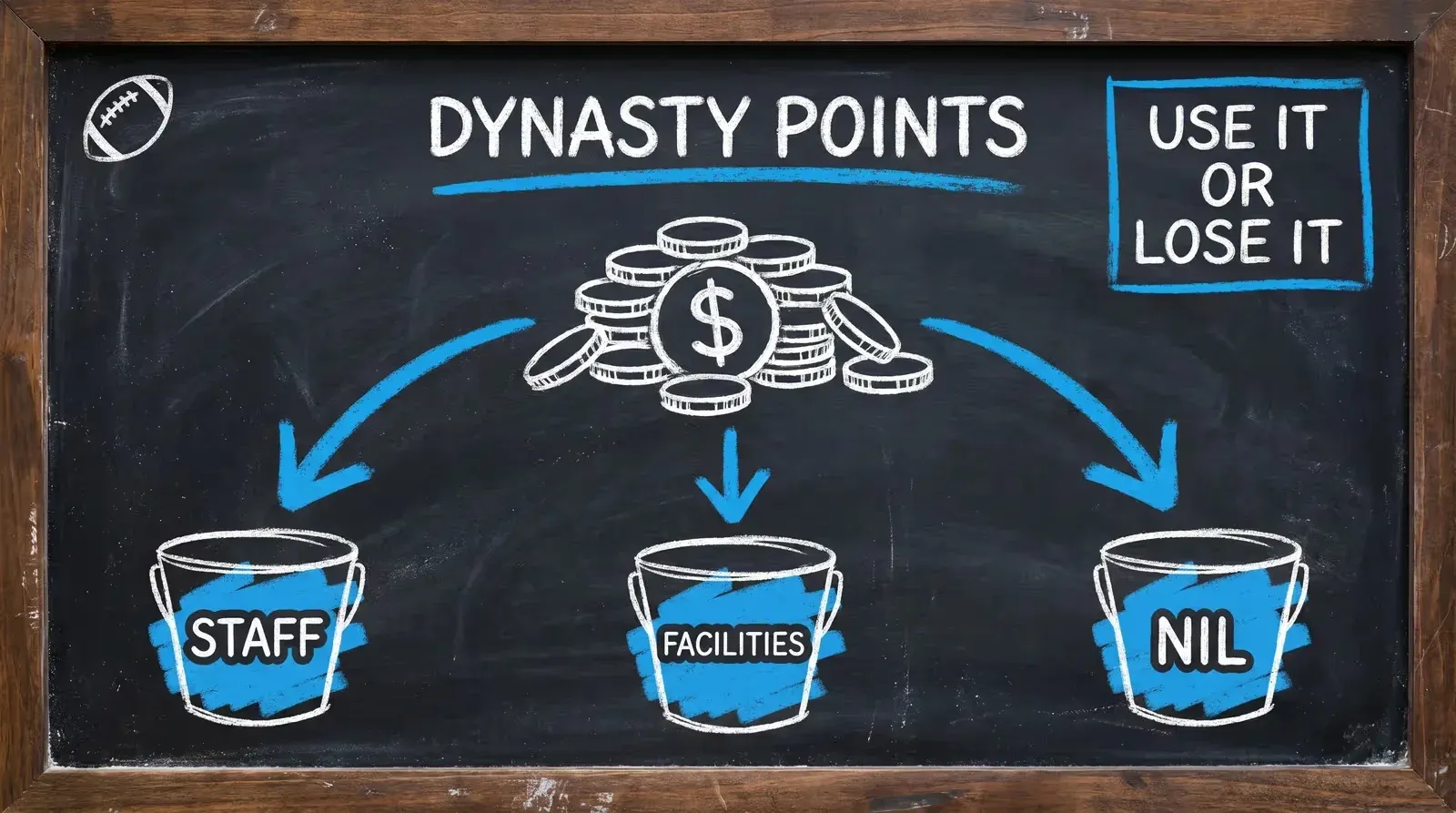
College Football 27 Dynasty Point Hoarding Guide
Master skill point hoarding in CFB 27 Dynasty to cut NIL costs, stop unwanted transfers, and control exactly when players hit their peak.
College Football 27 Best Playbooks and Defensive Settings Guide
Best offensive and defensive playbooks in CFB 27, plus settings adjustments after the running game and blocking updates.
College Football 27 Dynasty Recruiting Guide: Find Hidden Gems Every Class
Master CFB 27 Dynasty recruiting with NIL strategy, the Playing Time filter method, and position-specific archetype hunting to build elite rosters.
The meta in EA Sports College Football 27 has shifted significantly since launch. Speed boosting is gone, aggressive blocking now draws holding penalties at a much higher rate, and defensive contain schemes work differently than they did at release. If you're still running the same playbook you used on day one, you're leaving yards on the field.
This guide breaks down the two offensive playbooks worth switching to right now, the settings that complement the updated gameplay, and why the changes actually open up more offensive variety than the old meta allowed.

Oregon State playbook overview
The core issue is that two of the biggest rushing exploits from launch are no longer viable. Speed boosting has been patched out entirely, so you can't artificially accelerate ball carriers through the backfield the way you could before. Aggressive blocking still exists as a setting, but it now triggers holding penalties far more often, making it a liability rather than an advantage over the course of a full game.
Defensive block shedding has also been improved, meaning blockers no longer wall off defenders as cleanly. Offensive tackles are doing a better job of identifying contain defenders, which sounds like a buff but actually reduces how automatic contain pressure was as a rushing lane. Defenses will likely shift toward more stunt packages to compensate, so having quick passing options ready is no longer optional.
The good news: the run game itself is still effective. Pistol Hulk Stretch from the UTSA playbook remains one of the best rushing concepts in the game despite all the changes. The shift is less about running less and more about building an offense that doesn't collapse when the run gets stuffed.
Oregon State is the top recommendation for players who want to keep a strong ground game without going one-dimensional. The playbook mixes Pistol rushing concepts with enough passing formations to keep defenses honest, which is exactly what the post-update meta rewards.
Key formations and concepts in the Oregon State playbook:
The RPO options are particularly valuable here. As defenses move toward stunts to replace the contain pressure they've lost, RPOs let you read the defense pre-snap and punish them whether they commit to stopping the run or dropping into coverage. The variety of bunch and trips formations also creates natural traffic for short passing routes when the run isn't clicking.
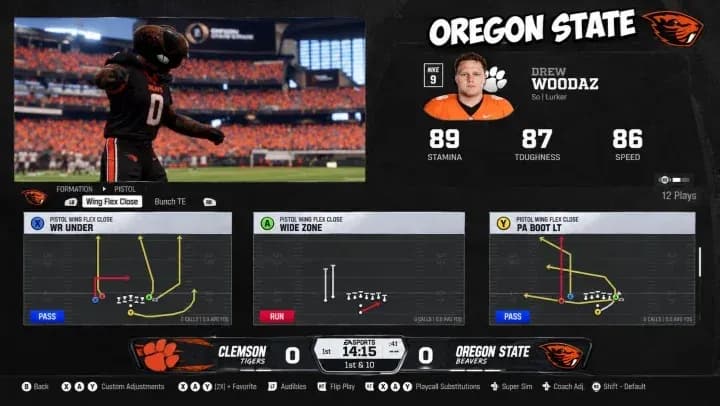
CFB 27 Oregon State Pistol Bunch TE
Colorado is the pick for players who want more formation variety and a few concepts you won't see as often in online play. The playbook leans into unconventional groupings that can genuinely confuse defensive alignments.
Key formations and concepts in the Colorado playbook:
The standout here is Gun Tight, which has been called the best gun tight formation in the entire game. Full House and Split Backs give you backfield looks that most opponents won't have specific defensive packages prepared for, especially in ranked play where people tend to stick to standard gap and cover schemes.
Go-Go formations add another wrinkle for tempo-based offenses. If you want to push pace and keep the defense from substituting, Colorado gives you the tools to do it.
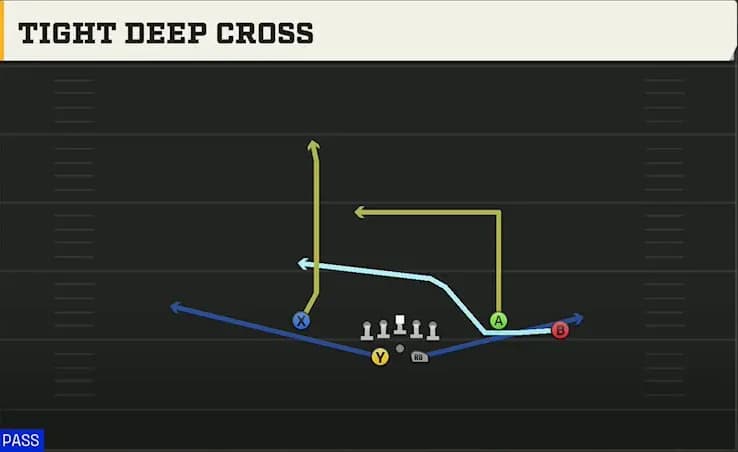
Colorado Gun Tight formation
Changing your playbook is only half the adjustment. Several gameplay settings need to reflect the new meta as well. Here's the full breakdown:
| Setting | Recommended Value | Why It Matters |
|---|---|---|
| Passing Mechanics | Placement & Accuracy | More control over ball placement on contested throws |
| Pass Lead Increase | Small | Avoids overthrowing on adjusted routes |
| Reticle Speed | 7 | Balanced between responsiveness and precision |
| Auto Base Protection | Empty | Helps your line handle stunt packages defensively |
| Blocking | Balanced | Avoids holding penalties from Aggressive |
| Auto Flip | On | Adjusts run direction automatically based on defensive front |
| CB Matchups | Balanced | Prevents mismatches without over-committing |
| Gap Integrity | Conservative | Keeps your defensive line disciplined against option concepts |
| Option Read Key | Conservative | Safer reads on option plays |
| Option Pitch Key | Aggressive | Commits to the pitch when the read opens up |
| RPO Read Key | Conservative | Avoids forcing throws into coverage |
| RPO Pass Key | Conservative | Lets the play develop before committing |
The Auto Base Protection set to Empty is the setting most players overlook. With defenses running more stunts after the contain changes, having your line automatically pick up blitzers and twists before the snap reduces the number of blown protections on plays that aren't designed for quick releases.
For players on PC looking to get the most out of the experience visually, the best PC settings for max FPS in College Football 27 are worth checking alongside these gameplay adjustments.
The pre-patch meta in CFB 27 rewarded players who could find one dominant rushing concept and spam it with speed boosts and aggressive blocking. That ceiling has been lowered. The teams that are winning online now are the ones with multiple ways to move the ball, because no single approach is automatic anymore.
Oregon State and Colorado both work because they give you answers to different defensive looks rather than one nuclear option. If your opponent adjusts to stop Pistol runs, you have Bunch formations and RPOs to punish them. If they load the box, Gun Tight and trips concepts create spacing on the outside.
This also means roster speed matters more in a different way now. Check the fastest players ranked in CFB 27 to make sure you're deploying the right personnel in these formations, since the playbooks above get significantly more dangerous with the right athletes in the backfield and at receiver.
For everything else you need to build a complete offense in this game, the full EA Sports College Football 27 strategy guides cover Dynasty mode, coach archetypes, and more.