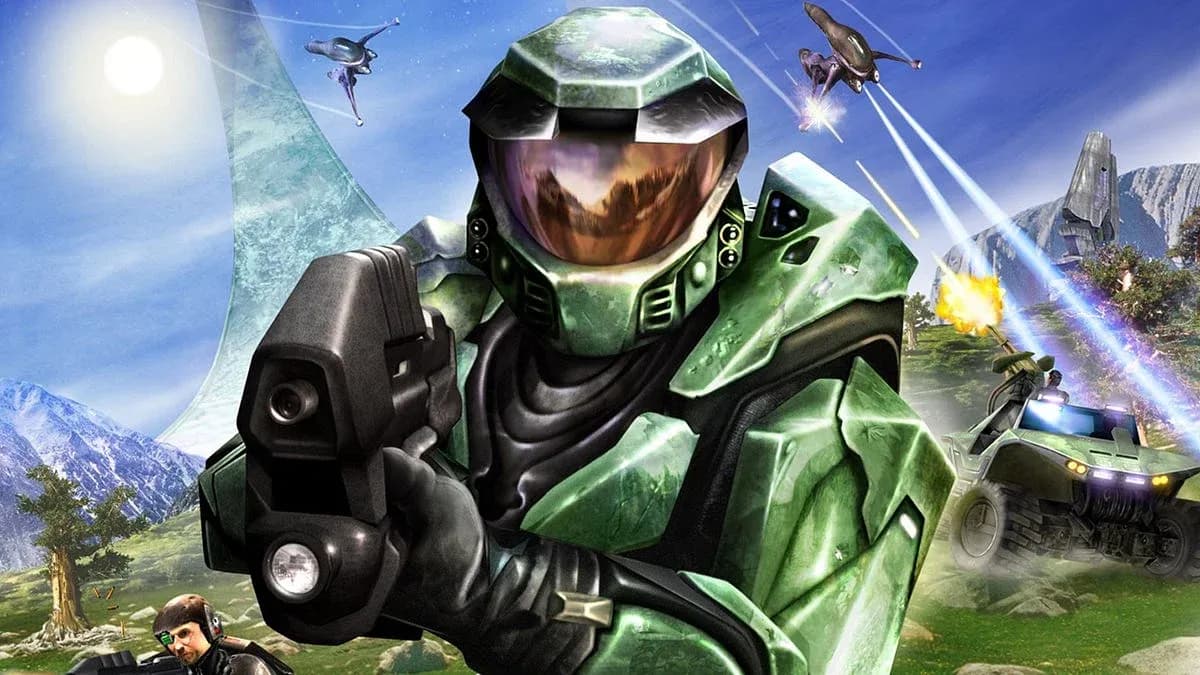

Picture a 32-year-old setting up a four-player split-screen session in a college dorm, controllers daisy-chained together, someone screaming about a Warthog betrayal. That memory is exactly what Halo Studios was banking on with its ground-up remake. Here's the thing: the numbers suggest that bet only half-paid off.
Halo: Campaign Evolved launched to genuine technical praise, but sales analyst Rhys Elliott of Alinea Analytics has crunched the first two weeks of data and the picture is sobering. The remake sold approximately 1.2 million copies and generated around $67 million in gross revenue, which Elliott describes as "a soft performance for a ground-up remake of one of the most iconic console shooters." That framing is hard to argue with once you see what it's being compared to.
The number that stings
Call of Duty: Black Ops 1 and Black Ops 2 landed on PS5 roughly a month ago as straightforward 1080p ports. No remake polish, no rebuilt engine, no modern lighting overhaul. Just two games from 2010 and 2012 running on current hardware. Together, they moved 12 million copies on PS5 in their first month, with Black Ops 2 alone accounting for 8.9 million of those sales.
That's a 16-to-1 gap on PlayStation in favor of the older, cheaper, graphically inferior ports. The platform split for Halo: Campaign Evolved was almost perfectly even, with 42% of sales on Xbox and 41% on PS5, meaning roughly 544,000 PlayStation players picked it up. Against Black Ops 2's 8.9 million PS5 copies, that's not a close race.


Why PvP is the missing variable
Elliott's argument cuts straight to the point: "Except for CoD, Halo is arguably the most multiplayer-defining console franchise in history. Split-screen Halo and LAN parties are a foundational memory for exactly the 30-something demographic this remake was chasing."
Halo: Campaign Evolved ships with co-op support but zero competitive multiplayer. No ranked playlists, no social lobbies, no Big Team Battle. For a franchise whose identity was built as much on 16-player LAN parties as on the Master Chief's story, that absence hits differently than it would for most games.
The key here is understanding what PlayStation players specifically were looking for. Many of them never owned an original Xbox, never played the 2001 version, and have no deep attachment to the campaign. They know Halo as a multiplayer brand, the kind of game their Xbox-owning friends wouldn't shut up about. Selling them a campaign-only experience at a premium price was always going to be a tougher pitch than selling them the Black Ops multiplayer they already have muscle memory for.
What the data actually tells us about Halo on PlayStation
This isn't the first signal that Halo Studios has had a PS5 traction problem. At launch in the US, Halo: Campaign Evolved ranked 4th on Xbox but only 29th on PS5 in terms of popularity. The platform gap has been a consistent theme throughout the game's commercial story.
The comparison to Black Ops is instructive but not entirely fair in isolation. Call of Duty is a global sales machine with an installed fanbase that dwarfs almost every other franchise in the shooter games space. Halo hasn't had a fully original new installment since Halo Infinite in 2021, and its brand recognition on PlayStation has never been as strong as on Xbox. Those are real structural disadvantages that no amount of PvP maps would completely erase.
But Elliott's point isn't that PvP would have made sales equal. The argument is that PvP would have given PS5 players a reason to buy in at all. A campaign remake asks players to invest in a story they may have already experienced or simply don't care about. Multiplayer gives them something to return to for months, the kind of long-tail engagement that drives word-of-mouth and sustained sales.
The remake's identity problem
Halo: Campaign Evolved was always going to be a niche product in some respects. Remaking a 25-year-old single-player campaign, however faithfully, is a different commercial proposition than launching a live-service multiplayer title. The studio made a deliberate creative choice to focus on the campaign, and there's a real argument that doing the campaign right was worth the trade-off.
The problem is that the 30-something nostalgia demographic this release was clearly targeting doesn't just remember the campaign. They remember the chaotic multiplayer sessions that defined a console generation. Delivering half of that memory and charging a full premium price is where the commercial math gets complicated.
You'll want to keep an eye on whether Halo Studios responds to this data with any post-launch multiplayer additions, or whether Campaign Evolved remains exactly what it launched as. In the meantime, if you're working through the campaign itself, check out the Halo: Campaign Evolved weapon tier list to make sure you're not sleeping on the best tools the game gives you.