
Aion 2 gives you enough character slots to build a small roster, and the question of whether to fill them comes up fast. The short answer is yes, alts are worth making, but only once your main has real momentum. Run them as resource supplements rather than second mains, and they pay off. Try to gear two characters to endgame parity on the same server, and you will fall behind on both. Here is exactly how to think about your roster.
How many character slots does Aion 2 give you?
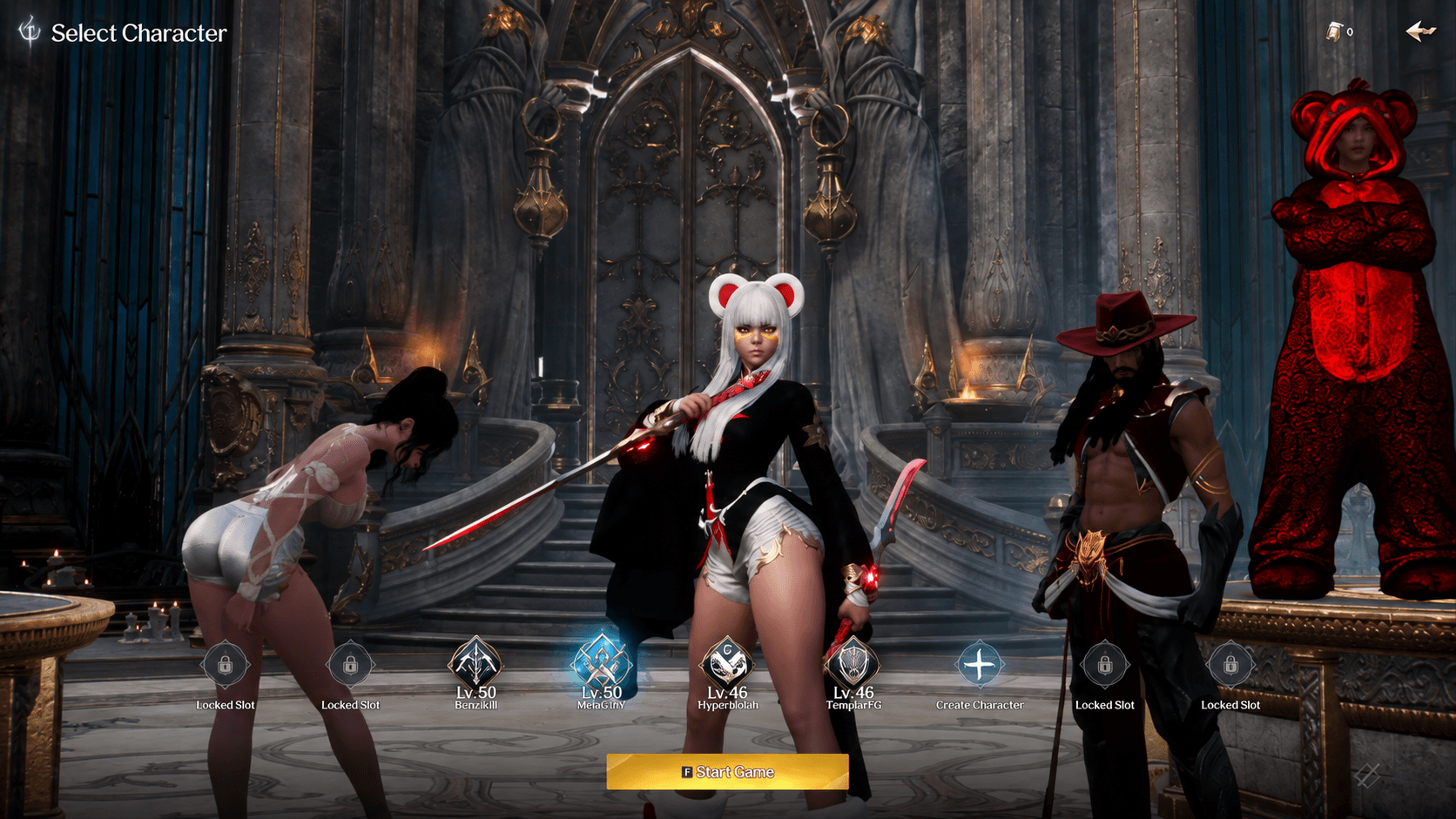
Aion 2 starts each account with approximately four character slots per server, expandable up to eight. That gives you room for a main and a couple of alts from day one, with space to grow later. Whether the expansion from four to eight costs real money or is earned through play has not been officially confirmed, so treat the ceiling as a planning number rather than a guarantee.
One detail that matters more than the raw slot count: slots are tied to a specific server, not your account globally. If you create characters on two different servers, those rosters are completely separate. Nothing carries between them, including Kina, Market access, or progression materials.
Alts Explained: Should You Make An Alt in Aion 2?

Should you make an alt in Aion 2?
The clearest signal to start an alt is reaching Level 45 on your main. At that point, you have unlocked the content that matters, you understand your class, and you have a farming routine in place. An alt created before that milestone is mostly a distraction.
Once your main is established, an alt earns its slot by doing one thing well: running content your main has already locked out for the week. Dungeons, Conquest Expeditions, and other activities operate on per-character limits, so a second character means a second set of weekly rewards. That extra Kina and those extra materials flow back into your main's upgrades, which is the whole point.
The main story campaign reportedly takes around 10 hours to clear, so getting an alt to a functional level is much faster the second time through. You already know the quests, the zones, and the systems.
Can you run two mains on the same server?
Technically yes. Practically, no. Players who ran the Korean and Taiwanese builds before global launch are consistent on this: pushing two characters to equal endgame power on the same server means both end up weaker than a single focused main.
Two structural reasons make this hard:
- Gear enhancement costs scale steeply. Funding one character's enhancement is already a grind. Funding two effectively doubles the Kina drain, and Kina from play is finite.
- The Daeva Pass is sold per character. If you buy battle passes, a second main is not just double the time. It is double the spend.
Players who tested the Korean build put the realistic ceiling at roughly 70 to 80 percent of your main's power for a well-managed alt, and that requires heavy min-maxing. Two characters at full endgame parity is not a realistic goal for most players.
If you genuinely want two competitive characters, the cleaner approach is rolling the second one on a separate server. It becomes a clean slate with its own economy, rather than a split of the same resources. The tradeoff is that nothing crosses over, and if you use the optional Membership, you are effectively funding two parallel setups.
What are the real benefits of running alts?
Extra Kina and dungeon rewards
The primary value of an alt is additional Kina and dungeon materials from content your main has already exhausted for the week. Once an alt can clear Conquest Expeditions, its Odyle Energy becomes a second pool of farming capacity. You spend it on gear and progression materials, then transfer what you can to support your main's upgrades.
There are limitations on what transfers between characters, particularly without the optional Membership, which gates access to the Market and the Kina-to-Quna Exchange. Without Membership, each character largely lives on its own Kina income and direct player-to-player trading is disabled. With Membership, the economy opens up, but that is a monthly cost on top of per-character pass purchases.
Class and role flexibility
An alt lets you try a different class without abandoning your main's progress. This matters most for party content. If your main is a damage dealer and your group consistently needs a healer or tank, having a Cleric build or support alt ready means you are never stuck waiting for a role your group already has too many of.
Support classes like Cleric and Chanter, along with tanks like Templar and Gladiator, tend to find party slots more easily than DPS characters because the demand for them is higher relative to supply. A DPS main plus a support alt is one of the more practical combinations for players who want flexibility in group content. For a full breakdown of how the factions affect your class options, the Elyos vs Asmodian guide covers every real difference worth knowing before you commit.
Guild content coverage
Guild activities sometimes need specific roles that your main cannot fill. Having an alt in a different role means you can switch when your group needs it rather than sitting out content or forcing your guild to recruit a fill.
How many alts should you run?
The sweet spot for most players is one or two alts. Beyond that, the weekly chores stack up faster than the rewards justify.
| Roster size | Weekly time investment | Best for |
|---|---|---|
| Main only | 10-15 hours | Maximum focus on endgame gear |
| Main + 1 alt | 15-20 hours | Balanced income with manageable upkeep |
| Main + 2 alts | 20-25 hours | High efficiency farming to fund main |
| Main + 3+ alts | 25+ hours | Rapidly diminishing returns, burnout risk |
The pattern that works is treating alts like the Lost Ark roster model: your main does the heavy progression, alts log in to clear weekly content, and then you log out. Short, capped sessions rather than open-ended grinding. An alt that stays at the functional dungeon threshold and never gets pushed into high-tier gear can sustain itself on weeklies without demanding much of your time.
How to set up your alt efficiently
Creating an alt is straightforward: select an available slot from the Character Selection screen, choose your class, customize your appearance, and start. The one setup decision that matters most is server. Create your alt on the same server as your main if you want any shared progression benefits. Server Storage and other server-level systems only apply to characters on the same server.
Once your alt is created, getting its hotbar and skills configured correctly from the start saves time. The Aion 2 hotbar setup guide covers binding consumables, active skills, Stigma abilities, and building macros, which is worth reading before you start leveling a new class you are less familiar with.
For a wider look at everything available across all class guides, builds, and systems, the full Aion 2 guides collection is the fastest way to find what you need as your roster grows.
Common mistakes to avoid
- Creating an alt before your main hits Level 45. Your time is better spent building momentum on your primary character first.
- Trying to gear your alt to endgame parity. Get it to the Conquest Expedition threshold and redirect everything else to your main.
- Filling all eight character slots immediately. More characters means more weekly chores. Start with one alt and see how the time commitment feels before adding more.
- Rolling alts on a different server than your main without a plan. A second-server character is a separate economic investment, not a free extension of your existing account.
- Ignoring role balance when choosing your alt class. A second DPS when your main is already DPS gives you less flexibility than a support or tank alt would.