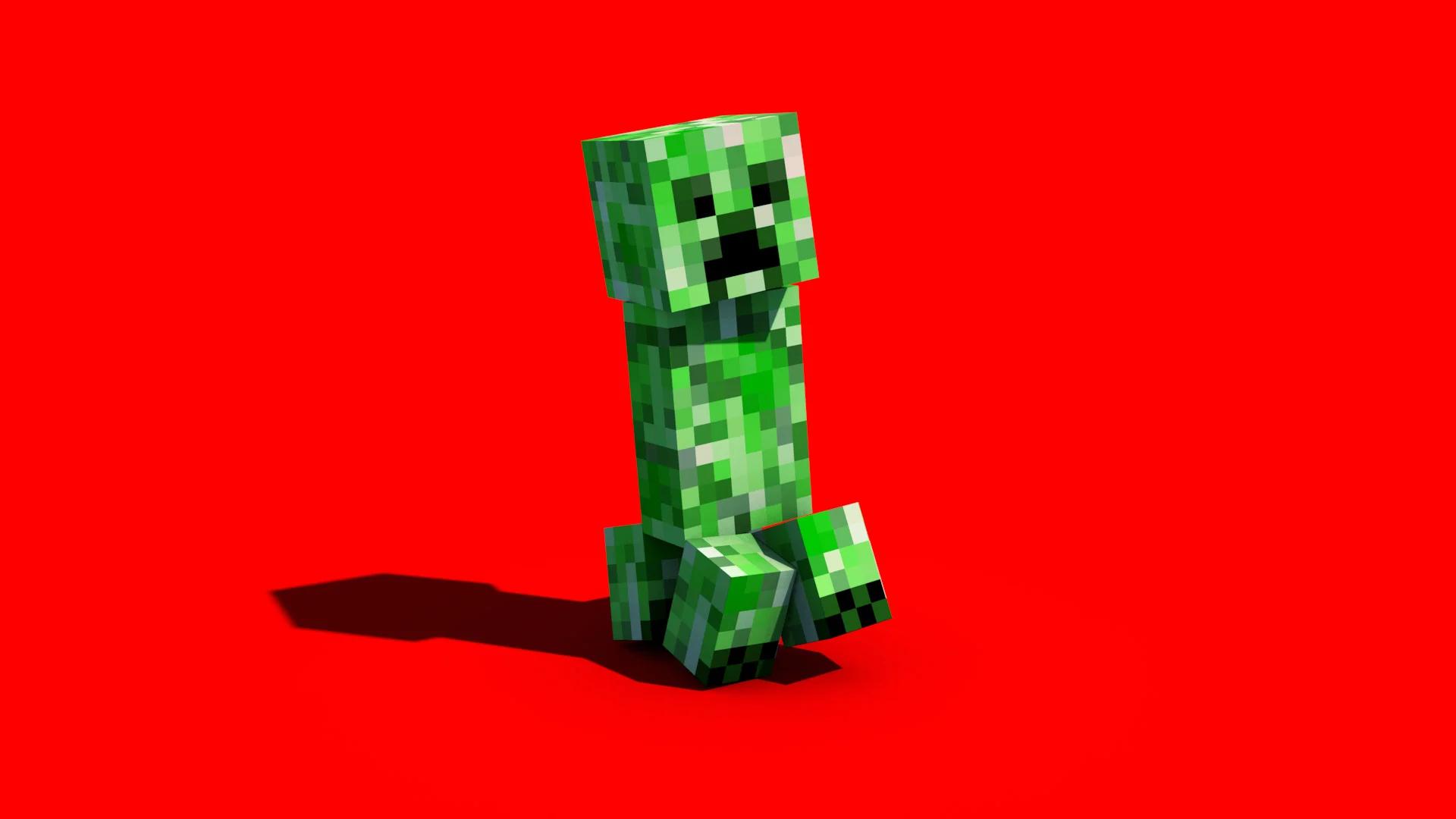

A creeper in Minecraft is a hostile mob that approaches quietly and explodes at close range, damaging players and nearby blocks.
Your first decision is whether you have room to escape or need immediate cover. A distant creeper is a manageable ranged target; one beside you needs a defensive response, not a hopeful extra swing. Recognizing its warning signs helps you choose between retreating, blocking, and fighting. Keeping creepers away from your home takes a different approach: prevent nearby spawns and control their access before an encounter starts.
How creepers find you and explode
Creepers have a tall, mottled green body, four short legs, and no arms. They have 20 HP, equivalent to 10 hearts.
Their approach is easy to miss because they have no idle call. They make ordinary stepping and swimming sounds, which can blend with your own movement. Watch your surroundings instead of relying on a distinctive monster noise to announce them.

Detection range and fuse timing
These distances describe different stages of an encounter. The distance that starts the fuse is shorter than the distance needed to cancel it while remaining visible.
| Behavior | Trigger or value | What you should do |
|---|---|---|
| Detecting a player | Within 16 blocks normally, or 14 blocks while crouching | Notice the approach before the creeper reaches you |
| Starting its fuse | Within 3 blocks of the player | React when it stops, hisses, flashes, and swells |
| Completing its fuse | 1.5 seconds, or 30 ticks | Choose an immediate defensive action |
| Canceling through distance | Reach 7 blocks away while remaining in sight, regardless of difficulty | Keep retreating instead of stopping just beyond melee reach |
Breaking line of sight also cancels a normal proximity-triggered countdown. A solid wall or properly placed blocks can interrupt the creeper's view. Its hiss still plays to the end after cancellation, so the sound alone does not mean an explosion is inevitable.
Recognize a primed creeper
Creepers can also jump down from ledges. Fall damage advances their fuse, so one landing beside you may explode much sooner than one approaching on level ground. If you're gathering blocks at Minecraft calcite farming locations, check the ledges above your mining route before stopping to dig.
How to survive a creeper encounter
Check your escape route before choosing to fight. Open ground gives you room to retreat, while a narrow tunnel can make cover or a shield the better immediate choice. Avoid backing toward an unseen drop or trapping yourself against your own walls.
Choose the defense that fits your position
| Option | Best situation | How to use it | Main limitation |
|---|---|---|---|
| Sprint away | You have a clear route | Prioritize separation over another attack | Obstacles and ledges can interrupt your escape |
| Solid cover | A wall or placeable blocks are close | Put a complete obstruction between you and the creeper | A gap can leave the creeper's view unobstructed |
| Bow and arrows | You spot the creeper early | Attack while preserving room to move | Drawing another shot is risky once it closes in |
| Shield | You cannot escape cleanly | Raise it toward the creeper before the explosion | Blocking late can leave you exposed, and it does not protect nearby buildings |
A correctly positioned shield can completely block explosion damage. Have it ready before committing to a close encounter, especially when your retreat route is cramped. Trying to equip and raise it at the last instant adds an avoidable timing problem.
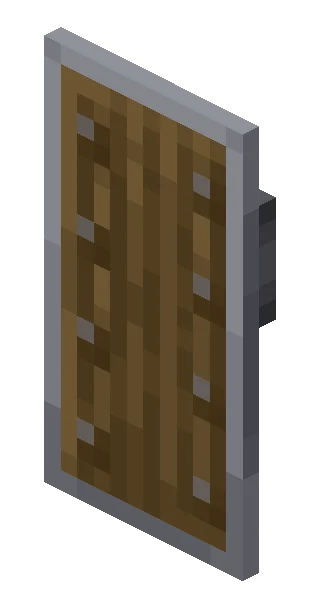
Block the blast before impact
Use a hit-and-retreat rhythm in melee
A sword can work when you have enough space to disengage. The safer pattern is a short attack followed by a deliberate reset:
- Approach with a clear route behind you.
- Land one hit, then back away immediately.
- Let the creeper stop swelling before approaching again.
- Repeat until it dies, without chasing it into a corner.
Knockback helps create separation, but terrain still decides whether you can retreat. Do not turn a successful hit into a string of attacks unless you know the next hit will finish the creeper. A bow is the safer recommendation when you have arrows and space because you can deal damage without entering its fuse-triggering range.
Water changes the consequences of a blast, but it is not a substitute for defense. A creeper exploding in a water source does not leave the usual crater, yet nearby players can still take explosion damage. Protecting the terrain and protecting your health are separate tasks.
Where creepers spawn and how to protect your base
Remove dark spawning spots
Regular creepers naturally spawn on eligible solid blocks in the Overworld at light level 0. Mushroom fields and deep dark biomes are excluded. Light the floor and entrance of your Minecraft first-night shelter so you do not leave suitable dark spawning spots inside.
Creepers cannot open doors. Keep entrances closed, but inspect the area outside before walking out in the morning. Unlike zombies and skeletons, creepers do not burn in sunlight and remain hostile during the day.
Use cats as a deterrent
Creepers flee from cats and ocelots within a 6-block radius. Positioning a cat near a frequently used entrance can discourage approaching creepers, although cats and ocelots do not attack them.
Tamed wolves and iron golems do not target creepers. Do not leave a doorway unprotected because another friendly mob is nearby.
Before expanding Minecraft food farms, check their access paths for dark spawning spots and leave yourself room to back away from an approaching creeper. A well-lit house does not make an unlit work area outside safe.
What is a charged creeper?
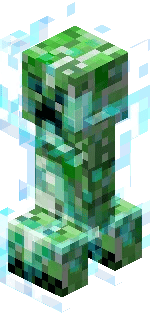
A charged creeper forms when lightning strikes within 4 blocks of a normal creeper. You can identify it by the blue electrical aura surrounding its body.
Its explosion power increases from 3 to 6, while its countdown timing and trigger range stay the same. Double explosion power does not mean every damage value or crater size doubles: proximity, difficulty, and the blocks around the explosion affect the result.
Treat the aura as a reason to avoid an improvised melee fight. Preserve your escape route and attack from range if you need to remove it. Do not lead it toward your shelter just to reach familiar ground.
What creepers drop and when to fight
Killing a creeper without letting it explode lets you collect its normal drops. A creeper destroyed by its own explosion drops nothing.
| Reward | Requirement | Amount |
|---|---|---|
| Gunpowder | Kill the creeper without it detonating | 0–2 normally, up to 5 with Looting III |
| Experience | Kill it as a player | 5 XP |
| Music disc | Have a skeleton deliver the killing blow | One random disc from the creeper's disc pool |
Getting a music disc
For a disc attempt, position the creeper between you and a skeleton so an arrow can hit it. You can damage the creeper first; the skeleton needs to deliver the final blow, not all the damage.
This setup asks you to manage two threats at once. Prepare space to move before attempting it, and abandon the attempt if the creeper reaches you. A disc is not worth standing beside a swelling mob.
Getting a creeper head
A creeper head requires a different kill: another charged creeper's explosion must kill the creeper. The charged creeper causing the blast does not drop its own head.
Head drops also differ by edition. In Java Edition, one eligible mob killed by a charged creeper explosion drops its head, selected at random if several qualify. In Bedrock Edition, all eligible mobs killed by that explosion drop their corresponding heads.
Plan head collection away from your builds, with the intended victim separated from other eligible mobs if you are playing Java Edition. Otherwise, you can spend a charged creeper on the wrong head.