
To make money fast in Moon Sweepers, sell Moon Dust near the Depot while collecting nearby $100 flags and $250 survey rewards. Spend those earnings on whatever interrupts your cleaning most, rather than buying every brush on the wall. Your first major savings target is $500 for a Garage and Push Sweeper. Once you can collect larger loads, automated delivery and the 6% Market Contracts bonus become more attractive. Processing comes later, when your operation can keep its machines supplied.
How do you reach your first $500 quickly?
A Garage costs $200, and the Push Sweeper costs $300. Reaching that combined $500 target gives you an affordable entry into vehicle cleaning, so keep it in mind before spending everything on intermediate tools.

Keep your first cleaning route short
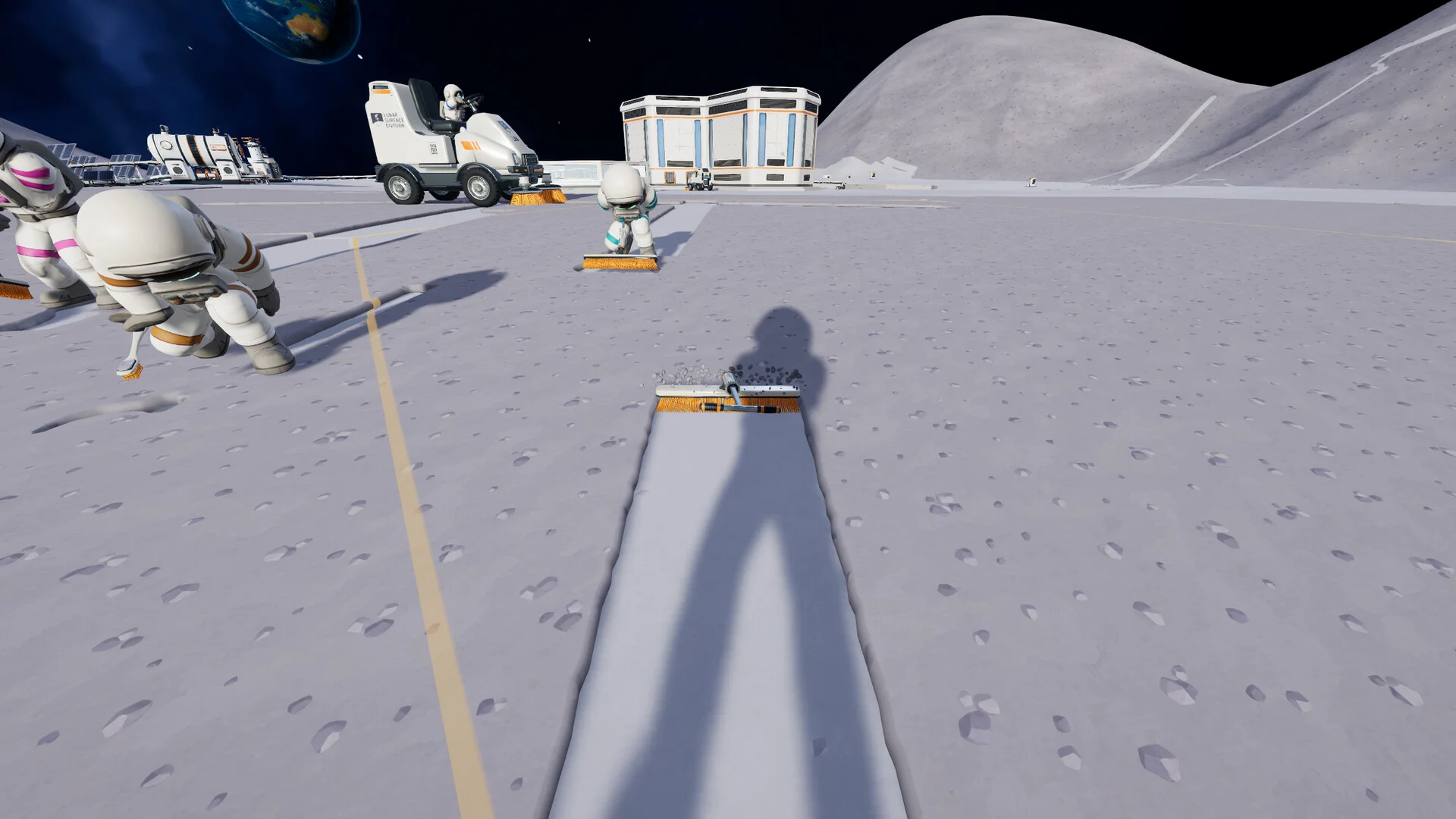
Start with the free Toothbrush and clean sectors near the Depot. Press Q to drop your collected material in a capsule, carry it back, and sell it through the Depot's shipment system. Raw Moon Dust pays $1/kg before bonuses, making 100 kg worth $100.
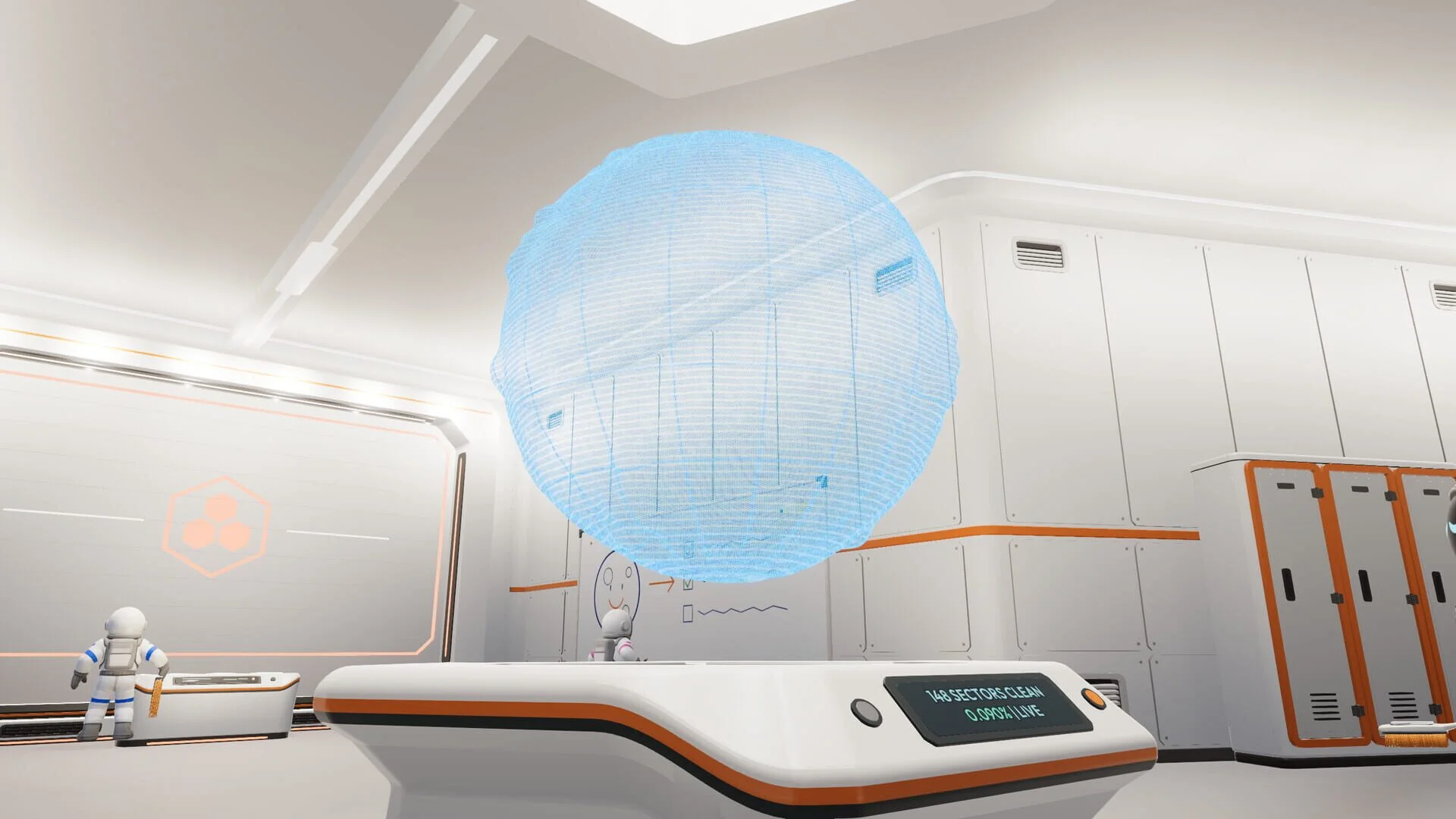
Finish nearly cleared sectors before starting fresh ones. Each completed hexagonal sector adds $10 to your earnings, separate from the Dust sale. Check corners and edges if the completion reward has not appeared, since small remaining patches can hold it up.
Collect exploration rewards along your route
Untangling a flag pays $100, while completing a survey pays $250. Both are one-time rewards, but they can cover a large share of your first vehicle purchase. Check terrain beyond North Station and the routes toward East Station and West Station as your cleaning takes you there.
| Savings route | Earnings before other purchases | Remaining to reach $500 |
|---|---|---|
| Complete two surveys | $500 | $0 |
| Complete one survey and untangle two flags | $450 | $50 |
| Untangle five flags | $500 | $0 |
| Sell 500 kg of raw Moon Dust at the base rate | $500 | $0 |
These are savings examples, not routes you need to follow exclusively. Combining nearby rewards with Dust sales lets you keep earning without turning every purchase into a long exploration trip.

Claim the last sector bonus
Which early tools are worth buying?
The Household Broom costs $25 and provides an affordable improvement over the starting Toothbrush. After that, choose purchases around the interruption you encounter most: repeated cleaning passes or constant stops to empty your container.
- Household Broom, $25: A low-cost early purchase when the starting tool is slowing your progress.
- Household Broom container upgrade, $30: Raises capacity from approximately 3 kg to 6 kg, reducing packing interruptions.
- Wide Broom, $75: A useful option when you need better coverage without spending $150.
- Extra Wide Broom, $150: Better suited to clearing broad, open areas with fewer passes.
A flag reward can pay for the $75 Wide Broom and leave $25. That does not make it an automatic purchase, though. If your container fills constantly, extra capacity addresses that problem more directly than another increase in width.
Skip tools that do not solve your current problem. The best upgrades to unlock guide can help you plan purchases around the $500 vehicle target instead of emptying your balance at every step.
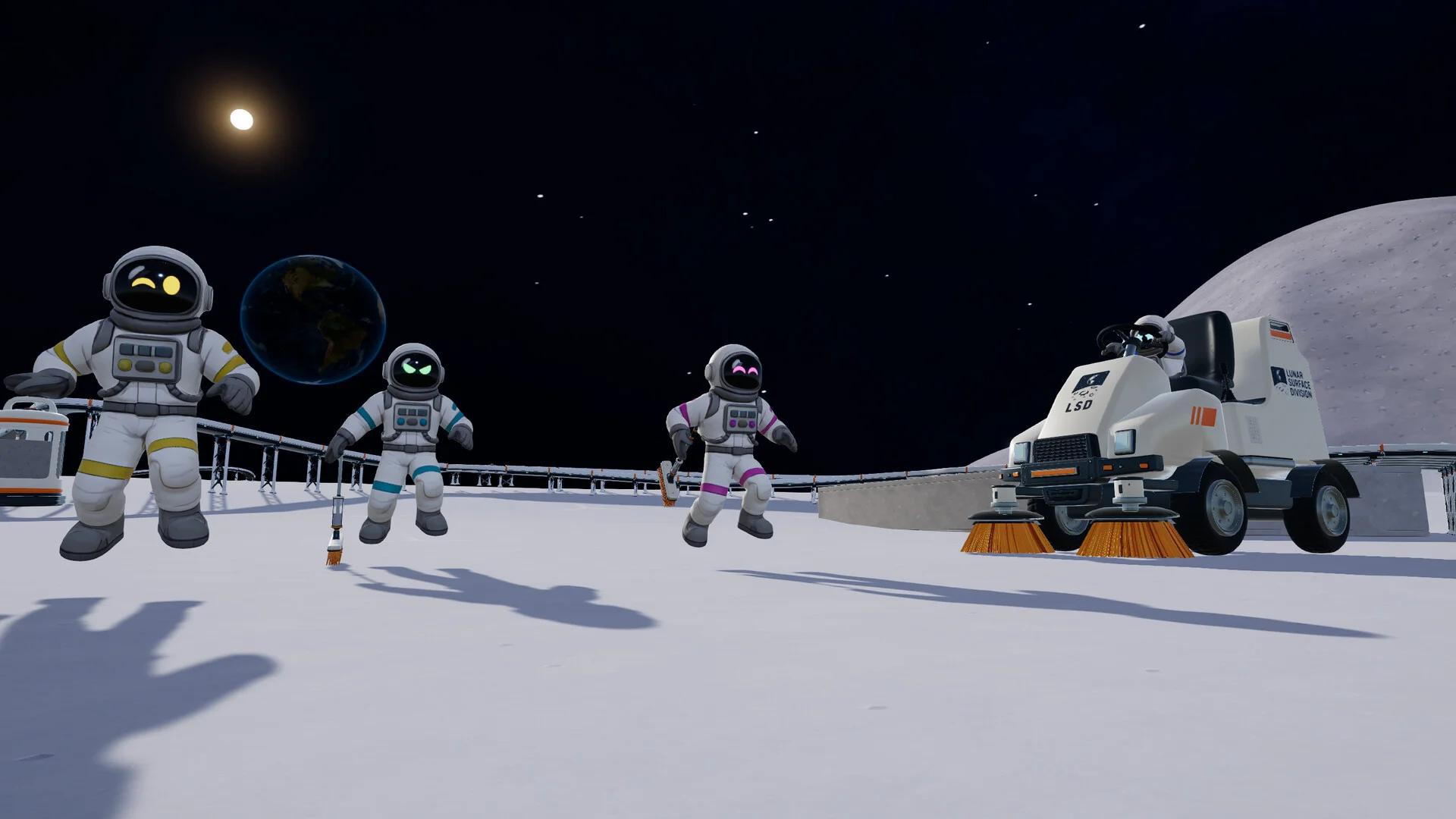
Choose width or storage first
Which vehicle should you save for next?
The $300 Push Sweeper is the cheapest vehicle purchase covered here, but budget for its $200 Garage as well. That $500 setup is a practical first milestone if you want to move beyond handheld cleaning.
Later vehicles offer more cleaning coverage and storage. Compare both against the cost, rather than saving for the largest hopper regardless of how your delivery system works.
| Vehicle | Purchase price | Cleaning width | Hopper capacity |
|---|---|---|---|
| Ride-on Sweeper | $1,000 | 1.98 m | 500 kg |
| Lunar Sweeper | $2,500 | 2.8 m | 1,200 kg |
| Mega Vacuum Rover | $6,000 | 3.7 m | 3,000 kg |
The Mega Vacuum Rover offers the greatest width and capacity in this comparison, but its $6,000 price makes it a much larger commitment. The Ride-on Sweeper provides a more affordable upgrade, while the Lunar Sweeper increases both coverage and capacity substantially.
Before buying any of them, check your Garage's unloading route. A larger hopper helps you gather more Dust between unloads, but full Garage storage or blocked capsule outputs can still delay payment.
How do you automate Dust sales?
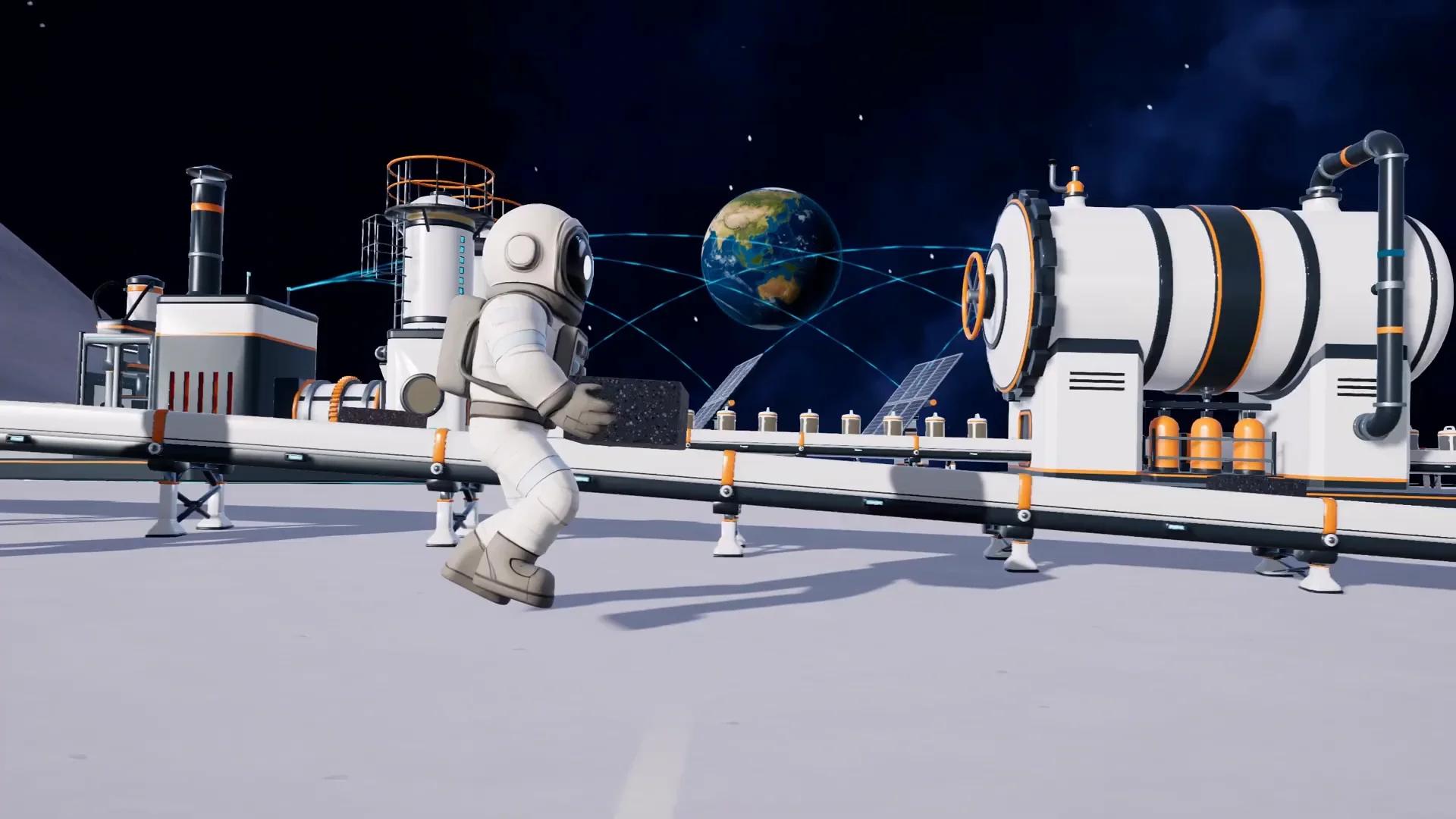
If carrying capsules back to the Depot takes too much time, build a short delivery line before buying another cleaner. A Packager accepts Dust you have already collected and feeds capsules onto a connected conveyor.
Build one working conveyor route
For a manual-cleaning setup, use this sequence:
- Buy the Building Tool for $50.
- Open Logistics and purchase a Packager for $100.
- Place the Packager near your cleaning area and unload your tool into it with E.
- Connect its output to a conveyor leading into the Depot's outside intake.
Conveyors cost $0.50 per metre, so a 20-metre section costs $10. Each section can extend up to 30 metres; longer routes need connected sections. Start short so you can check the complete route without paying for unnecessary distance.
Since patch 1.0.3, eligible Dust and stone delivered by belt to the Depot's outside intake sell automatically. That removes the manual shipment launch step for those deliveries.
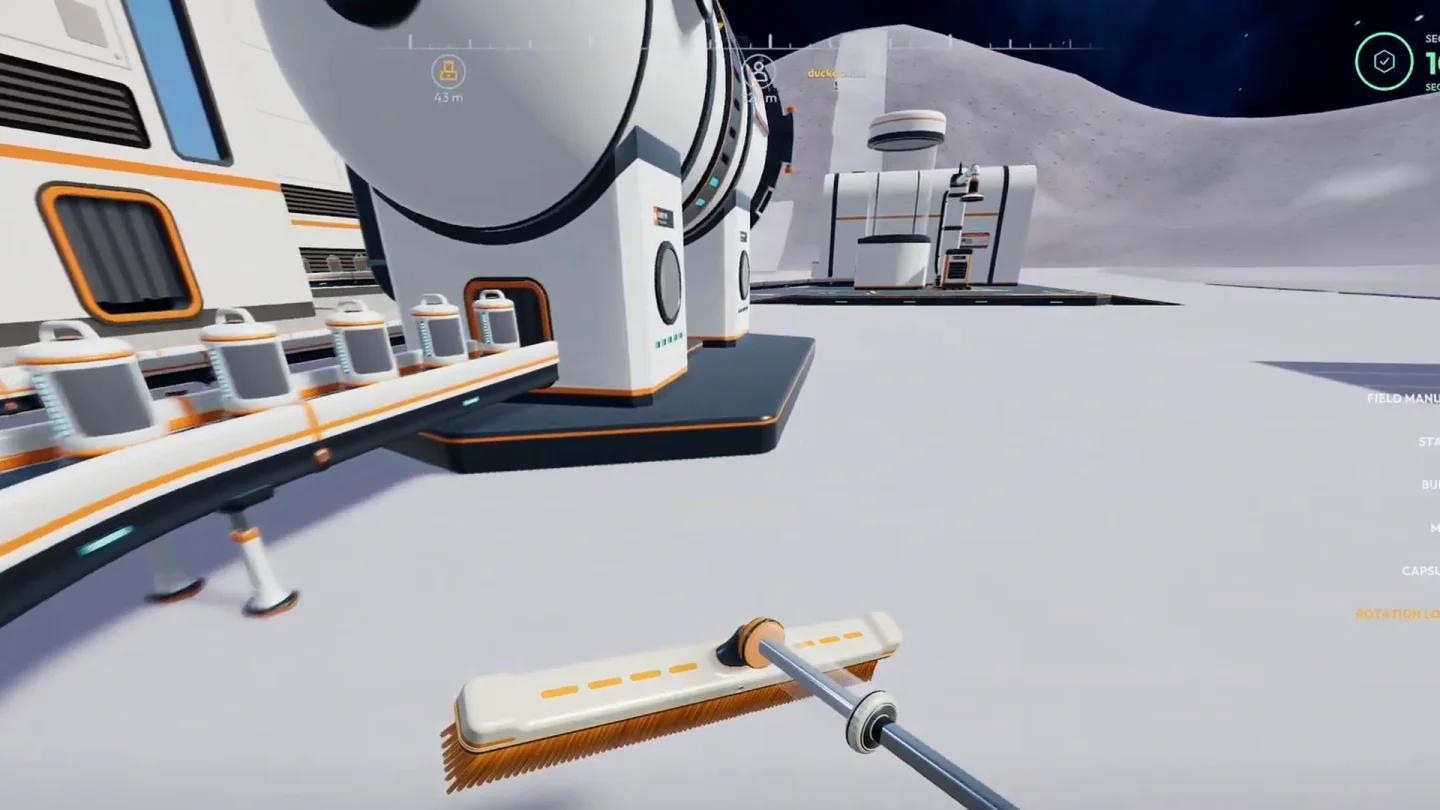
Route capsules into the Depot
Fix unloading before adding collection capacity
A Garage or Robot Vacuum dock can also feed a conveyor delivery system. Check that capsules leave the source, pass through the intended connections, and reach the intake before expanding the line.
If Dust accumulates in Garage storage or capsules stop at an output, address that delivery problem first. Another vehicle will give the same blocked route more material to handle.
When is Market Contracts worth its $120 cost?
The first Market Contracts upgrade costs $120 in the Upgrade Matrix and increases eligible Moon Dust sale payouts by 6%. A shipment with a normal value of $500 then pays $530, adding $30 without requiring another load.
The purchase recovers its cost after approximately $2,000 in qualifying sales at their normal value:
$120 ÷ 0.06 = $2,000 in base-value sales.
That makes Market Contracts a better purchase once you regularly deliver substantial amounts of Dust. While you are still collecting tiny loads with a basic brush, improving collection or delivery can address a more immediate limitation.
Should you choose Region Bounty instead?
Region Bounty adds $15 to the completion payout for cleaned regions. It suits a routine built around finishing areas, while Market Contracts rewards the volume of eligible Dust you sell.
Choose based on the work your equipment already supports. Frequent sector completions make Region Bounty relevant; regular large Dust shipments make Market Contracts more attractive. Neither upgrade increases cleaning speed, so solve slow collection first if that remains your main problem.
Should you sell raw Dust or process it?
Raw Moon Dust provides immediate income at $1/kg. Processing raises the sale value of the resulting materials, but it also introduces machinery costs, power demand, and additional material routing.
| Material | Base sale value | Required processing | Machine price | Machine power demand |
|---|---|---|---|---|
| Moon Dust | $1/kg | Sell directly | None | None |
| Moon Sand | $3/kg | Pressure Chamber processes Dust | $500 | 10 kW |
| Moonstone | $7/kg | Stone Press uses Dust and Moon Sand | $1,000 | 18 kW |
Start with a Pressure Chamber when supply is steady
The Pressure Chamber gives you a processing step without requiring a complete Moonstone line. It costs $500, consumes 10 kW, and turns Dust into Moon Sand worth $3/kg.
Buy it after you have enough collection and delivery capacity to keep it working. A machine waiting for Dust ties up money that could have improved your supply. Plan its electricity needs with the solar panels, batteries, and electricity guide before expanding production.
Add Moonstone production when both inputs are reliable
The Stone Press needs separate supplies of raw Moon Dust and Moon Sand. Use a splitter to route material toward the required inputs, and budget for the Moon Sand production that supports the press.
When should you invest in automated cleaners?
The Robot Vacuum Mk I costs $250 and cleans an area around its dock. Connect that dock to a working conveyor route so its collected Dust can reach the selling system while you clean elsewhere. Once its available area is clean, that location stops supplying fresh material.
J.O.O.N.A.S. is a much later purchase at $20,000, with a Capsule Catcher costing another $1,500. Patch 1.0.4 doubled its cleaning speed and changed it to clear one hex at a time, avoid buildings, and launch capsules to the nearest Capsule Catcher without returning to its dock. It also keeps working when no players are nearby.
The Capsule Catcher holds up to 100 kg, so it still needs a reliable onward delivery route. Buy expensive automation when your transport and processing can handle its output, rather than spending $20,000 to create a larger unloading problem.
Once your delivery system is ready for that investment, follow the J.O.O.N.A.S. setup guide to plan the cleaner's placement and Capsule Catcher connections.